Downloads
 Login
Login
 Register


Tags
Promoting U.S.-grown jasmine rice holds key to reducing imports
Jasmine rice is rising in popularity in the United States, but most of it is imported. USA Rice is encouraging consumers, retailers and restaurants to buy U.S.-grown jasmine rice and support American farmers.
Whitney Shannon, Staff Writer, Farm Press
At a Glance
- Jasmine rice is becoming increasingly popular in the U.S.
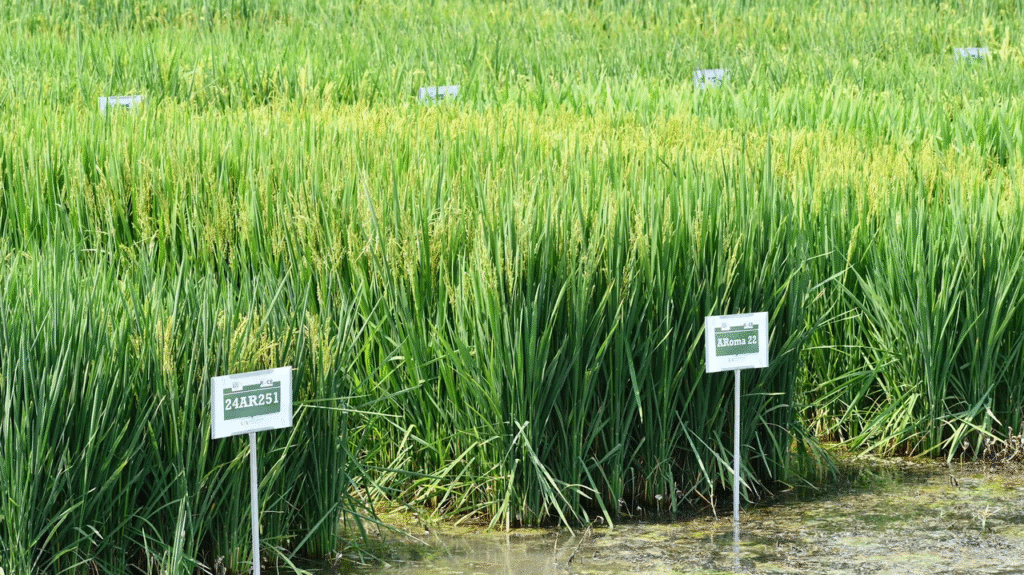
- All six rice-producing states in the U.S. grow jasmine rice.
- The U.S. rice industry looks to boost domestic consumption and reduce imports.
Jasmine rice is growing in popularity among U.S. consumers, with North America ranking as the second-largest global market for the variety, accounting for 35% of the market share. But most of that rice is imported from other countries, mainly from Thailand.
Currently, the U.S. imports $1.5 billion of rice each year, equal to 1.5 million metric tons. Of that, 800,000 tons are Thai jasmine. Based on consumer preferences and purchasing habits, demand for jasmine rice is projected to persist, which is why USA Rice Federation and industry leaders are working to promote and secure a domestic foothold in the market.
Jasmine rice is produced in all six U.S. rice-producing states. In 2026, U.S. rice producers planted more jasmine rice than ever — around 50,000 acres. Peter Bachman, USA Rice CEO, said most of those acres were planted in the South and that “more would have been planted in the U.S. this year, but we ran out of jasmine seed.”
Bachman pointed out that jasmine rice can be grown in all six of those states, which presents opportunities to reduce jasmine rice imports and boost the domestic market.
“We continue to experience around 4% compound annual growth, demonstrating that it is a stable market, there is consistent demand, and we are expected to hit 7% growth by 2030,” Bachman said. “We now have more U.S. jasmine brands than we have ever had. We have the most acreage out there with new anticipated acreage, and we are focused on quality with a great opportunity here.”
Tracking metrics of jasmine rice
Bachman said it is easier to track metrics for jasmine rice compared to generic long-grain rice. Data analysis suggests demand has increased for jasmine rice and is largely favored by millennials and Generation Z with consumer preferences fueled by flavor and a taste for international cuisine. Higher incomes in the U.S. also improve purchasing accessibility of jasmine rice, but the U.S.-grown message also resonates with conservation-minded shoppers.
“They like that we are sustainable, that our crop helps the environment, and that we are doing conservation practices that help ducks, other waterbirds and wildlife,” Bachman said.
Knowing that consumer demands create and dictate food service trends, Bachman said the same preferences sway which ingredients restaurant chefs choose to use.
“Growth [of jasmine rice] on U.S. menus is up close to 25% since 2020, and it is predicted to have a four-year growth of 10% and outperform 87% of all other foods over the next four years,” he said.
These consumer insights are part of what led to promotional activities spearheaded by USA Rice to promote domestic jasmine varieties. Metrics are based on data collected from specialty food service organizations, helping pinpoint consumer preferences.
According to the research, 85% of U.S. consumers are aware of jasmine rice, and 69% have tried it before. Of those who have tried it, 82% either “like” or “love” it. Since 2022, there has been a 13% growth in consumers who “like” or “love” jasmine rice, and online mentions of the variety have risen 24% in the last 12 months.
Taking the campaign a step further
One aspect of USA Rice’s promotional activities is working with restaurants like P.F. Chang’s, Panda Express and Taco Bell to encourage the incorporation of U.S. rice on their menus and advertise that it is domestically produced. This goes for all U.S.-grown rice varieties.
On the jasmine rice front, USA Rice has successfully worked with retailers to shift their store-brand jasmine rice to varieties that are grown in the U.S., no longer relying on imports to fulfill the inventory. Walmart was the first to announce this decision last year, and Bachman said Kroger is in the process of making the same switch.
Also as part of these efforts, USA Rice initiated a promotional campaign in 2025 to help broaden the footprint of domestic jasmine rice consumption. The inaugural campaign was launched in September, celebrated annually as National Rice Month.
“We know that investing in the promotion of U.S. jasmine rice yields real results,” Bachman said, as he described advertising projects in major jasmine rice-consuming cities like Los Angeles, Chicago, Washington, D.C., Boston and New York. In those locations, ads were placed on city buses and in train stations and airports, featuring a QR code that connected consumers to a landing page listing all U.S.-grown jasmine rice brands.
Additionally, colorful “shelftalker” labels were placed in 1,000 grocery stores nationwide, displaying the same QR code to inform consumers from the grocery store aisles. The one-month promotional period in September generated an 8.9% increase in sales year over year, and a 5% lift overall compared to the month before. Now, USA Rice prepares to launch its second year of the campaign, even expanding into the Canadian market.
“The Canadian market acts similarly to the U.S. market, in terms of what people are interested in eating and in their generational preferences, like Gen Zs and millennials,” Bachman said. “They want jasmine rice too, so if we can expand our exports of U.S. jasmine rice, that will be even better to help offset any growing pains we experience here in the U.S. market.”
Other export outreach efforts are planned for December’s USA Rice Outlook Conference in Nashville, Tenn., where U.S., Canadian and Central American food service groups are invited to taste test U.S.-grown jasmine rice in hopes of building interest and broadening business connections.
Crop insurance benefits for farmers
For U.S. rice farmers looking to increase their jasmine acres, a new crop insurance product is rolling out for 2027. Bachman explained that rice acres have traditionally been certified as short-, medium- or long-grain. Now, farmers will be able to certify acres as aromatic to cover jasmine rice or other varieties like basmati and dol.
This new certification option will protect the farm’s actual production history since aromatic rice is often lower-yielding than generic long-grain, and the yield difference can hinder the five-year average of a farm’s yield history.
“This program will isolate your APH for that farm for that year, and if you have a history of growing jasmine, you can go back in your records and show your agent to make sure you pull them out,” Bachman explained. “That will lift your APH for your generic long-grain and preserve it, plus establish an [APH] and a yield for your jasmine rice.”
This crop insurance product is expected to be finalized in November through the USDA Risk Management Agency. Bachman said the program will be advertised to farmers in the coming months as a reminder for those preparing to certify acres.
To help ensure quality of the aromatic crop, USA Rice has also established a Jasmine Task Force of Southern marketers and growers to generate a list of jasmine rice varieties that meet premium standards. The hope is to one day have a U.S.-grown jasmine certification marked on packaged rice. One goal is to avoid oversaturation of jasmine varieties that cannot be comingled due to drastic variations in cooking or aromatic qualities.
The task force will also help prioritize research opportunities and explore genetic editing to improve the yields of jasmine varieties.
“We want to make sure everything is standard and meets specifications for consumers so we can maintain quality and continue to compete,” Bachman said.
https://www.farmprogress.com/rice/promoting-u-s-grown-jasmine-rice-holds-key-to-reducing-importsPublished Date: September 2, 2026



 READ
READ