Downloads
 Login
Login
 Register


Tags
Philippines rice production dips amid typhoon-related losses

By John Reidy
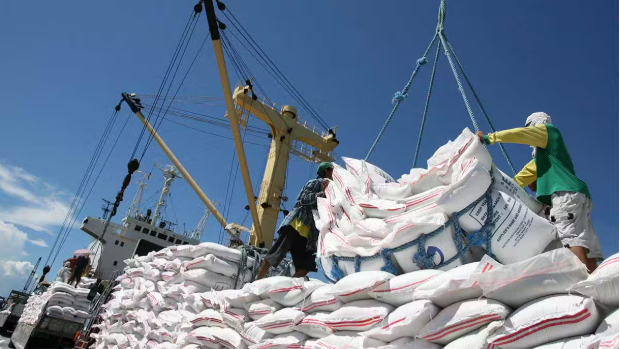
MANILA, PHILIPPINES — Typhoon-related losses and challenging post-harvest conditions are taking their toll on 2025-26 rice production for the Philippines, but government support and subsidies continue to underpin planting of the staple food crop, according to a report from the Foreign Agricultural Service (FAS) of the US Department of Agriculture.
The FAS projects rough rice production at 19.6 million tonnes in 2025-26, which is slightly lower than both the previous estimate (0.4%) and the 2024-25 production level (0.2%) due to lower output in the fourth quarter of 2025.Despite high fertilizer prices, farmers continue to plant rice, supported by expanded government subsidies and programs that help stabilize farmgate prices and provide additional market options, the FAS said.
Consumption remains strong, driven by population growth and stable retail prices, while rice imports are estimated to decrease due to the extended import ban, from Sept. 1 to Dec. 31, 2025. Total consumption is projected to be 17.6 million tonnes, up from 17.4 million the previous marketing year with imports dropping to 4.4 million tonnes from 5.4 million.
With the increase in consumption and diminished imports, ending stocks are seen falling to 2.9 million tonnes in 2025-26 from 3.8 million in 2024-25.
Meanwhile, the corn harvest in 2025-26 also is expected to decline to 8.27 million tonnes from 8.33 million in 2024-25 due to typhoon-related losses that hit key producing regions, particularly in the third quarter. Weather disruptions outstripped improved yields and government support, the FAS noted.
Growth in total corn consumption to 10.15 million tonnes, up 2.5% year on year, is primarily due to a projected expansion in feed and residual use, which is expected to rise by 2.7% to 5.75 million tonnes.
The increase in feed corn demand reflects continued growth in the broiler, layer, and pet food industries, as well as the sustained recovery of the swine industry within 2025, the FAS said.
With reduced local output, corn imports are projected to rise from 1.59 million tonnes in 2024-25 to 1.85 million in 2025-26.
The FAS estimates that total wheat consumption in 2025-26 will increase, driven by higher demand for both milling and feed wheat. With no national production, the Philippines is forecasted to import 7.4 million tonnes of wheat in 2025-26, up from 6.3 million the previous year.Growth in milling wheat consumption is supported by increasing demand for bread, pasta and biscuits, though rising prices for bakery ingredients are expected to moderate this trend. Feed wheat consumption is estimated to rise as the swine, poultry (broiler and layer) and pet food industries continue to expand, offsetting a decline in aquaculture.
https://www.world-grain.com/articles/22241-philippines-rice-production-dips-amid-typhoon-related-lossesPublished Date: January 1, 2026


 READ
READ