Downloads
 Login
Login
 Register


Tags
Philippine rice farms target tech boost to cut costs, prevent crop loss
By Dexter Barro II
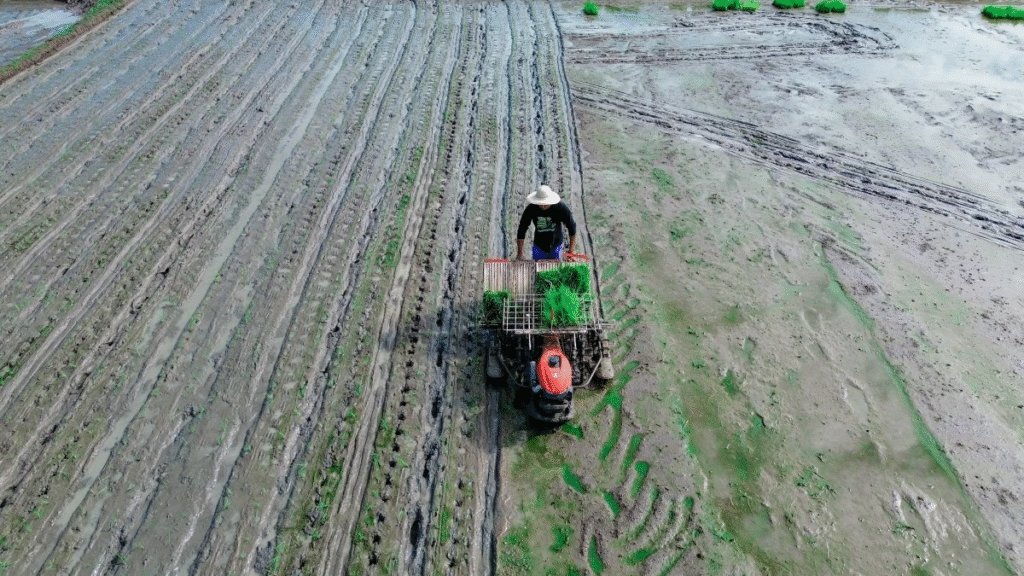
The mechanization level of the country’s rice farms is on track to reach 3.40 horsepower per hectare (hp/ha) by 2031, further lowering labor costs and improving the sector’s productivity, according to the Philippine Center for Postharvest Development and Mechanization (PhilMech).
In a statement, PhilMech said it is banking on the second phase of the Rice Competitiveness Enhancement Fund (RCEF), which concludes in 2031, to procure the machinery needed to modernize the rice sector.
The country’s rice farm mechanization level—referring to the availability of machines for rice farming—has already risen to 2.81 hp/ha from around 2.31 hp/ha in 2010 under RCEF’s first phase, which ended in 2025.
PhilMech noted that reaching the 3.40 hp/ha target will bring the country closer to neighboring nations while strengthening the competitiveness of the domestic rice sector.
PhilMech Executive Director Dionisio Alvindia said increasing farm mechanization helps reduce labor costs and postharvest losses while speeding up farm operations.
“These improvements translate directly into higher productivity, better grain quality, and increased incomes for our rice farmers,” he said.
The RCEF was extended for six years under Republic Act (RA) No. 12078, which amended the Rice Tariffication Law (RTL). The legislation also increased the fund’s annual allocation—sourced from duties on imported rice—to ₱30 billion from ₱10 billion.
During the program’s first phase, PhilMech distributed nearly 33,000 production and postharvest machines to 7,588 farmers’ cooperatives, associations, and local government units (LGUs).
The agency reported that these machines reduced labor costs across 57 provinces by about ₱2 per kilo of palay (unmilled rice). This raised farmers’ income by roughly ₱9,000 per hectare, generating a combined ₱2.66 billion in additional annual income.
Mechanization likewise prevented close to 32,000 metric tons (MT) of postharvest losses each year, translating to around ₱541.3 million worth of rice, according to PhilMech data.
As for the current year, PhilMech had deployed more than 1,700 farm machines nationwide by the end of June, including four-wheel tractors, combine harvesters, recirculating dryers, and precision seeders.
Agriculture Secretary Francisco Tiu Laurel Jr. said the improving mechanization level is integral to building a more efficient and resilient rice industry that allows farmers to earn more from every harvest.
“Mechanization is also becoming increasingly important as our farming population ages. Modern equipment allows our farmers to continue cultivating their land with less physical strain while helping address labor shortages during planting and harvest,” he said.
https://mb.com.ph/2026/07/27/philippine-rice-farms-target-tech-boost-to-cut-costs-prevent-crop-lossPublished Date: July 27, 2026


 READ
READ