Downloads
 Login
Login
 Register


Tags
PH rice tariff policy may slow down imports
By: Jordeene B. Lagare – Reporter
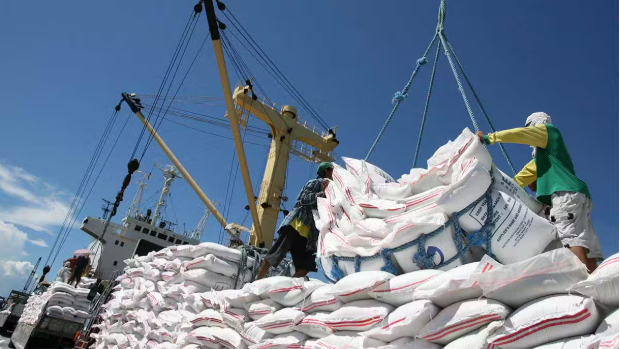
MANILA, Philippines — Industry sources said the government’s recent price-index tariff policy may weaken rice imports, triggering market speculation and resulting in higher prices, a report from the US Department of Agriculture (USDA) said.
The USDA report titled “Philippines: Grain and Feed Annual” was released in March and said rising farm input costs, particularly for imported chemical fertilizers and petroleum products, may hamper domestic output.
The foreign agency estimated rice imports to reach 5.1 million metric tons (MT) in marketing year 2026-2027 that begins in July, up 15.9 percent from 4.4 million MT in marketing year 2025-2026.
“Industry contacts note that basing tariff rates solely on international prices, rather than considering domestic demand, may inadvertently encourage market speculation, as readily available price information could prompt some actors to withhold stocks in anticipation of further price changes,” it added.
The report did not identify the “industry contacts” and may possibly include actors who are already involved in rice production or importation.
‘Marketing intelligence’
The report has long been used by American producers as “marketing intelligence” in relevant countries, but local producers also frequently use it as a bellwether for regulations and policies or as a promotion tool for a particular agenda.
The Philippines is a net importer of fuel and fertilizer, making the country vulnerable to global price spikes and supply shocks.
The USDA said the government and traders are trying to rebuild stocks from local production with President Marcos declaring a moratorium on rice imports in September last year to protect local farmers from low palay prices during the peak harvest season. The ban was extended until Dec. 31.
The Philippine Department of Agriculture (DA) reported that the measure reduced import volumes and raised farmgate prices to around P17 per kilo for wet palay and P23 per kilo for dry palay by the end of 2025.
The report also said some industry stakeholders are pushing for the reinstatement of the 35-percent tariff on imported rice “to provide greater protection for the local rice industry.”
Data from the Bureau of Plant Industry showed that rice imports totaled 1.17 million MT as of March 26, with 81.46 percent coming from Vietnam.
The Philippine Statistics Authority estimated that palay production may decrease by 7.1 percent to 4.36 million MT in the January to March period from the actual output of 4.7 million MT in the same period a year ago.
Fertilizer alternatives
Meanwhile, Agriculture Secretary Francisco Tiu Laurel Jr. said on Wednesday that the government is studying alternatives to cushion the impact of rising fertilizer prices triggered by the escalating conflict in the Middle East.
“Supply is not the main concern; rather, it is the upward pressure on global prices driven by logistics costs and market uncertainty,” Tiu Laurel said in a statement.
“I reviewed all the figures on where our fertilizer comes from … supply is not the issue—it’s really the price,” he added.
The DA has been scaling up the use of alternatives, including liquid fertilizers, biofertilizers and soil ameliorants, to mitigate the rising cost of petroleum-based inputs even before the United States and Israel attacked Iran on Feb. 28.
Prices of many agricultural products might rise by about P2 to P5 per kilogram, largely driven by transport expenses, the DA chief said.
Tiu Laurel said he and Senator Francis Pangilinan visited the facility of AgriSpecialist Inc. in Laguna which produces biofertilizer developed by the National Institute of Molecular Biology and Biotechnology of the University of the Philippines Los Baños.
DA data showed that approximately 20 percent of the country’s 713,000 metric tons of imported urea-based fertilizers came directly from Qatar and Saudi Arabia. The bulk originated from Indonesia, Brunei, Malaysia, China, and Vietnam. Ammonium sulfate fertilizers were solely sourced from China and Japan.
https://newsinfo.inquirer.net/2205500/ph-rice-tariff-policy-may-slow-down-importsPublished Date: April 2, 2026


 READ
READ