Downloads
 Login
Login
 Register

Tags
Nano-Selenium Helps Grow More Nutritious Rice
Selenium stimulates the plant’s photosynthesis, which can then increase by more than 40%.
Original story from the University of Massachusetts Amherst
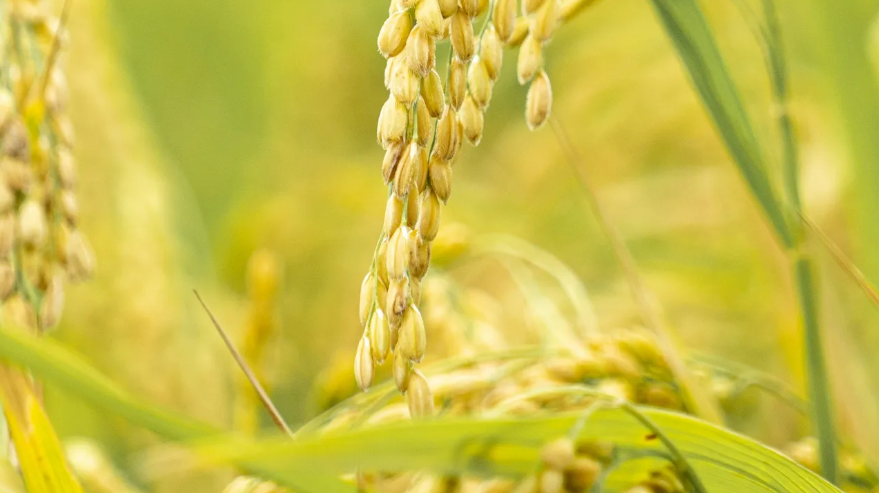
The cultivation of rice – the staple grain for more than 3.5
billion people around the world – comes with extremely high environmental,
climate and economic costs. But this may be about to change, thanks to new
research led by scientists at the University of Massachusetts Amherst and
China’s Jiangnan University. They have shown that nanoscale applications of the
element selenium can decrease the amount of fertilizer necessary for rice
cultivation while sustaining yields, boosting nutrition, enhancing the soil’s
microbial diversity and cutting greenhouse gas emissions. What’s more, in a new
paper published in the Proceedings of the National Academy of Sciences,
they demonstrate for the first time that such nanoscale applications work in
real-world conditions.
“The Green Revolution massively boosted agriculture output
during the middle of the last century,” says Baoshan
Xing, University Distinguished Professor of Environmental and Soil
Chemistry, director of UMass’ Stockbridge School of Agriculture, and co-senior
author of the new research. “But that revolution is running out of steam. We
need to figure out a way to fix it and make it work.”
Part of what made the Green Revolution so revolutionary was
the invention of synthetic, nitrogen-heavy fertilizers that could keep
agricultural yields high. But they’re expensive to make, they create an
enormous amount of carbon dioxide, and much of the fertilizer washes away.
Most crops only use about 40–60% of the nitrogen applied to
them, a measurement known as nitrogen use efficiency, or NUE, and the NUE of
rice can be as low as 30%—which means that 70% of what a farmer puts on their
fields washes away into streams, lakes and the oceans, causing eutrophication,
dead zones and a host of other environmental problems. It also means that 70%
of the cost of the fertilizer is likewise wasted.
Furthermore, when nitrogen is applied to soils, it interacts
with the soil’s incredibly complex chemistry and microbes, and ultimately leads
to vastly increased amounts of methane, ammonia and nitrous oxide—all of which
contribute to global warming. Furthermore, synthesizing fertilizer itself is a
greenhouse-gas-heavy enterprise.
“Everybody knows that we need to improve NUE,” says Xing—the
question is how?
What Xing and his co-authors, including lead author Chuanxi
Wang and another senior author, Zhenyu Wang, professors of environmental
processes and pollution control at Jiangnan University discovered, is that
nanoscale selenium, an element crucial for plant and human health, when applied
to the foliage and stems of the rice, reduced the negative environmental
impacts of nitrogen fertilization by 41% and increased the economic benefits by
38.2% per ton of rice, relative to conventional practices.
“We used an aerial drone to lightly spray rice growing in a
paddy with the suspension of nanoscale selenium,” says Wang. “That direct
contact means that the rice plant is far more efficient at absorbing the
selenium than it would be if we applied it to the soil.”
Selenium stimulates the plant’s photosynthesis, which
increased by more than 40%. Increased photosynthesis means the plant absorbs
more CO2, which it then turns into carbohydrates. Those
carbohydrates flow down into the plant’s roots, which causes them to grow.
Bigger, healthier roots release a host of organic compounds that cultivate
beneficial microbes in the soil, and it’s these microbes that then work
symbiotically with the rice roots to pull more nitrogen and ammonium out of the
soil and into the plant, increasing its NUE from 30 to 48.3%, decreasing the
amount of nitrous oxide and ammonia release to the atmosphere by 18.8–45.6%.
With more nutrients coming in, the rice itself produces a
higher yield, with a more nutritious grain: levels of protein, certain critical
amino acids, and selenium also jumped.
On top of all of this, Xing, Wang and their colleagues found
that their nano-selenium applications allowed farmers to reduce their nitrogen
applications by 30%. Since rice cultivation accounts for 15–20% of the global
nitrogen use, this new technique holds real promise for helping to meet the
triple threat of growing population, climate change, and the rising economic
and environmental costs of agriculture.
Reference: Wang C, Cheng B, Xiao Z, et al. Nanotechnology-driven
coordination of shoot–root systems enhances rice nitrogen use efficiency. Proc
Published Date: September 25, 2025


 READ
READ