Downloads
 Login
Login
 Register


Tags
Middle East Crisis: Punjab basmati industry remains hopeful despite 15% spike in op costs
Vibhor Mohan

Chandigarh: The basmati rice industry in Punjab remains hopeful that a complete disruption in global trade is unlikely in the coming months, despite the heightened tensions in the Middle East.
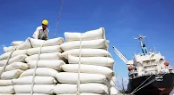
While markets in the United States and Europe continue to operate almost normally, the conflict has impacted shipments from India to several Middle Eastern countries, causing a shift in consumption patterns and regional supply chains. This logistics crisis is increasing financial pressure on exporters, with working capital requirements expected to rise by 10-15%.
Critical maritime hubs, including Iran’s Bandar Abbas port and major terminals in Saudi Arabia, Kuwait and Qatar, have faced shutdowns or severe disruptions.
This has forced exporters to navigate longer sea routes, leading to a shortage of available ships and extending working capital cycles.
Ranjit Singh Jossan, vice-president, Basmati Rice Millers & Exporters Association, told TOI that the situation in the Middle East had reduced the availability of ships and increased the length of sea routes. As a result, exporters’ working capital cycles may become longer and payments may also be delayed.
This can lead to a 10% to 15% increase in working capital requirements, he said.
Domestic inventory levels in India are also showing signs of a shift. While stock levels in Madhya Pradesh remain similar to last year, stocks in Punjab and Haryana are expected to be 20% to 30% lower than last year by March 31.
Trade sources indicate that if basmati exports reach the target of 63 LMT, national stock levels may start declining gradually.
Although Indian exporters are passing higher freight and insurance costs onto buyers, they are still grappling with mounting detention charges and ground rent at domestic ports like Kandla and Mundra.
The timing of the disruption coincides with the holy month of Ramadan, a period of peak demand. In several Middle Eastern countries, cases of panic buying have been reported as people purchase rice and other food items in quantities much higher than their daily needs. Consequently, stock levels in these nations are declining rapidly, with retail prices for rice and other essentials jumping by 20% to 25%.
According to trade experts, if the disruption in maritime logistics continues for another month, the basmati rice trade could face a shortfall of around 2 to 2.5 LMT. Nevertheless, demand from countries where basmati rice is a staple may help balance this impact to a large extent.
Exporters are also exploring alternative sea routes to reduce dependence on the Strait of Hormuz, which are considered important to maintain the continuity of the supply chain.
Crisil Ratings indicates that while the Strait of Hormuz conflict may trigger immediate shipping blockades and payment delays, the overall volume of Indian basmati rice exports is expected to remain steady. This resilience is driven by an anticipated 5% to 6% surge in demand from other key Middle Eastern markets — including Saudi Arabia, Iraq, the UAE, and Yemen — which collectively represent nearly 60% of India’s total export footprint.
Overall, trade experts feel that export volumes are expected to remain largely stable during the current and next financial year and may increase by around 2% compared to the 6.06 million tonnes recorded in 2024–25.
Afghanistan’s Rice Lifeline
The geopolitical situation has also made India the only major source of rice supply for Afghanistan, as tensions persist in Pakistan and its borders remain almost closed. Reports suggest that stock levels in several regions of Afghanistan are nearly exhausted. Experts say that once the situation becomes normal, Afghanistan, considered a market of around 4–5 LMT, may also witness large-scale panic buying.
Innovating Payment Routes
The rice industry is bracing for a possible shift in global trade as the conflict with Iran forces a move towards alternative financial settlement systems. With the Strait of Hormuz increasingly volatile, the current situation is reminiscent of the rupee–rial arrangement and a two-decade history of finding “innovative payment routes” to ensure essential food supplies reach Iranian markets despite escalating tensions.
https://timesofindia.indiatimes.com/city/chandigarh/middle-east-crisis-punjab-basmati-industry-remains-hopeful-despite-15-spike-in-op-costs/articleshow/129641453.cmsPublished Date: March 19, 2026


 READ
READ