Downloads
 Login
Login
 Register

Tags
Japan to Buy Back 210,000 Tons of Government Reserve Rice, Contracting with 8 Operators for Full Volume
Japan’s Ministry of Agriculture, Forestry and Fisheries (MAFF) announced on the 18th that it has signed contracts to buy back the full planned volume of 210,000 tons of government reserve rice from 8 of the 10 operators that participated in the release conducted between March and April 2025. This marks the first buyback of released reserve rice since the current reserve system began in fiscal 2011. Following the “Reiwa Rice Crisis” that began in summer 2024, the government released 590,000 tons, reducing reserve stocks to 320,000 tons. JA Zen-Noh, which accounted for over 90% of the winning bids, is believed to be the central counterparty in these contracts. The reduction of 210,000 tons in market circulation could serve as a floor supporting rice prices.
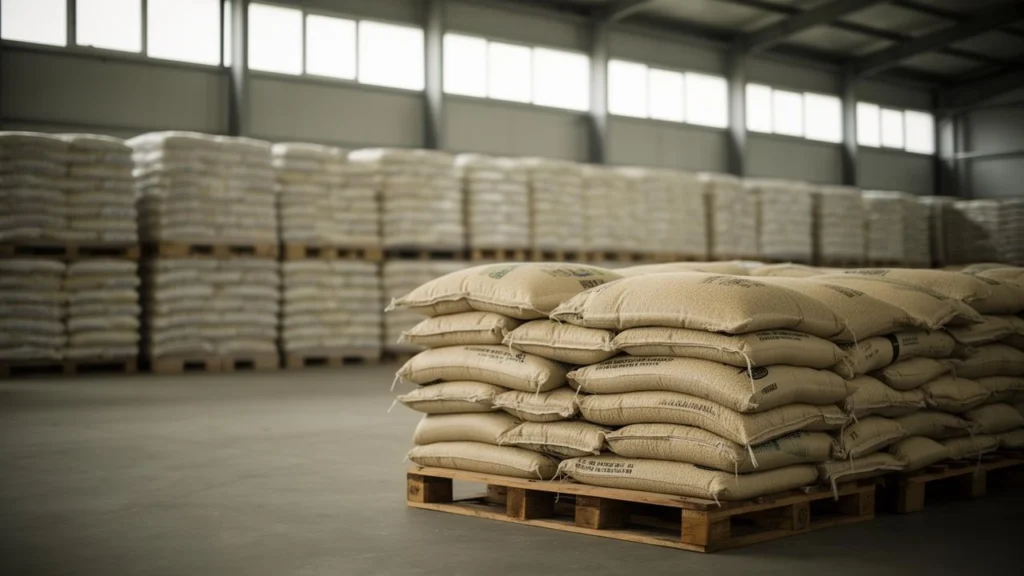
Japan’s Ministry of Agriculture, Forestry and Fisheries announced on the 18th that it has signed contracts to buy back a total of 210,000 tons of government reserve rice — the full planned volume — from 8 of the 10 operators that participated in the release conducted between March and April 2025. This is the first buyback of released reserve rice since the current reserve system began in fiscal 2011.
The procedure was conducted through discretionary contracts. Eligible participants were the 10 operators, including the National Federation of Agricultural Cooperative Associations (JA Zen-Noh), that won reserve rice through the buyback-conditional auctions held in March and April of last year. Each operator’s winning bid volume served as the ceiling for their application, and contract recipients were selected by comparing offered prices.
The buyback targets 210,000 tons of 2025-harvest rice. The ministry released a total of 590,000 tons of reserve rice last year, and reserve stocks — considered appropriate at 1 million tons — have now fallen to 320,000 tons. The buyback aims to restore inventories depleted by the response to the rice shortage and price surge known as the “Reiwa Rice Crisis” that began in summer 2024.
In last year’s release, a total of 310,000 tons was supplied to the market through auctions under former Agriculture Minister Taku Eto. The 10 winning operators included various regional agricultural cooperatives and grain collection companies, with JA Zen-Noh accounting for over 90% of winning bids. As a result, JA Zen-Noh is believed to be the central counterparty in this buyback as well.
The buyback will reduce the amount of rice circulating in the market by 210,000 tons. While MAFF has indicated that “there will be no significant impact on price trends,” the reduction in supply could serve as a factor supporting rice prices.
Following the conclusion of contracts, the ministry plans to disclose details including volumes and the number of contracts. The buyback of reserve rice is positioned as a mechanism to prepare for future emergencies by recovering rice released during price surges once market conditions have stabilized.
https://finance.biggo.com/news/52be182d-a199-4b17-b4d2-4a1d62bc598dPublished Date: September 19, 2026


 READ
READ