Downloads
 Login
Login
 Register


Tags
Iran currency collapse hits India’s basmati rice exports, ₹2,000-crore shipments stranded
Md Zakariya Khan
Despite shipment delays and payment risks, shares of major Indian rice exporters ended higher on Tuesday.
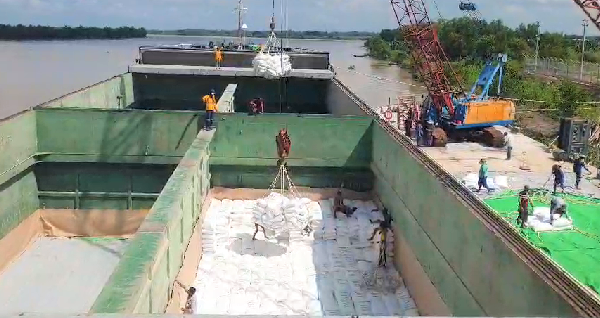
Iran’s sharp currency collapse, triggered by the ongoing crisis in the country, has affected India’s basmati rice exports, with rice worth more than ₹2,000 crore stranded at major ports such as Kandla and Mundra. On Monday, India’s Rice Experts Federation (IREF) said exporters have decided to hold back consignments at ports due to uncertainty over payments and clearance delays.
“The crisis has raised concerns for farmers, millers, and exporters, particularly in Punjab and Haryana, and could dent India’s overall basmati rice export performance this financial year,” IREF said in a statement.
Iran’s collapsing currency a concern for India
Iran is witnessing violent protests across the country against the present regime. In addition, US President Donald Trump’s announcement of a 25% tariff on Iran-linked trade has created difficulties for countries doing business with Iran. Following this, Iran’s currency, the Rial, has fallen to a record low, with nearly 1.3 million rials now required to buy one US dollar.
This has directly impacted India’s basmati rice exports, as Iran is India’s second-largest buyer of basmati rice after Saudi Arabia, importing around 12 lakh tonnes annually, valued at over ₹12,000 crore.
“The steep depreciation has triggered high inflation and acute foreign exchange shortages, forcing the Iranian government to withdraw subsidies on food imports. As a result, Iranian importers are struggling to arrange payments, prompting Indian exporters to halt fresh shipments,” IREF said.
The federation added that Iranian importers are finding it increasingly difficult to access foreign currency, leading to delayed payments and heightened credit risk for Indian exporters.
Impact on India’s supply chain
The disruption is expected to ripple across India’s basmati rice supply chain and may put pressure on prices as export demand weakens.
“The impact is likely to be felt across the supply chain. Basmati rice farmers in Punjab and Haryana, already coping with weather-related challenges such as floods, may face price pressure as export demand softens. For small and medium exporters, many of whom have availed cheaper credit under recent government schemes, the crisis poses a serious liquidity risk, with payments worth ₹1,500–2,000 crore potentially frozen,” the industry body said.
No major impact on rice exporters’ shares
Despite the export disruption, the crisis has not impacted the share prices of major Indian rice exporters, with stocks ending higher on Tuesday.
According to exchange data, shares of LT Foods, GRM Overseas, and AWL Agri Business (Adani Wilmar) ended in positive territory. LT Foods rose 3.09% to ₹375, while GRM Overseas gained 1.9% to ₹171. AWL Agri Business edged up 0.06% to ₹293, and KRBL Ltd added 1.84% to close at ₹363.35.
Meanwhile, the BSE Sensex ended at 83,627.69, down 250.48 points, while the NSE Nifty 50 settled 57.95 points lower at 25,732.30.
https://www.fortuneindia.com/economy/iran-currency-collapse-hits-indias-basmati-rice-exports-2000-crore-shipments-stranded/129430Published Date: January 13, 2026



 READ
READ