Downloads
 Login
Login
 Register


Tags
Indonesia signals permanent halt to ASEAN rice imports
Sreekanth Ravindran / Khmer Times
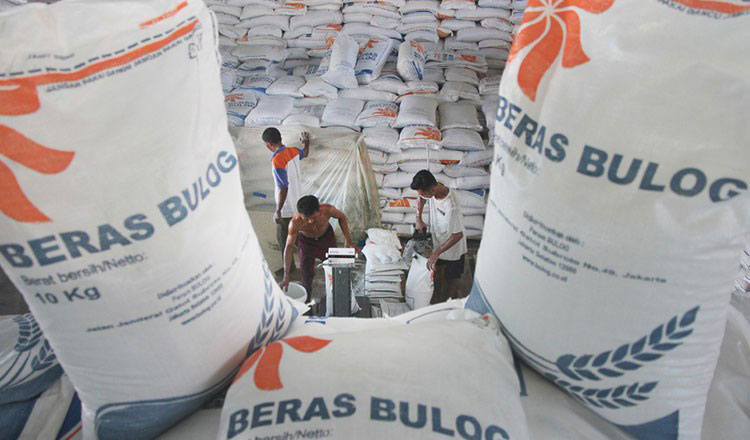
Synopsis: The move follows strong domestic production as well as rising concerns over the reliability of overseas supply chains.
Indonesia will not import rice from ASEAN countries starting 2026, following strong domestic production gains and rising concerns over the reliability of overseas supply chains, according to multiple Indonesian media reports.
A senior government official said Indonesia will not import rice for 2026 for either household consumption or industrial use, citing sufficient domestic output to meet national demand.
Tatang Yuliono, Deputy for Trade and Distribution Coordination at the Coordinating Ministry for Food Security, told local media last week that all rice requirements, including for food processing industries, would be fulfilled by local farmers.
The government has already rejected a proposal from the Ministry of Industry to import nearly 381,000 tonnes of rice for industrial purposes in 2026, arguing that domestic supplies will be adequate.
The no-import policy is set to apply nationwide, including in free trade zones such as Sabang in Aceh. Tatang added that relevant ministries will continue to review food import policies through upcoming commodity balance meetings.
Indonesia’s confidence is rooted in a strong agricultural performance in 2025, when the country successfully halted imports of both rice and corn, marking a major milestone in national food security efforts.
By mid-2025, state rice reserves had reached a record high of approximately four million tonnes, helping stabilise domestic prices and provide support to regions affected by natural disasters.
Official data shows that Indonesia’s rice production in 2025 is expected to reach 34.77 million tonnes, a 13.54 percent increase year-on-year.
The growth has been attributed to favourable weather conditions and expanded farmer support programmes under President Prabowo Subianto’s administration, including improved irrigation, seed distribution, and fertiliser subsidies.
President Prabowo has also highlighted geopolitical risks associated with food imports. Speaking to cabinet members at a retreat in Hambalang last week, he warned that ongoing military tensions between Thailand and Cambodia underscored the dangers of relying on external suppliers for staple food commodities.
Indonesia had previously sourced large volumes of rice from both countries. Thailand was Indonesia’s largest foreign rice supplier in 2024, with shipments totalling nearly 1.4 million tonnes, according to Statistics Indonesia (BPS).
Cambodia was also among Indonesia’s suppliers, with the government targeting imports of 22,500 tonnes in 2024 to safeguard domestic supplies. Rice imports from India that year amounted to 246,587 tonnes. The first milled rice shipment arrived in Indonesia in November 2023, marking a milestone, with an initial quantity of 125,000 tonnes.
“Imagine if we don’t reach rice self-sufficiency in the middle of wars that are happening everywhere,” Prabowo said, pointing at the Cambodia-Thailand border conflict, according to the Jakarta Globe report.
He noted that while ceasefires may be negotiated, conflicts could quickly reignite, posing risks to food security. “Is it even safe for us to rely on imports from conflict-struck countries?” he asked.
While Indonesia moves towards self-sufficiency, the decision could have implications for regional exporters. Cambodia’s rice exports reached a record high in 2025, exceeding 940,000 tonnes—nearly 50 percent higher than the previous year—with export revenues surpassing $600 million.
As Indonesia reassesses its long-term import strategy, the shift signals a stronger emphasis on domestic resilience across the ASEAN belt amid an increasingly uncertain global food landscape.
https://www.khmertimeskh.com/501824803/indonesia-signals-permanent-halt-to-asean-rice-imports/Published Date: January 12, 2026


 READ
READ