Downloads
 Login
 Register


Tags
India’s rice market splits as Basmati prices decline and non-basmati grades rally
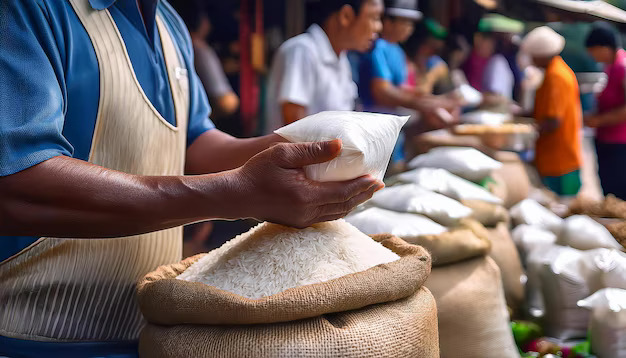
New-crop arrivals in North India are weighing on basmati prices, while tighter paddy availability in the south is pushing up Sona Masoori, Ponni and everyday rice varieties
India’s wholesale rice market is moving in two distinct directions, with basmati prices easing on improving new-crop arrivals in northern markets even as non-basmati varieties register broad-based increases amid tighter supply conditions in the south. Indicative wholesale rates published by PingB2B on November 17, 2026, show 1121 Basmati Steam declining 6 per cent to Rs 94 per kg, while Sona Masoori Raw has climbed 9 per cent to Rs 63 per kg on an all-India basis.
The price movements, based on rates recorded as of November 13, reflect a comparison with PingB2B’s previous rate board of September 4. The platform’s indicative prices exclude GST and are subject to variation depending on grade, order volume and supplier.
The divergence underscores the growing influence of regional crop conditions on India’s rice trade. In the basmati segment, rising new-crop arrivals in North India and slower buying following an earlier price rally are putting pressure on lower and mid-range grades. Export-oriented varieties, however, are holding relatively firm. In contrast, weaker monsoon conditions and reduced paddy acreage in southern India are tightening supplies of key non-basmati varieties, particularly Sona Masoori and Ponni.
Basmati market cools as new-crop supplies improve
The basmati market is showing signs of correction as fresh arrivals gather pace across northern producing regions. Buyers have moderated their purchasing activity after the earlier rally, particularly for lower and mid-range grades, creating downward pressure on wholesale prices. 1121 Basmati Steam, one of the key traded varieties, is quoted at Rs 94 per kg nationally, down 6 per cent against the September benchmark. Prices stand at Rs 108 per kg in Delhi, Rs 99 in Jaipur, Rs 94 in Bangalore, Chennai and Pune, and Rs 86 in Surat.
1121 Basmati Golden Sella is priced at Rs 83 per kg nationally, down 5 per cent, while 1718 Basmati Steam has edged down 1 per cent to Rs 93 per kg. Pusa Steam remains unchanged at Rs 85 per kg, indicating relatively stable trading conditions in this segment. Not all basmati grades are following the downward trend. 1509 Basmati Steam has risen 2 per cent to Rs 82 per kg nationally, with prices increasing to Rs 95 in Delhi and Rs 87 in Jaipur. Its rates in Bangalore, Chennai and Pune are at Rs 82 per kg, while Surat is quoting Rs 76.
The variation across grades points to a market in which supply pressure is not uniform. While improved arrivals are influencing prices in several categories, export demand and grade-specific requirements continue to support selected varieties.
Southern supply constraints lift Sona Masoori and Ponni
The non-basmati segment is facing a different set of market fundamentals. Weaker monsoon conditions in southern India and reduced paddy acreage have tightened supply expectations, pushing up prices of varieties with significant regional consumption. Sona Masoori has emerged as one of the strongest movers, with its all-India wholesale price rising 9 per cent to Rs 63 per kg. The increase is particularly sharp in Chennai, where the rate has climbed 20 per cent to Rs 75 per kg. Delhi is quoting Rs 83 per kg, up 11 per cent, while Jaipur and Bangalore have recorded Rs 78 and Rs 75 per kg, respectively.
Prices have also increased to Rs 64 per kg in Hyderabad and Rs 72 in Pune. The broad-based movement suggests that the firmness in Sona Masoori is extending beyond its traditional southern markets. Ponni Parboiled has similarly strengthened, rising 4 per cent to Rs 54 per kg nationally. Chennai prices have increased 16 per cent to Rs 68 per kg, while Bangalore and Hyderabad are quoting Rs 57 per kg, both higher than the previous benchmark. Pune is at Rs 47 per kg, up 1 per cent.
The pressure is also extending to widely traded everyday grades. IR 64 Parboiled has increased 3 per cent to Rs 41 per kg nationally, with prices ranging from Rs 35 in Kolkata to Rs 45 in Pune and Surat. PR 11/PR 14 Steam has risen 4 per cent to Rs 52 per kg, while its Delhi price stands at Rs 54. The increases indicate that tighter supply conditions are influencing not only speciality regional varieties but also rice grades serving broader domestic consumption and processing markets.
Broken rice prices add to market uncertainty
Broken rice is also showing an upward movement. Its indicative all-India wholesale price has increased to Rs 35 per kg, up 1 per cent against the September rate board. City-level prices include Rs 35 in Bangalore, Rs 36 in Chennai, Rs 34 in Hyderabad, Rs 39 in Pune, Rs 32 in Kolkata and Rs 36 in Surat. The movement comes against a broader increase in the government’s all-India average wholesale price for broken rice, which rose approximately 5 per cent between October 10 and November 2.
Trade expectations are also being influenced by the possibility of restrictions on broken rice exports. Exporters have flagged the prospect of curbs, although any policy decision would need to be confirmed by the government. The segment is relevant to more than the table-rice market. Broken rice is used across feed and industrial applications, making its availability and pricing important for a wider set of downstream buyers. Any change in export policy could alter domestic supply expectations and influence procurement decisions.
Regional price gaps expose the complexity of rice procurement
The latest rate board highlights substantial differences between national averages and prices in individual markets. These variations reflect the influence of local availability, procurement channels, transportation costs and regional demand. Sona Masoori, for instance, is quoted at Rs 83 per kg in Delhi against an all-India rate of Rs 63. Chennai and Bangalore are both at Rs 75 per kg. HMT rice has recorded a particularly sharp increase in Hyderabad, where the indicative price stands at Rs 77 per kg, up Rs 30 against the September benchmark. Pune is quoting Rs 76 per kg, up Rs 8.
Speciality regional varieties are commanding distinct price points. Seeraga Samba is priced at Rs 133 per kg in Chennai, up Rs 18, while Indrayani has reached Rs 75 per kg in Pune, an increase of Rs 3. These differences underline why national averages alone may not adequately capture the economics of rice procurement. For millers, wholesalers and institutional buyers, the actual purchase price depends on the variety, grade, local supply conditions and quantity being sourced.
Divergent supply trends shape the near-term outlook
The latest wholesale data points to a market increasingly influenced by crop-specific and regional supply dynamics. Improving arrivals are easing prices across several basmati grades, although export-oriented varieties continue to show relative resilience. Non-basmati rice, meanwhile, is facing upward pressure as weaker monsoon conditions and reduced paddy acreage constrain supplies in parts of southern India. The rise in broken rice prices adds another variable, particularly as traders assess the possibility of changes to export policy. For millers, exporters, wholesalers and bulk buyers, the immediate challenge is to manage procurement amid these contrasting trends. The next weekly price assessment will provide a clearer indication of whether the basmati correction and non-basmati rally are developing into sustained market movements or remain adjustments linked to the current crop and arrival cycle.
Source: PingB2B indicative wholesale rice rates, updated November 17, 2026. Prices are as of November 13, 2026, compared with the September 4 rate board. All prices are in Rs per kg and exclude GST. Actual transaction prices may vary by grade, quantity and supplier.
https://agrospectrumindia.com/features/24/35189/indias-rice-market-splits-as-basmati-prices-decline-and-non-basmati-grades-rally.htmlPublished Date: November 24, 2026


 READ