Downloads
 Login
 Register


Tags
Indian farmers fetch record prices for premium paddy varieties as El Nino impacts production
Consumers may have to pay more for rice in the coming months as growers get over ₹1,000 a quintal than the minimum support price fixed for paddy
By Subramani Ra Mancombu
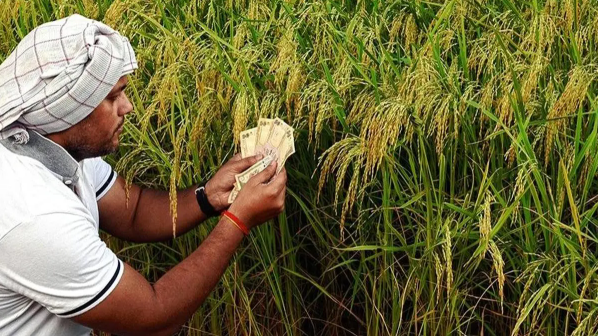
Indian farmers growing premium paddy varieties are fetching at least ₹1,000 a quintal more than the minimum support price (MSP) fixed by the government. However, consumers may have to pay more for preferred rice varieties such as Sona Masuri and Kolam over the next few months, as production has been affected by deficient rains due to the impact of El Nino weather.
“Currently, farmers are receiving ₹3,600-3,700 per quintal for premium varieties of paddy. This is ₹1,1000 higher than the MSP, or even where States have a higher MSP by offering a bonus. Farmers have never witnessed such benefit ever before,” said S Chandrasekaran, a Delhi-based trade analyst.
For example, BPT paddy modal price (rates at which most trades take place) was quoted at ₹3,600-4,500 per quintal at quite a few agricultural produce market committee (APMC) yards in Andhra Pradesh’s Bapatla district. In most Karnataka APMC yards, paddy prices are over ₹3,000 and are quoted as high as ₹5,200. The government has fixed ₹2,461 as the MSP for Grade A paddy this year.
Impact on exports
This has led to varieties such as Sona Masuri and Kolam becoming pricey, and the trend could continue over the next few months. The cereal’s production has been affected in South India, particularly in Karnataka, parts of Andhra Pradesh and Telangana.
This is impacting exports, too. Currently, rates offered by millers are valid for less than a day only, say some exporters. However, others say it depends on the situation and the type of relationship among millers, traders and brokers.
“For us, the quote offered by millers is valid only for six hours. This is because prices are changing by the hour,” said New Delhi-based exporter Rajesh Paharia Jain.
‘Relationship matters’
“There is no hard and fast rule over the rates. It can be valid for over 24 hours too. If people can clinch the deal over phone, then there should be no problem,” said BV Krishna Rao, President of The Rice Exporters Association (TREA).
“Normally, millers give 2-3 days time to exporters and traders. It has been reduced to a day,” said M Madan Prakash, President of Tamil Nadu Agri Commodities Exporters Association.
“Relationship matters. It could be between an exporter and a miller or a broker and the exporter and miller. It also depends on the volume purchased from the miller,” said Suraj Agarwal, Vice-President (West Bengal), Indian Rice Exporters Federation (IREF).
Buyers’ market still
Jain said the price of parboiled rice (common variety) has increased by ₹100 a quintal in the past couple of weeks to ₹3,550. The price of white rice has increased to ₹3,350 from ₹3,200 a quintal.
Parboiled rice ( 5% broken) is quoted at $395 a tonne, while white rice (5% broken) is quoted upwards of $380, he said.
“It is still a buyers’ market with usual trading on in the export market,” said Rao, adding that BPT rice is ruling at ₹80 a kg, while its variants are quoted at ₹60-80.
“FCI rice is available at ₹35 a kg, but premium rice is around ₹70,” he said.
Fear grips market
Currently, fears of the impact of El Nino weather have gripped the rice market in the export and domestic markets. “For example, the Govind Bhog variety’s paddy is soft. Heavy rain could affect its quality, said Agarwal.
Non-basmati rice production has been particularly affected in Karnataka, where half of the crop is delayed due to deficient monsoon. Levels in reservoirs are low, so the State government may accord priority for drinking water, he said.
“Arrivals of the Kharif crop have begun, and they are expected to peak within a few weeks. The MSP is a floor price and not a ceiling price. This year farmers are benefiting from higher prices. Millers, traders and exporters are struggling,” said Chandrasekaran.
Driving rates in UP, Bihar
Agarwal said the shortage in Karnataka is helping drive up prices of some varieties in Bihar and UP varieties. These are seen as substitutes for Kolam rice and are ruling above ₹3,300.
“In Karnataka, no quotes are offered for Kolam rice since the situation is bad,” said the IREF vice-president. On the other hand, the area under Sona Masuri in States such as Bengal has declined.
“Farmers did not get a good price for Sona Masuri until last year. They have shifted to Govind Bhog rice as its returns are higher,” he said, adding that the country has become a unified market, where shortage in one region is leading to a rise in prices in other regions.
Chandrasekharan said though current paddy premium is a temporary boost in farm income, “the opportunity is good for additional rural growth”.
Record stocks
“The government has to be careful in planning any market intervention to balance farm income and price,” he said.
India’s kharif rice production is feared to be at least 10 million tonnes lower than the 123.93 million tonnes produced last year. Paddy coverage has dropped by at least four per cent this year to 426.81 lakh hectares this year due to a deficit monsoon caused by the current El Nino weather.
However, as of September 1 this year, the Food Corporation of India, which stocks rice for emergency and various welfare schemes, had a record inventory of 39.05 million tonnes of rice. It also had good stocks of paddy, which could yield 30.75 million tonnes of rice.
https://www.thehindubusinessline.com/economy/agri-business/indian-farmers-fetch-record-prices-for-premium-paddy-as-el-nino-impacts-production/article71600779.ecePublished Date: October 22, 2026



 READ