Downloads
 Login
Login
 Register


Tags
Indian basmati rice exports likely to remain steady despite Middle East tensions
By bno – Mumbai bureau
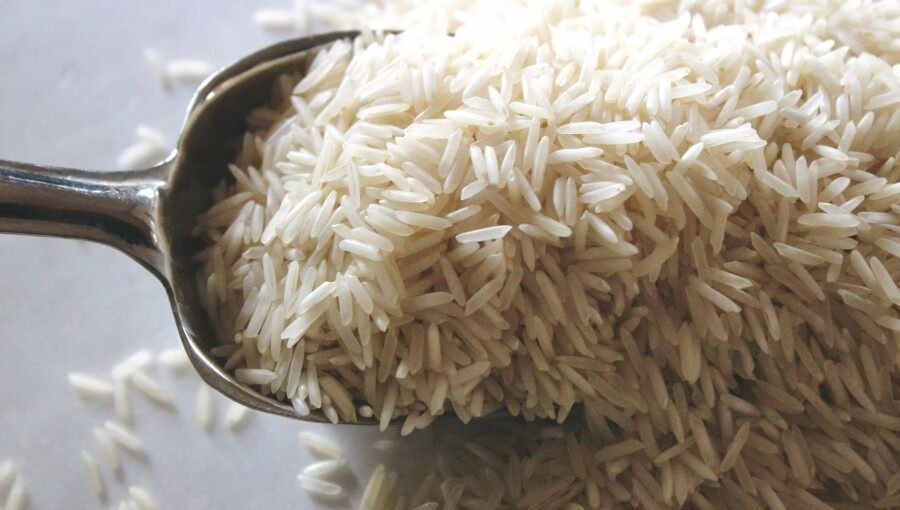
Indian basmati rice export volume is likely to remain steady in fiscal year 2025–2026 and fiscal year 2026–2027, with an increase of up to 2% over the export volume of 6.06mn tonnes (MT) recorded in fiscal year 2024–2025, despite the prevailing conflict in the Middle East, according to a report by Crisil Ratings published on March 16.
While the Middle East conflict may impact exports to Iran, a key market, higher demand from other markets in the region, such as Saudi Arabia, Iraq, the United Arab Emirates and Yemen, will provide an offset.
Crisil said that basmati rice exporters may experience an extended working capital cycle owing to logistical constraints, including vessel availability, transit times, and payment delays. This could lead to a rise in working capital debt, Crisil added.
However, exporters are expected to pass on any increase in freight and insurance costs to customers, thereby helping to secure their operating profitability. Balance sheets are expected to remain strong despite rising debt levels, thereby keeping credit profiles stable. An analysis of 47 companies rated by Crisil Ratings, accounting for about 60% of the overall Indian basmati rice industry revenue, indicates as much.
India is the world’s largest producer as well as exporter of basmati rice. The South Asian country contributes approximately 85% of the global basmati rice volume. In India, Haryana, Punjab and Uttar Pradesh are the main basmati rice-producing states. Most of the basmati rice produced in India is exported, as it is not the preferred variety in the local market. Exports make up nearly two-thirds of India’s yearly basmati rice sales by volume, making the industry highly vulnerable to geopolitics.
Iran is one of the largest buyers of Indian basmati rice, contributing close to 14% of the variety’s export volumes in the last fiscal year, while the Middle East and other West Asian countries together accounted for 70–72%. The current conflict in the region has impacted supply chains and may disrupt exports, especially to Iran.
If the logistical challenges remain in play for around a month, basmati rice trade volume is estimated to be impacted by 350,000–370,000 metric tonnes. However, demand from other countries in the region that are dependent on imports of basmati rice to maintain food security will help offset the negative impact, Crisil said.
Nitin Kansal, director, Crisil Ratings, stated that disruptions in the Strait of Hormuz, which is a vital transit route for rice exports to the Middle East, could result in the blockage of goods and delayed payments from customers in the short term. Nevertheless, Indian basmati rice export volume is likely to remain stable due to 5–6% higher demand expected from other Middle Eastern countries such as Saudi Arabia, Iraq, the United Arab Emirates and Yemen, which account for 55–60% of the export volume, Kansal added.
Next fiscal, basmati rice realisation is expected to be stable owing to resilience in demand and near-stagnant production of basmati paddy in key producing areas following excess rains.
Indian basmati rice exporters are also looking for alternative routes in order to bypass the Strait of Hormuz to ensure supply to the Middle East region.
Smriti Singh, associate director, Crisil Ratings, said that the alternative routes may lead to an increase in transit times. The possible aftermath of this is a lengthening of the working capital cycle of basmati rice exporters, resulting in a 10–15% expansion in working capital demands, which will need to be met through additional debt. However, healthy balance sheets of Crisil-rated companies will keep their credit profiles stable, Singh added.
India’s foodgrain production outlook
India’s Ministry of Agriculture and Farmers Welfare earlier this month unveiled the second advance estimates of production of major crops for the year 2025–26. The second advance estimates take into account Kharif, or the summer crop season, and Rabi, or the winter crop season.
The government said that the foodgrain production scenario “appears very strong” and is at a record level. According to the second advance estimates for 2025–26, Kharif foodgrain output is likely to touch 174.144mn metric tonnes and Rabi foodgrain production is expected to be 174.513mn metric tonnes. This is roughly 4.6mn metric tonnes (2.8%) and 5.3mn metric tonnes (3.2%) higher, respectively, compared to last year’s Kharif foodgrain production of 169.460mn metric tonnes and Rabi foodgrain production of 169.166mn metric tonnes.
According to the second advance estimate, Kharif rice production could be 123.928mn metric tonnes, higher than 122.772mn metric tonnes witnessed in the previous year. The rice output in the Rabi season is estimated to touch 16.72mn metric tonnes. Wheat production is estimated at 120.21mn metric tonnes, higher than the previous year’s production of 117.945mn metric tonnes, the government said.
Maize output in the Kharif season is estimated at a record 30.247mn metric tonnes and Rabi maize output at a record 15.903mn metric tonnes.
https://www.intellinews.com/indian-basmati-rice-exports-likely-to-remain-steady-despite-middle-east-tensions-432527/?source=iranPublished Date: March 19, 2026


 READ
READ