Downloads
 Login
Login
 Register


Tags
Importers must buy palay to get rice import allocations
Ada Pelonia
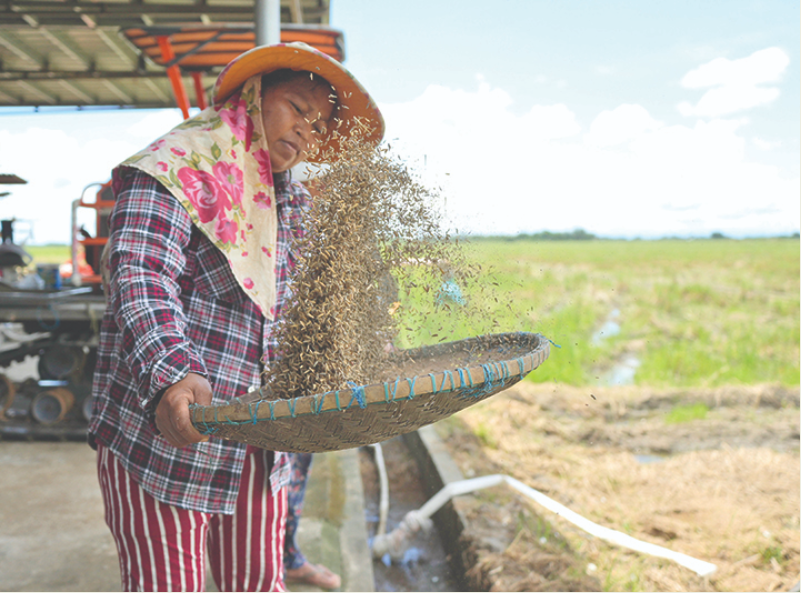
THE Department of Agriculture (DA) will require importers to purchase palay to secure rice import allocations in the second half of 2026.
Agriculture Secretary Francisco Tiu Laurel Jr. said the passage of the Rice Industry and Consumer Empowerment (RICE) Act will serve as the legal basis for the initiative.
“Technically, this system should self-police everybody and remain transparent. The allocations won’t be subjective,” he told reporters on the sidelines of the induction of the new officers of the Economic Journalists Association (EJAP) on Monday night.
He expressed hope that at least a version of the plan should be implemented in the second half of the year, with an already “solid” system by end-2026.
While the purchase of paddy rice to import ratio was yet to be decided, Tiu Laurel said the agency has created a technical working group (TWG) composed of representatives from the government and industry stakeholders for data-driven policies.
The TWG will refine a two-layer system to determine the necessary volume of rice imports while also pointing to when and where it should go, down to provincial and regional levels, according to the DA.
Future import volume and timing will be data-guided, indicating a calibrated system for Luzon, the Visayas, and Mindanao, and eventually priced per province, it added.
The agency hopes that the creation of the TWG will ensure enough imported rice enters the market to temper prices without overwhelming local harvests.
“We’ve already asked stakeholders to record what they purchased locally—palay or rice—since this can be considered as part of the future allocations,” Tiu Laurel said.
He noted that production from the farmer level should also be looked into, including where they sold their harvest, the trader who purchased it, when the paddy rice was milled, and even the market selling it for retail.
“There’s a need to look at the whole distribution system to rationalize it properly and efficiently. We need data-driven decisions, so nothing would be decided out of guesswork,” Tiu Laurel said.
For 2026, the DA chief said the country’s rice arrivals should stand at 3.8 million metric tons (MMT), including the 200,000 metric tons (MT) buffer stock.
If realized, this will be higher than the 3.38 MMT recorded total volume of imports last year.
Image credits: Nonie Reyes
https://businessmirror.com.ph/2026/02/10/importers-must-buy-palay-to-get-rice-import-allocations/Published Date: February 11, 2026


 READ
READ