Downloads
 Login
Login
 Register


Tags
Hidden Resistance Genes in Northeast Indian Rice Could Transform Blast Disease Fight
by Bioengineer
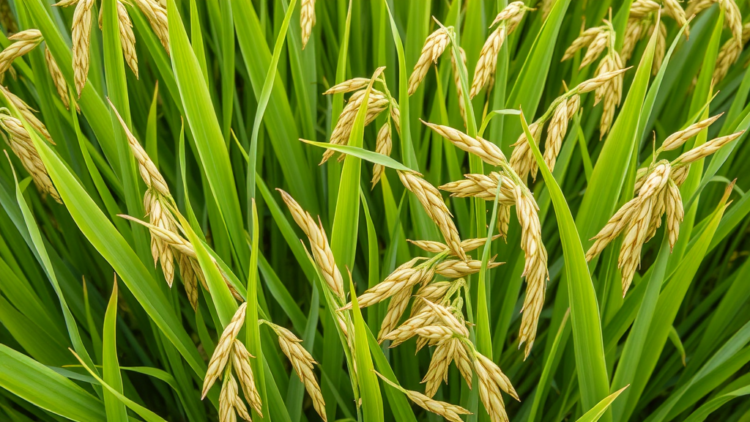
Deep in the hills and valleys of Northeastern India, thousands of rice landraces have been quietly evolving alongside one of agriculture’s most destructive pathogens. A new study suggests that this remote genetic treasure trove may hold some of the most powerful defenses against rice blast disease ever catalogued in the region. Researchers from Central Agricultural University, Imphal, and partner institutions have screened 58 rice genotypes from Northeastern India for the presence of major blast resistance genes, and the results point to a remarkable concentration of disease-fighting traits hiding in plain sight among traditional varieties.
Rice blast, caused by the fungus Magnaporthe oryzae, is widely regarded as the most devastating disease of rice worldwide. The pathogen attacks leaves, stems, and critically the grain-bearing panicles, and under favorable conditions it can wipe out a substantial share of a harvest. Farmers have long relied on fungicides and resistant cultivars, but the fungus is notorious for its ability to mutate and overcome single-gene defenses. That makes the search for broad-spectrum and stacked resistance genes a central priority for rice breeders everywhere, and it is precisely what makes the new findings so significant.
The research team, led by Thokchom Nepolian Singh and colleagues at the College of Agriculture, Central Agricultural University, Imphal, set out to determine which of the well-characterized blast resistance genes are already present in the region’s germplasm. Fifty-eight genotypes collected from across Northeastern India were evaluated, alongside a susceptible control genotype known as HR-12 and a resistant check variety called Tetep, a famous donor of blast resistance originally from Vietnam. The team grew all entries in a uniform blast nursery, an experimental setting designed to apply intense, natural disease pressure so that the true resistance reactions of each genotype could be observed and scored.
In parallel with the field evaluation, the researchers employed fourteen gene-specific molecular markers to detect the presence of known resistance genes in each genotype’s DNA. This marker-assisted screening approach exploits the fact that most major resistance genes can be tracked through tightly linked DNA sequences, allowing breeders to identify valuable genes without waiting years for field validation. The molecular analysis revealed a strikingly high frequency of resistance genes across the collection, confirming that Northeastern Indian rice landraces represent a largely untapped reservoir of blast resistance.
Among the genes surveyed, Pik-p emerged as the most widely distributed across the screened genotypes. It was followed closely by Piz, detected in 96.66 percent of the material, Pi40(t) at 93.33 percent, and Pi-ta at 90.00 percent. Several other important genes also appeared at notable frequencies, including Piz-t at 86.66 percent, Pi40 at 83.33 percent, and Pik at 73.33 percent. These genes are not interchangeable; each encodes a different intracellular immune receptor of the nucleotide-binding, leucine-rich repeat class that recognizes specific secreted proteins from the blast fungus, triggering a defensive hypersensitive response that halts pathogen spread.
The standout discoveries, however, were two genotypes named Itanagar and Tomila, which carried eleven different blast resistance genes each. That level of natural gene stacking is rare and makes these landraces exceptionally valuable as donor parents for breeding programs aiming to engineer durable resistance. Gene stacking is widely considered the most reliable strategy against blast because the fungus would need to simultaneously overcome multiple immune recognition systems to successfully infect the plant, a far more difficult evolutionary feat than defeating a single gene.
Close behind the top performers, seven additional genotypes each harbored ten resistance genes: Chakhao Poreiton, Chakhao Chandel-2, Liangneng Chakhao, Barbite rice, Hungyo, Chamiyak, and Lamyanba. The presence of multiple resistance genes in these traditional aromatic and local varieties is particularly encouraging because several of them, such as the Chakhao cultivars prized in Manipur for their distinctive aroma and cultural value, are already of economic and gastronomic importance. Improving their agronomic performance while retaining their intrinsic qualities becomes far easier when they already carry elite disease-resistance genetics.
The technical workflow behind these findings reflects standard best practice in modern plant pathology and genetics. High-molecular-weight genomic DNA was isolated from young leaf tissue, and polymerase chain reactions were run using primers specific to each resistance gene locus. Amplified fragments were then separated on agarose gels, and the presence or absence of the expected band sizes served as evidence for each gene. Combining this molecular passport with disease scores from the uniform blast nursery allowed the team to link genetic potential with actual field performance, a critical validation step that pure molecular screens sometimes lack.
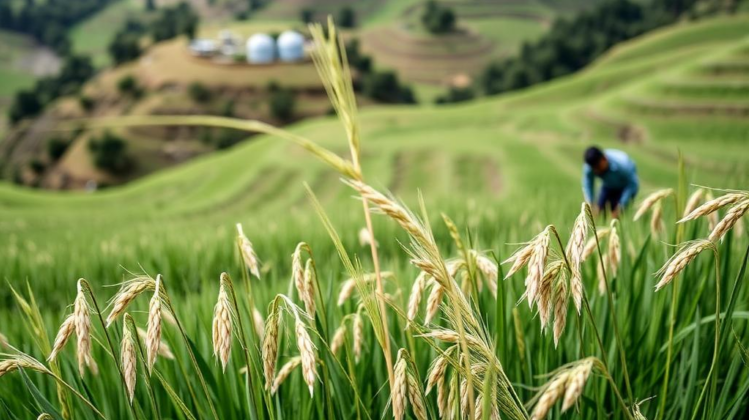
The broader context of the work is equally important. Rice is the staple crop for billions of people, and Northeastern India is recognized as one of the centers of rice genetic diversity, home to landraces adapted to steep terrains, variable rainfall, and diverse pest pressures. Much of this diversity remains genetically uncharacterized, and as modern high-yielding varieties displace traditional cultivars, unique alleles risk being lost before their value is known. Studies like this one serve as both a rescue mission and a roadmap, documenting which resistance genes exist where, before that information and the germplasm itself disappear.
For breeders, the practical implications are immediate. The multi-gene genotypes identified here can be crossed with elite varieties and their offspring tracked using the same gene-specific markers, enabling precise introgression of resistance cassettes without dragging along undesirable traits. Gene pyramiding through marker-assisted backcrossing has already proven effective in improving Basmati and japonica rice cultivars elsewhere, and the Northeastern Indian donors identified in this study offer locally adapted, genetically diverse material for the same strategy. As blast continues to threaten rice production in a changing climate, the humble landraces of the region’s terraced hills may prove to be among the most important allies in keeping one of the world’s most vital food crops safe.
Subject of Research: Molecular screening of blast resistance genes in Northeastern Indian rice germplasm (Oryza sativa L.)
Article Title: Molecular Screening for Identification of Blast Resistance Genes in Northeastern Indian Rice Germplasm (Oryza sativa L.)
Article References: Singh, T. N., Saharia, D. D., Biswas, D., Devi, O. P., Pyngrope, A. H., Singh, N. B., Kh., P., Manjunath, P., Devi, T. R., Phurailatpam, S., Ngangkham, U., Devi, E. L., & Chongtham, S. K. (2026). Molecular Screening for Identification of Blast Resistance Genes in Northeastern Indian Rice Germplasm (Oryza sativa L.). Indian Journal of Genetics and Plant Breeding, 86(3), 292-302. https://doi.org/10.1007/s44489-026-00032-1
Image Credits: AI Generated
DOI: 10.1007/s44489-026-00032-1
Keywords: rice blast, Magnaporthe oryzae, blast resistance genes, Northeastern India, rice germplasm, marker-assisted selection, gene pyramiding, Oryza sativa, Pik-p, Pi40(t), landraces, plant breeding
https://bioengineer.org/hidden-resistance-genes-in-northeast-indian-rice-could-transform-blast-disease-fight/Published Date: September 21, 2026


 READ
READ