Downloads
 Login
Login
 Register


Tags
Global Rice Prices Stagnate as Indian Surplus Offsets War Risks

- Despite war-related risks in the Middle East causing a 10-15% surge in costs for exporters, global rice prices have remained stable.
- A massive surplus and large stockpiles from India are the primary reason for the price stagnation, offsetting the inflationary pressures from the conflict.
- Indian rice is being offered at a lower price ($340–$345 per tonne) than competitors, with an additional 500,000 tonnes in transit further suppressing market prices.
Thai exporters face a 15% surge in costs due to Middle East conflict, while a “mammoth” Indian stockpile prevents a spike in global market prices.
Despite escalating conflict in the Middle East, global rice prices remain stubbornly flat, leaving Thai exporters to grapple with soaring overheads and disrupted shipping routes.
Chookiat Ophaswongse, honorary president of the Thai Rice Exporters Association, revealed that production and logistics costs for farmers and exporters have climbed by at least 10–15%.
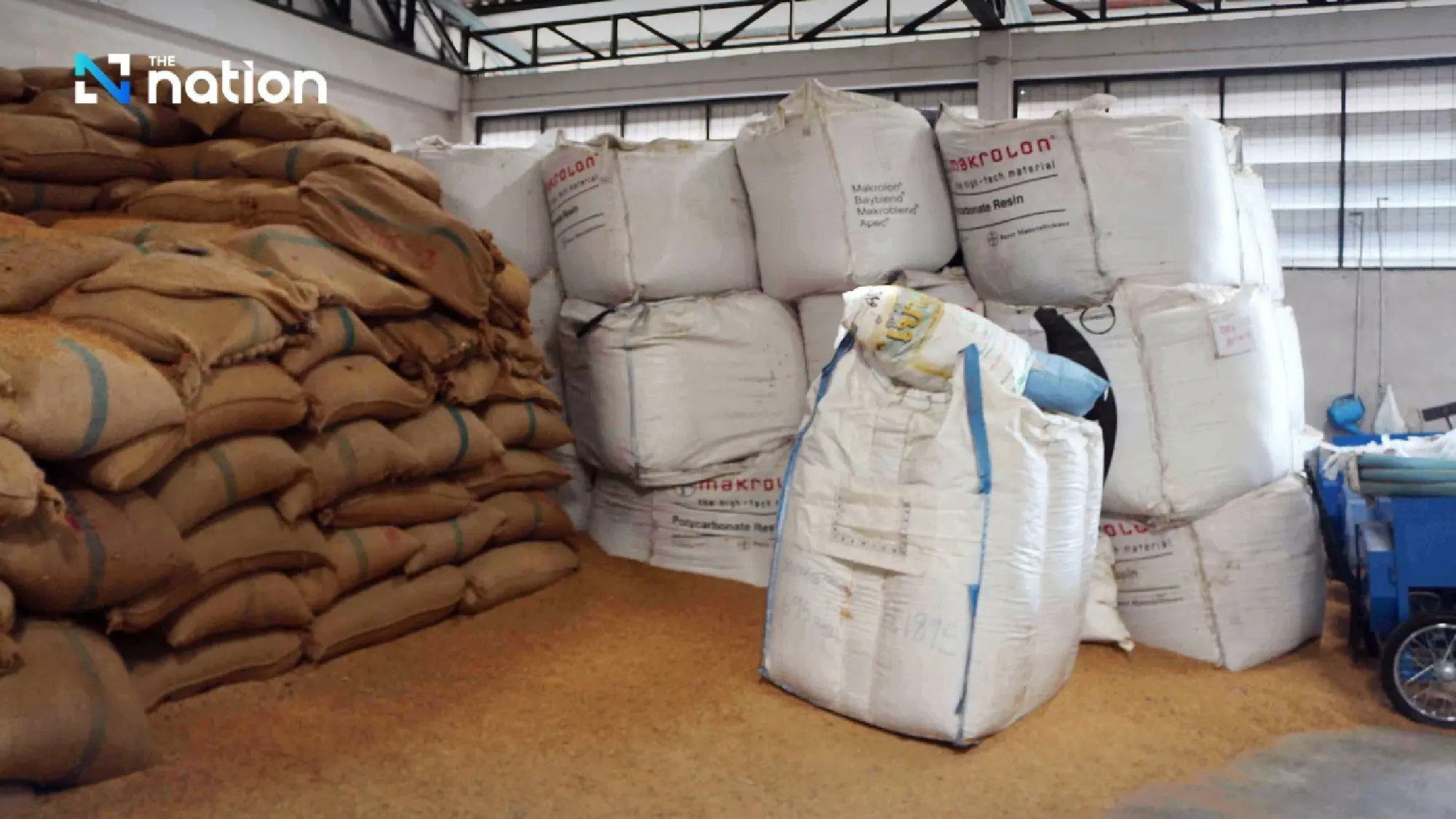
The surge is driven primarily by rising diesel prices—affecting everything from harvesting to transport—and a jump in packaging costs. Polypropylene sacks, for instance, have risen from 8 baht to 11 baht ($0.32) per bag.
“It is a peculiar situation,” Chookiat noted. “Normally, during a war, the price of a staple like rice would rise. However, the global market remains still because the world is currently awash with supply, particularly from India’s massive stockpiles.”
The price gap between Thai and Indian grain remains a significant hurdle. While the Thai baht’s recent depreciation has offered some competitive edge, Indian exporters continue to undercut the market.

Thai white rice is currently priced at $365 per tonne, whereas Indian rice is being offered at $340–$345.
Furthermore, an estimated 500,000 tonnes of Indian rice currently afloat or delayed en route to the Middle East is reportedly putting further downward pressure on prices as sellers look to offload stock.
The conflict has hit Thailand’s primary markets hard, particularly Iraq, which is the kingdom’s top buyer at roughly one million tonnes per year. Shipments to the region have largely ground to a halt as vessels are unable to dock safely.
“Customers have suspended deliveries because they cannot afford the surcharges or the costs of having ships idling at sea for extended periods,” Chookiat explained.
If the disruption persists, Thailand may struggle to meet its 2026 export target of seven million tonnes.
While exporters acknowledge that government subsidies for fuel are unlikely, they are calling for the state to intervene in the cost of raw materials.
The association is urging officials to monitor the prices of plastic pellets and packaging to prevent “opportunistic” price hikes by suppliers claiming to be affected by the crisis despite holding existing stock.
https://www.nationthailand.com/business/trade/40064320Published Date: March 27, 2026


 READ
READ