Downloads
 Login
Login
 Register


Tags
China rejects rice cargoes, citing GMOs
Rejection comes despite prior-shipment certification by Chinese agency.
BusinessLine (Chennai) – Prabhudatta Mishra New Delhi New Delhi
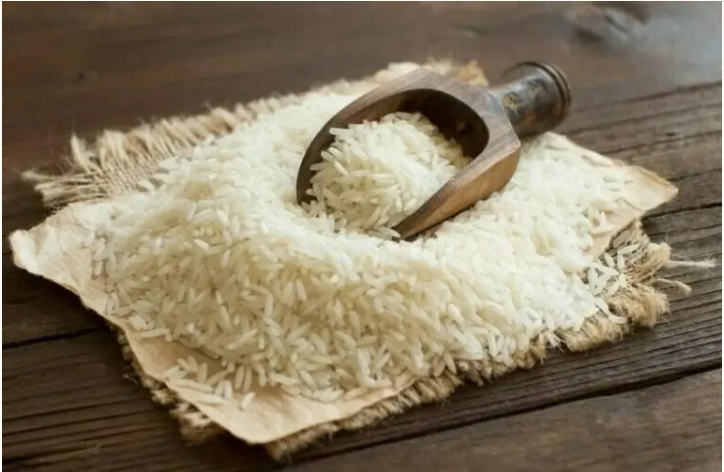
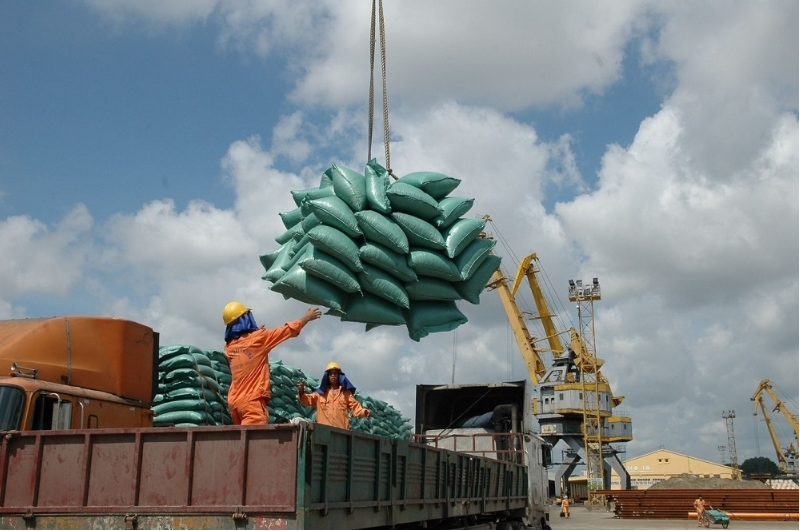
China has turned away three shipments of Indian rice, alleging the presence of genetically modified organisms (GMO) in what appears to be a calculated attempt to gain leverage in trade talks. The rejection comes despite the fact that the nonbasmati rice consignments were tested and cleared by a Chinese agency before they were shipped.
India has yet to permit the commercial cultivation of any GM food crops, with cotton remaining the only genetically modified one authorised in the country. The affected companies have taken up the matter with India’s agriexport promotion body, Apeda, as well as the Indian Council of Agricultural Research, according to industry sources.
In its representation to ICAR, Nagpurbased Shriram Food Industry said Chinese buyers and authorities were demanding an official declaration confirming that rice grown in India is nonGMO, even though only nonGMO paddy is cultivated nationwide. The company requested that ICAR issue a general statement or declaration confirming this.
“This would be extremely helpful for exporters like us as several shipments to China are currently facing difficulties during clearance due to the absence of such a document,” the firm noted in its communication.
Anup Goyal, Chairman and Managing Director of Shriram Food, said the India office of the China Certification & Inspection Group (CCIC), a Chinese Stateowned company, had inspected and certified the shipments, yet they were rejected by Chinese customs upon arrival.
Goyal stated that they had requested Apeda to investigate how these consignments were rejected on grounds of GMO presence after receiving prior clearance.
Industry sources pointed out the irony in the situation, noting that China itself grows GM rice. In 2006, the European Union even flagged concerns regarding GM contamination in Chinese rice exports.
WHY ONLY INDIA?
Foreign trade policy expert S Chandrasekaran wondered why China is demanding GMfree declarations specifically from India and not from competitors like Thailand, Vietnam, Pakistan or Myanmar. He said China may be engaging in strategic trade planning regarding its rice supply.
Data show that India exported 1,80,805 tonnes of nonbasmati rice worth $79.43 million to China in 202425. During the AprilJanuary period of the current fiscal year, the volume was higher at 1,86,013 tonnes, though the value was lower at $65.59 million. Because China previously restricted Indian rice through nontariff barriers, exports were minimal until 201920, totalling only 567 tonnes, but surged to 3,31,571 tonnes in 202021 after the curbs were removed.
USDA data indicate that China’s rice imports are estimated to rise to 3.1 mt in 202526 from 2.3 mt in 202425. Chandrasekaran said while India had deregulated certain modern breeding techniques to enhance climate resilience, China maintains a highsecurity, processbased approach that may view these techniques as a biosafety risk.
Our Bureau
With a coverage of over 16 lakh hectares (lh) in the past month, sowing of summer (zaid season) crops, which will end by May, have reached 42.68 lh as of March 20. This is 2 per cent less than 43.69 lh reported in the yearago period. The crop is grown before kharif sowing and after rabi harvest.
Though the area under pulses and bajra is up, they are not able to make up for the overall drop in summer acreage as both paddy and maize crop acreage is lower this time.
Farmers seemed to be opting for pulses as per the government plan as all the thrust is on crop diversification.
The government has fixed a target of 19.67 million tonnes (mt) of foodgrain production from the summer crops which include 12.15 mt of rice, 4 mt of maize, 1.14 mt of nutri cereals and 2.39 mt of pulses in the 202526 crop year (JulyJune). The target for bajra (millet) is set at 1.1 mt, urad (black gram) 0.32 mt, moong 2.07 mt and oilseeds 1.37 mt.
Last year, the summer season’s production was 19.11 mt of foodgrains — 11.28 mt of rice, 3.85 mt of maize, 1.26 mt of nutri cereals and 2.72 mt of pulses. Besides, the output of bajra was 1.23 mt, urad 0.35 mt, moong 2.37 mt and oilseeds 1.33 mt.
The share of summer crops was 5.3 per cent in the total foodgrain production of 357.73 mt in 202425.
Per the weekly update released by the Agriculture Ministry, paddy sowing was down 3 per cent at 27.86 lh from 28.65 lh, while nutri/ coarse cereals area was 12 per cent down at 6.04 lh against 6.84 lh yearago.
Among the nutri/coarse cereals, maize area is 15 per cent lower at 4.24 lh from 5 lh, while bajra has reached 1.38 lh against 1.35 lh, and ragi and jowar are at 0.20 lh as of March 20.
MP URAD BONUS
Area under summer pulses reached 4.09 lh from 3.47 lh, in which coverage of moong reached 2.57 lh and urad 1.28 lh. The key growers of summer pulses are Madhya Pradesh, Bihar, Odisha, Tamil Nadu, Uttar Pradesh and Gujarat.
Madhya Pradesh, the main producer of summer moong, recently announced a bonus on the urad crop grown in summer.
Announcing the bonus of ₹600 per quintal over and above the minimum support price (MSP) of ₹7,800/ quintal for urad, the State government said the step was aimed at encouraging farmers to shift from moong during the summer (zaid) season.
https://www.pressreader.com/india/businessline-chennai-9wvv/20260325/281951729348637Published Date: March 25, 2026


 READ
READ