Downloads
 Login
 Register


Tags
Basmati farmers in Punjab, Haryana reap windfall as prices jump 53% to Rs 42 per kg
With basmati prices jumping from Rs 28 to Rs 45 per kg, Indian farmers see a windfall, though experts urge caution over market volatility.
Akanksha Mishra
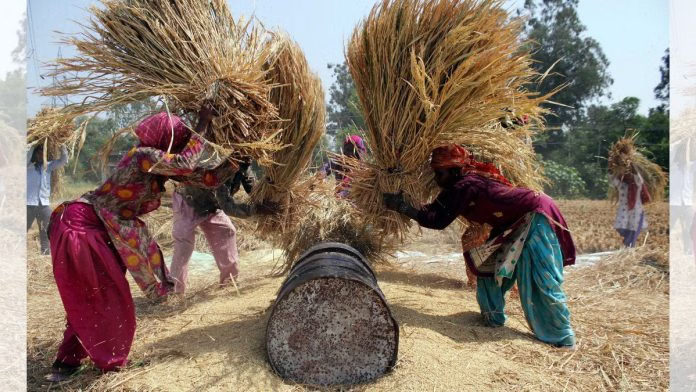
New Delhi: Basmati rice prices are 53 per cent higher than last year, at Rs 42 to Rs 45 per kg. In 2025, the rice was priced at Rs 28 per kg. As early basmati varieties such as Pusa 1509 hit the market, farmers, bureaucrats and mandis all reported higher prices for the fragrant rice, indicating a windfall for producers.
However, rather than an internal reason, experts argue that the rising cost of basmati rice is due to increased international demand, especially in Gulf countries.
“My analysis is that it is the Middle East and Gulf countries that are stockpiling this rice, and increasing demand because of the US-Iran crisis and the Strait of Hormuz closure,” said KBS Sidhu, retired IAS officer and former Deputy Commissioner of Amritsar, to ThePrint.
India is the world’s largest rice exporter, exporting more than 20 million metric tons of rice annually, out of which 6 million tonnes is basmati rice. More than half of the exported basmati goes to countries in West Asia, led by Saudi Arabia, UAE, Yemen, and Iran. While India supplies 70-80 per cent of the global basmati demand, the remainder is covered by Pakistan, the second-largest basmati exporter.
Since there is no minimum support price for basmati in India, the price of the crop each year is based on global demand. Last year, most Basmati variants sold for Rs 24 to 28 per kg. Farmers in Haryana and Punjab, the major basmati-growing belt, said that the cost of basmati indicates the shift in supply and demand.
“Our production this year has suffered a little due to unseasonal hailstorms and rains towards the end of harvest season. So this also could have raised prices,” Anil Beniwal, a farmer from Haryana’s Uchana district, told ThePrint.
Beniwal has grown the 1121 basmati variety on four acres of his land. He expects to sell it for Rs 45 to Rs 50 per kg given the current rates. While it is much better than last year, the money will only supplement his costs, rather than going towards savings.
“It is great to see basmati get its due, but it is also a costly crop to farm — it requires less water than normal paddy, but it requires the best quality water,” Beniwal said, adding, “If your tubewell has hard water, then forget about it.”
While farmers such as Beniwal expect a bonus as other basmati varieties — 1121 and Pusa 1718 — are set to hit the market in the coming weeks, experts like Sidhu expressed caution about what this means for the future.
“Since the prices are set by international factors, namely the Gulf countries’ demand, there’s no stability in them. If farmers take these prices at face value and increase production, and prices drop next year, they will suffer,” he said.
What is behind the price hike?
The All India Rice Exporters Association (AIREA) on 12 October reported how basmati farmers are reaping “war profits” as prices soar, indicating that the Iran-US crisis in the Gulf is responsible for increased basmati prices.
The US-Iran crisis, which began in February 2026, choked the Strait of Hormuz, a key maritime route into the Persian Gulf. In early March, the AIREA said that around four lakh tonnes of basmati rice from India was stuck, both in transit as well as in Indian ports such as Mundhra and Kandla, bound for the Middle East.
While the Strait of Hormuz is still closed for commercial shipping, the hike in basmati prices is not due just to this. Instead, Ashok Sethi, head of the Punjab Basmati Rice Exporters Association, describes this price rise as a change in the consumption pattern of Middle Eastern countries.
“There’s heavy demand in the Middle East, because every country has been hit by uncertainties and price shocks. Now they all want to shore up their reserves. Basmati demand is created by these countries, since they anyway import most of our produce,” said Sethi.
The prices are driven by countries such as the UAE, Saudi Arabia, and Iran stockpiling their basmati rice reserves, especially as geopolitical uncertainties in the area mount. This is also visible in the fact that in 2025, India exported around 6.5 million tonnes of basmati rice, its highest in a decade, but farmers peg this year’s supply to only be slightly lower than that.
This shows that low production is not the reason for high prices. Instead, the bulk buying of basmati by Gulf countries as reserve stocks, after the uncertainty brought on by the Hormuz crisis, is driving up prices.
“But who knows what the world’s situation will be like next year? We can’t guarantee these prices, or these conditions. Still, despite the price fluctuation, I would urge Punjabi farmers to grow basmati because it is suited for this land, and requires less water,” said Sethi.
However, basmati farmers in Haryana and Punjab are still sceptical about the price, aware of the market’s fickle nature.
“Just because basmati got a good price this year doesn’t mean it will last – we’ve all seen the highs and lows of the market. I don’t think too many farmers are going to be switching to basmati anytime soon too; the input costs are too high. There’s no guarantee like MSP,” said Jagjit Singh, a farmer based in Amritsar.
(Edited by Insha Jalil Waziri)
https://theprint.in/environment/basmati-farmers-in-punjab-haryana-reap-windfall-as-prices-jump-53-to-rs-42-per-kg/3077532/Published Date: October 21, 2026


 READ