Downloads
 Login
Login
 Register


Tags
Bangladesh Faces Rice Shortages Amid Flash Floods and Iran War Fuel Crisis
Haor Basin farmers are trapped in a cycle of crop loss and mounting debt
By Anik Rahman
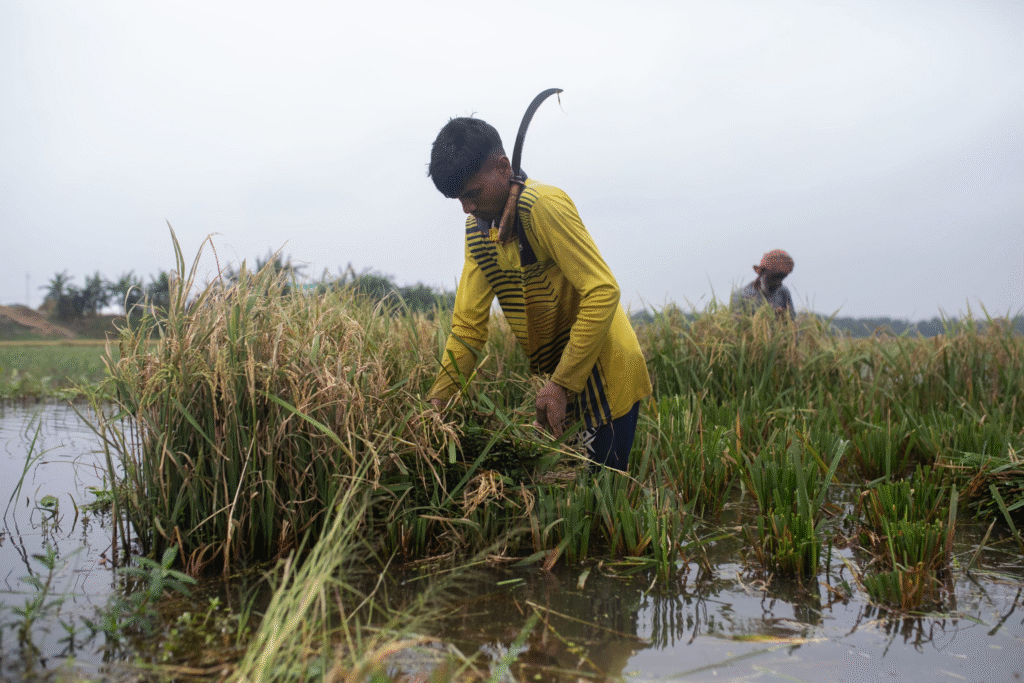
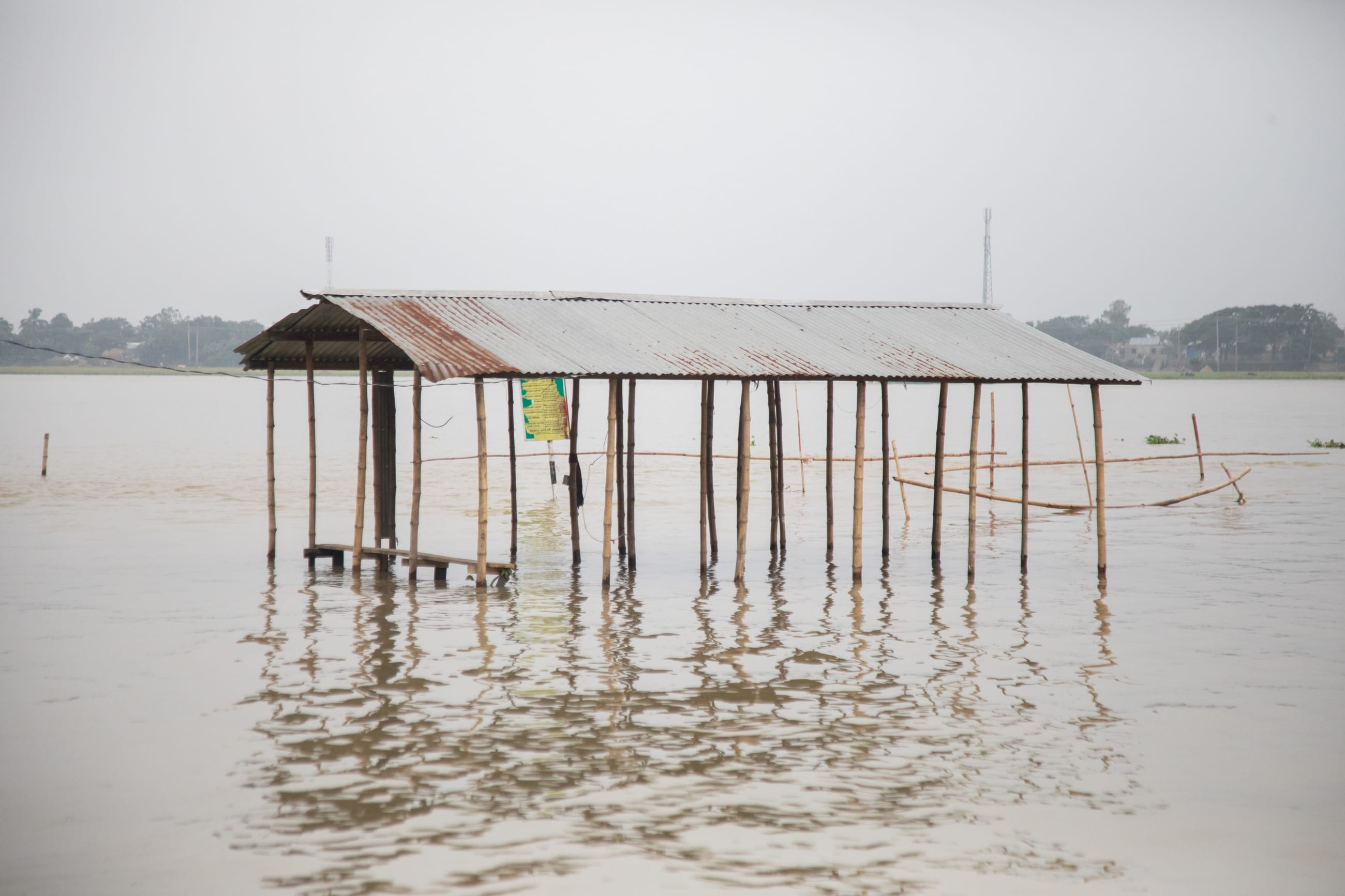
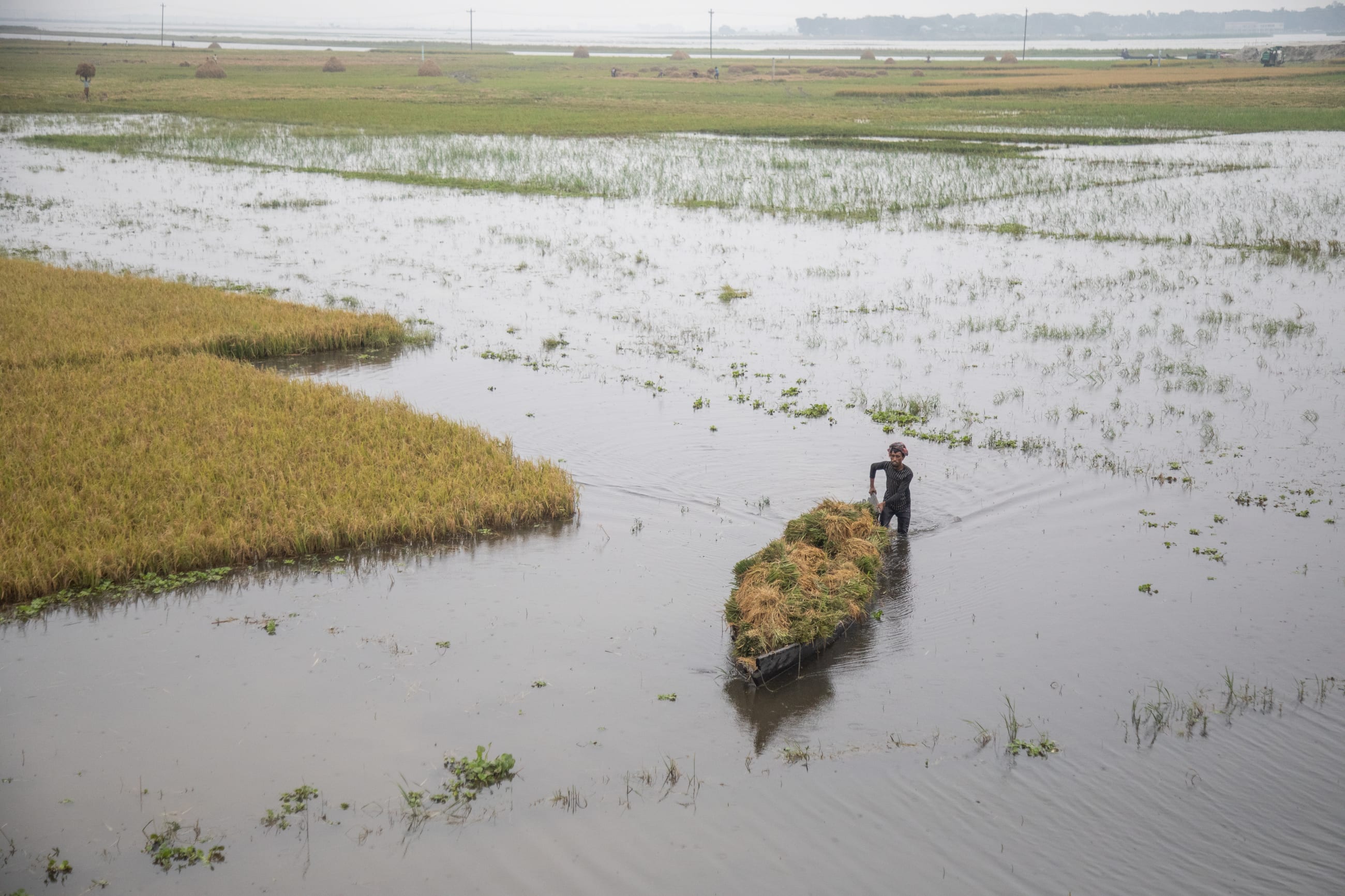
n late April, Bangladesh’s Haor Basin was hit by out-of-season flash floods. Rainfall across all seven districts of the basin ran nearly 76% above normal. In Kishoreganj, the Bangladesh Meteorological Department’s Nikli station recorded more than 6 inches of rain in a single day, and the World Food Program recorded double the amount of rainfall in Bangladesh compared to the same period last year.
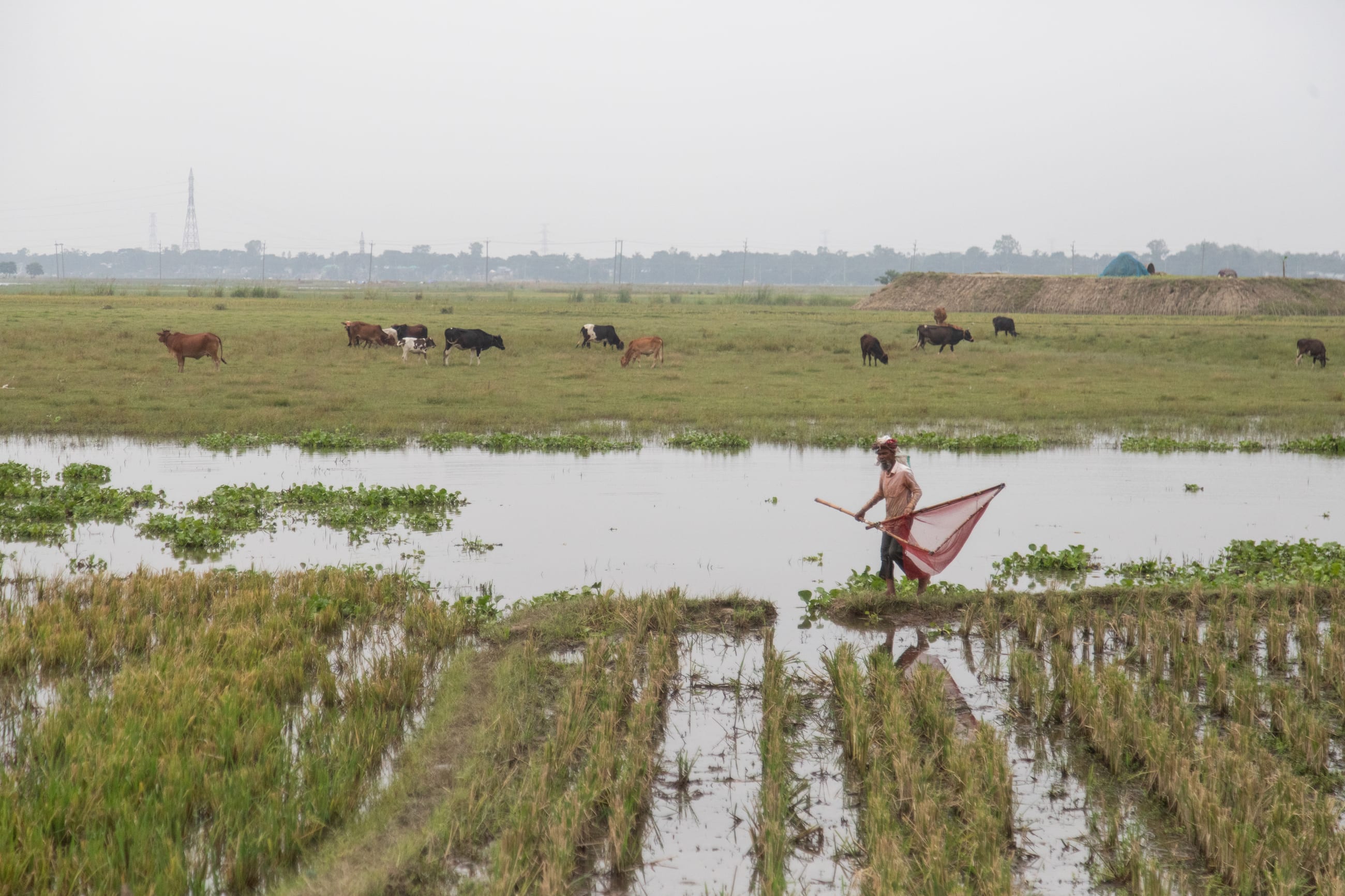
The stretch between April and May is traditionally a harvesting season for boro rice, the irrigation-intensive variety that accounts for half the nation’s rice harvest. This year, floodwaters inundated more than 130,000 acres of land devoted to growing this crop, leading to losses of nearly 214,000 metric tons of boro rice. Approximately 230,000 farmers watched as their lands were submerged weeks ahead of the expected monsoon season.
This isn’t the first time the Haor Basin has drowned before the harvest could be brought in. In March 2017 [PDF], flash floods damaged approximately 543,000 acres of land across seven districts, affecting 850,088 households.
Prior to the flooding this spring, Bangladesh began to face fuel shortages as a result of the turmoil created by the U.S.-Iran conflict. Farmers from Kishoregonj waited four to six hours to purchase diesel so that they could run their pumps and irrigate the boro fields amid scorching temperatures.
“We had to go to the black market when there was no fuel left at the fuel station, as we had to pay $1.22 per liter instead of $0.81 for that,” said a local farmer, Mohammad Supur Mia of Kishoreganj.
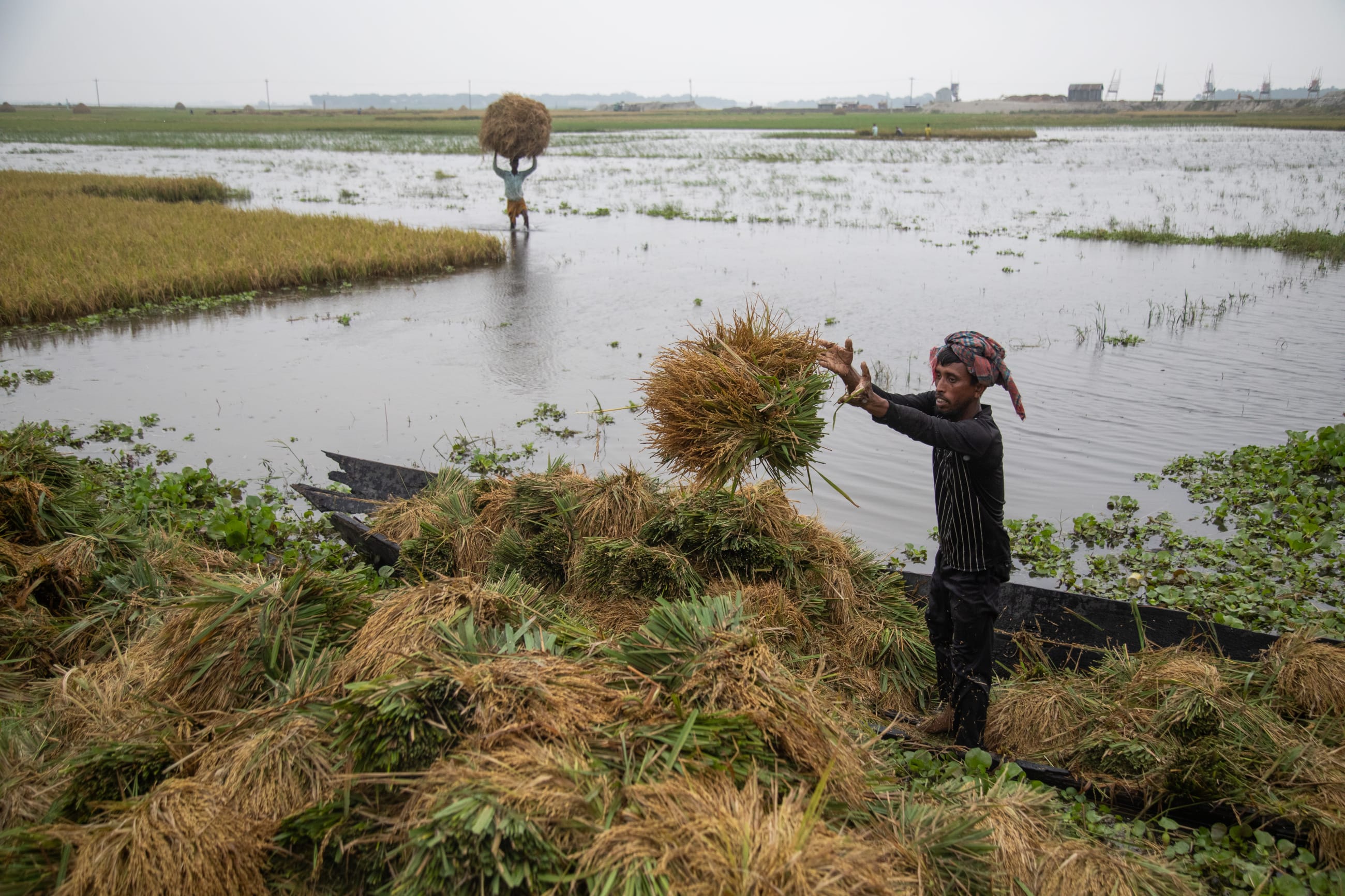
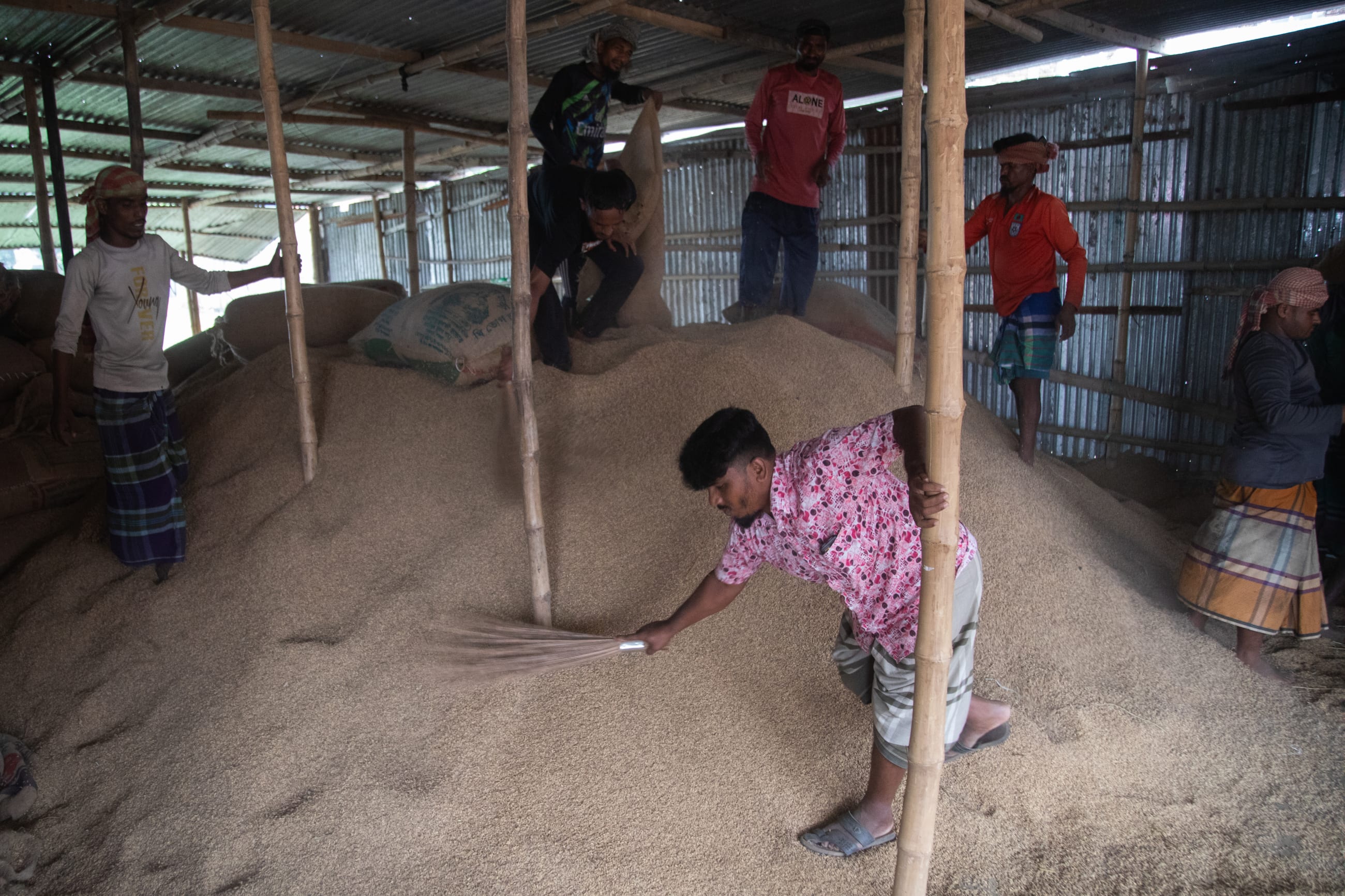
The cost of labor to save the crops has also quadrupled. The rate for a day laborer, who used to charge $5.69 for harvesting paddies on dry land, has doubled to $12.20 even though the labor required is reduced to half in flooded areas. The farmers who succeeded in protecting their crops from the floodwaters are selling their wet produce at $6.50 per maund when the regular price is $11.38 because of grain warehouse owners believing the produce is of lesser quality.
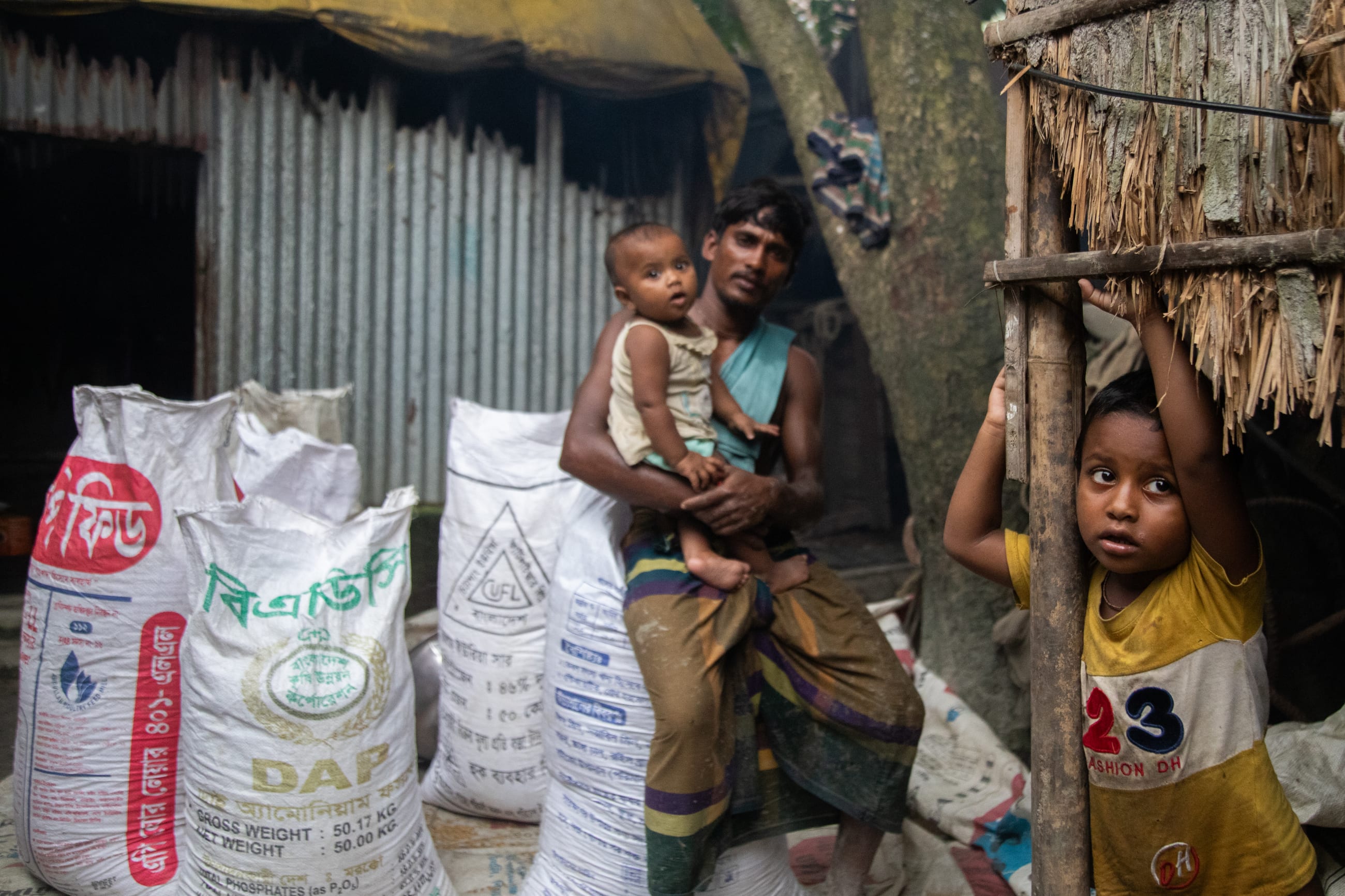
Mohammad Iqbal, who is from Kishoreganj, salvaged roughly one-third of his harvest; the rest remains submerged. He has a bank loan of $813.01 that requires him to pay 12 monthly installments of $89.43. As the sole earner for a family of six, he says, “I am unsure of how to put food on the table with the mounting pressure of loans and loss; selling only 40 maunds would do nothing for my family.”
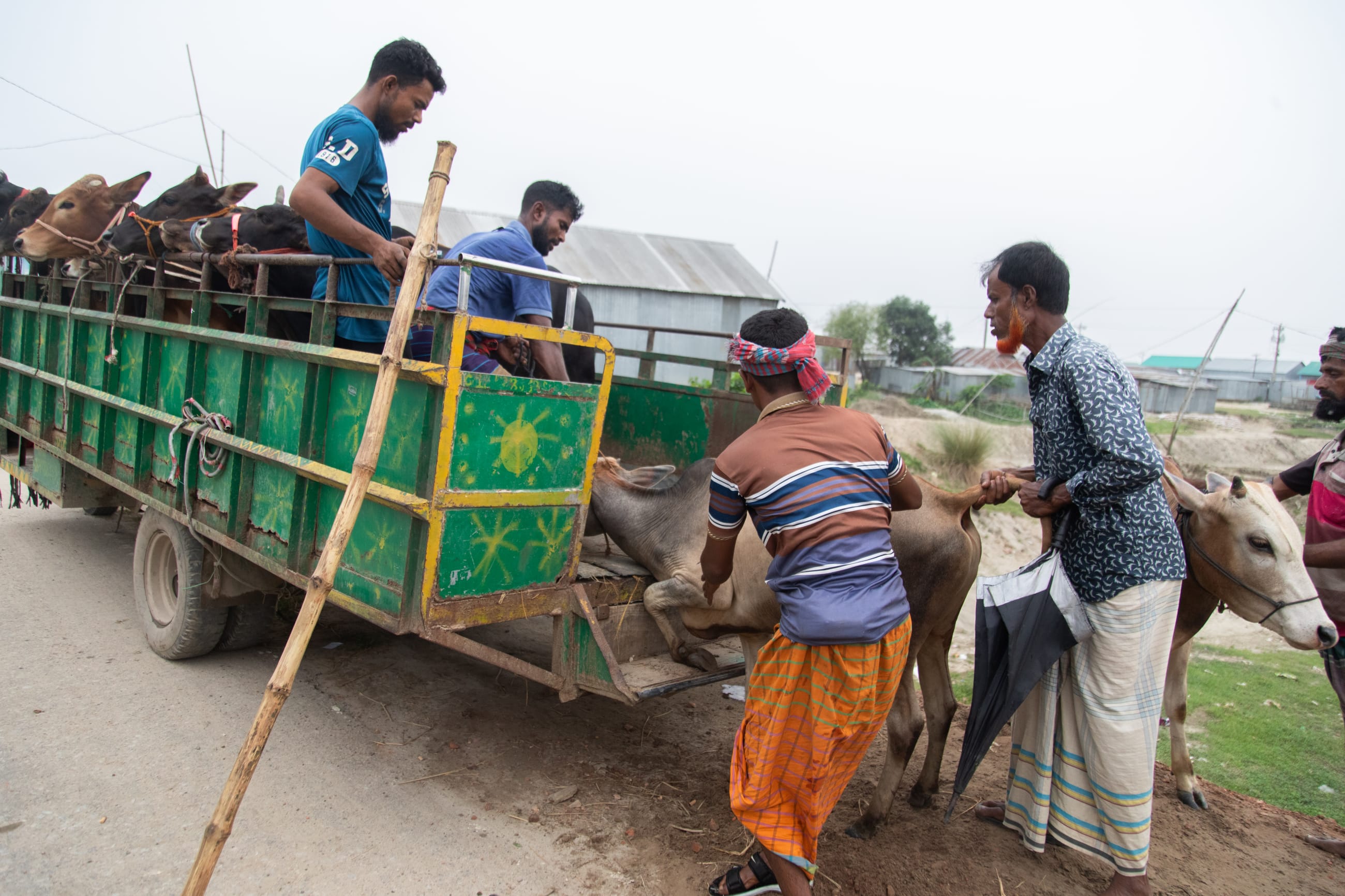
Faced with the scarcity of feed and debt problems, some farmers are being forced to sell their cattle at a lower price before Eid al-Adha, when livestock prices should be at their highest. “This is the only way I can repay my debt and take care of my family,” said Shahin Molla, a farmer from Kishoreganj.
Deforestation, Measles, and Medicine
The flooding is more than a local weather event. It is the downstream consequence of a regional system under strain. In May, approximately 15.75 inches of precipitation were registered by India’s Meteorological Department at the southwestern and eastern parts of the Khasi Hills of Meghalaya, which share boundaries with the Sylhet and Sunamganj districts of Bangladesh’s Haor Basin. This area is marked by deforestation and alterations in land use that have decreased forest cover that used to slow down and absorb water. Now, without this barrier, the Haor Basin regions of Bangladesh are experiencing higher rates of rain runoff with less warning.
The downstream effects on food supply are already visible. Different rice variant prices in Dhaka’s wholesale markets rose from $15 to $37 per ton by mid-May. If two-thirds of the Haor crop cannot be recovered, agricultural economist Mohammad Jahangir Alam estimates that the losses could translate into a 20% to 25% reduction in national rice supply. This outcome would place significant pressure on a country that is already experiencing a food deficit, as Bangladesh ranks eighty-fifth on the Global Hunger Index’s 2025 report.
Bangladesh is also dealing with a massive measles outbreak, driven by vaccination gaps and nutrition deficits. The emergency has recorded 9,260 confirmed and 61,194 suspected cases from mid-March through June 4. The outbreak has caused 91 confirmed deaths; another 514 are suspected.
According to public health expert Mohammad Mushtuq Husain, malnutrition weakens the body’s immune system, which makes one more susceptible to infectious diseases. Undernourishment also hinders physical and psychological development for children.
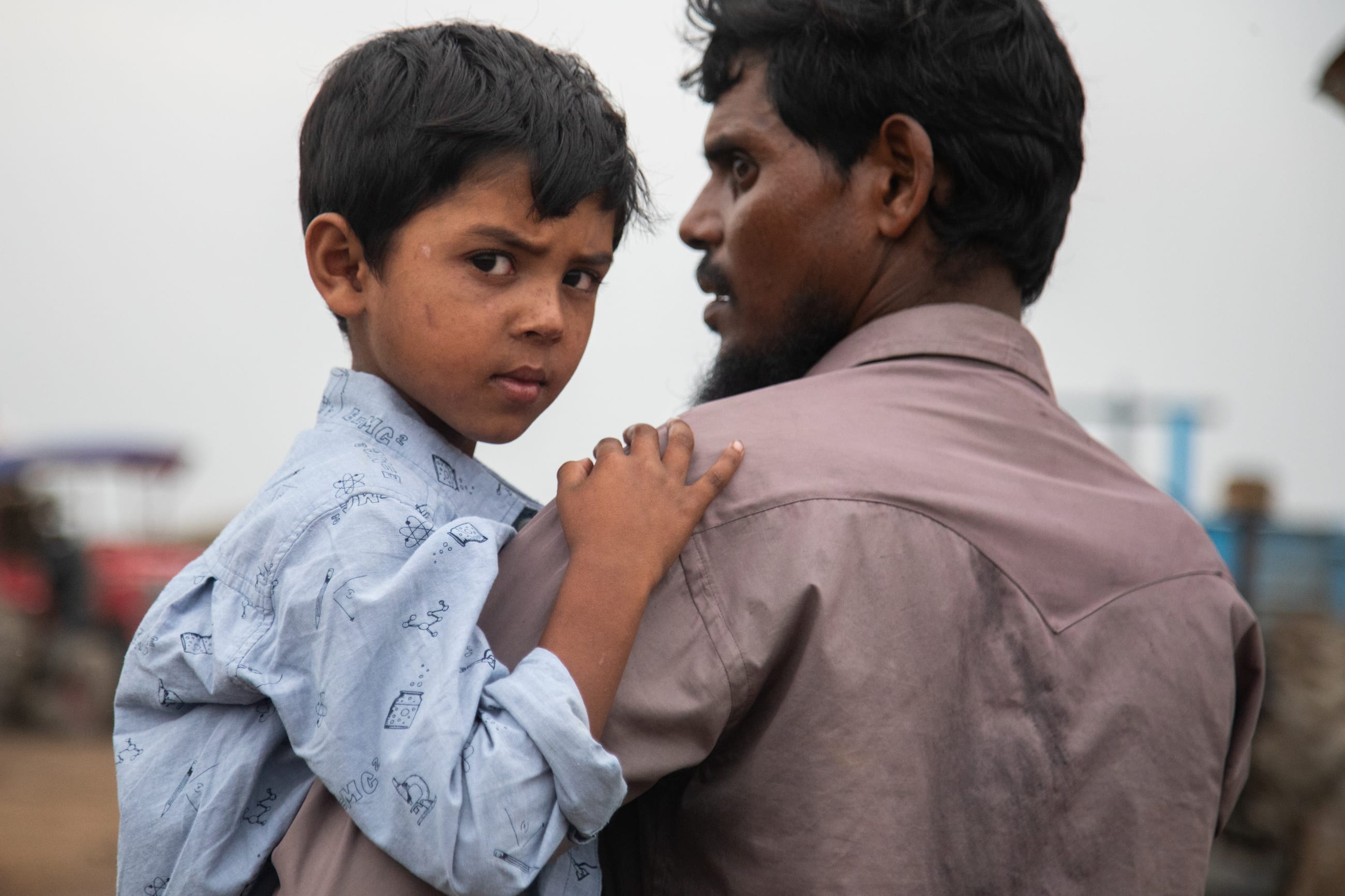
Arju Mia, a farmer from Kishoregonj, burdened by debt and crop losses, is struggling to send his 10-year-old son, who is infected with measles, to a hospital for treatment. His son developed symptoms on May 14 and was advised by local pediatricians to seek care in a better-equipped hospital.
“I don’t know how much it will cost in the hospital,” Arju Mia said. “I am still hoping to sell my harvest at a better price to afford the transportation cost.”
Finding Food and Finances
To ensure the minimum nutrition, some farmers have turned to catching fish from their flooded rice fields. Bobita Rani Das, for example, cooks the head of a fish for herself and her husband, saving the rest for their children to provide a reliable source of protein. Her husband, Bishwajit Das, has held back his harvested crop, waiting for the weather to be dry enough to be able to demand a fairer price.
“If the weather doesn’t improve, farmers may lose even more money,” said Zakir Hossain, a grain warehouse manager in Kishoreganj who bought only one-fifth of his usual target this season.
As the Muslim-majority country marks Eid al-Adha with ritual sacrifice, the farmers from the Haor Basin have already given theirs to the floods. Agriculture Minister Amin-ur Rashid has directed that flood-affected farmers receive $61 per month in financial assistance for three months. However, delays and inconsistent implementation have blunted this program. Rashid emphasized that the government cannot fully compensate for the losses incurred. The World Food Program has provided cash assistance to around 25,000 flood-affected households in the basin; yet that is only a fraction of the 230,000 farmers affected.
Jahangir Alam argues that structural solutions are plausible. Making resources such as short-duration stress-resistant varieties of rice that can tolerate temporary submergence would greatly help minimize losses when these unforeseen natural disasters occur. Improved upstream rainfall forecasting in Meghalaya could ensure that early warning systems can alert farmers sufficiently in advance, offering time to harvest their crops before floods hit.
Until then, Haor Basin farmers will remain trapped in a cycle of crop loss and mounting debt.
(Anik Rahman is an independent journalist and photographer based in Dhaka, Bangladesh, with more than 15 years of experience in South Asia and North America).
https://www.thinkglobalhealth.org/article/bangladesh-faces-rice-shortages-amid-flash-floods-and-global-fuel-crisisPublished Date: June 9, 2026



 READ
READ