Downloads
 Login
 Register


Tags
Food Management and Trade Company to Purchase 150,000 Quintals of Paddy
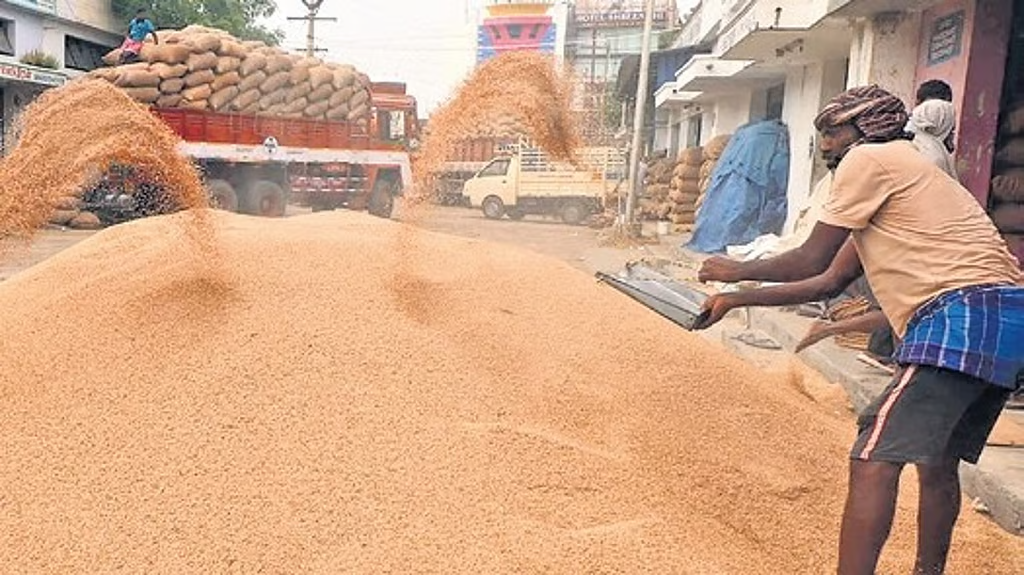
Kathmandu. The government-owned Food Management and Trade Company Limited has decided to purchase 150,000 quintals of paddy from farmers in the current fiscal year.
The Company Limited has been purchasing paddy from farmers to ensure fair prices for their produce and to break the undue influence and syndicate of middlemen in the market. The company has advanced a detailed action plan to purchase 150,000 quintals of paddy through purchase centers in 12 main districts of the Tarai region, from Jhapa in the east to Kanchanpur in the west, and through Jumla in the Karnali region.
For the purpose of paddy purchase, the company has received a budget of Rs 675 million (sixty-seven and a half crore) this year. Although the government sets the support price for paddy every year, farmers have been complaining that they are forced to sell paddy at low prices to private traders and middlemen due to the delayed start of government procurement. To address these grievances, the company has started the procurement process on time this year, coinciding with the harvest season.
Procurement at Support Price, Direct Benefit to Farmers
According to Madhav Mishra, Information Officer of the company, all administrative and technical preparations have been completed to collect paddy directly from farmers based on the minimum support price determined by the government. The company’s objective is to enable farmers to easily sell the produce from their own fields and receive returns commensurate with their production costs, as in previous years.
Information Officer Mishra said, ‘We have designated purchase centers covering 12 major districts of the Tarai and the Marshi paddy of Jumla. Our main objective is for farmers to be able to sell paddy at the support price set by the government. The procurement department of the company is rapidly advancing all work related to determining the necessary quotas, managing the budget, and deploying technical teams.’
From Where, Which Variety of Paddy, and How Much is Being Purchased?
According to Anturaj Poudel, Head of the Company’s Procurement Department, quotas have been allocated considering the nature of paddy produced in different parts of the country, the production of local farmers, and market demand.
The center-wise, variety-wise, and quantity-wise procurement details determined by the company are presented in the table below:
| S.N. | Purchase Center / District | Variety / Type of Paddy to be Purchased | Purchase Quota (in Quintals) |
| 1 | Rajapur (Bardiya) | Coarse and Medium Paddy | 30,000 |
| 2 | Dhangadhi (Kailali) | Medium and Local Paddy | 30,000 |
| 3 | Janakpur (Dhanusha) | Sona, Basmati, and Jira Masino | 14,000 |
| 4 | Birtamod (Jhapa) | Sona Mansuli and Ranjit Paddy | 12,000 |
| 5 | Biratnagar (Morang) | Sona Mansuli Paddy | 10,000 |
| 6 | Birgunj (Parsa) | Sona Mansuli Paddy | 10,000 |
| 7 | Nepalgunj (Banke) | Medium Paddy | 10,000 |
| 8 | Lahan (Siraha) | Sona Mansuli Paddy | 8,000 |
| 9 | Mahendranagar (Kanchanpur) | Coarse and Local Paddy | 8,000 |
| 10 | Bhairahawa (Rupandehi) | Sawa Mansuli Paddy | 5,000 |
| 11 | Tulsipur (Dang) | Medium and Local Paddy | 5,000 |
| 12 | Jumla | Local Kalimarsi Paddy | 200 |
| To be adjusted in districts based on demand | 2,000 to 3,000 | ||
| Total | 150,000 |
Source: Food Management and Trade Company Limited
A portion of the total allocated quota has been kept as a reserve for emergency demand and adjustments in districts as per need.
Where Has Paddy Procurement Started?
According to Anturaj Poudel, Head of the Company’s Procurement Department, the procurement work has been formally started at the Dhangadhi center in Sudurpaschim from Mangsir 1. More than 500 quintals of paddy were purchased on the first day in Dhangadhi, and paddy collection from farmers is ongoing.
Similarly, in Rajapur of Bardiya and Tulsipur of Dang, after completing discussions with local administration, farmer representatives, and political parties, paddy procurement will commence within two days.
However, some complications have arisen at the Mahendranagar center in Kanchanpur. Farmers have demanded an increase in the quota of 8,000 quintals allocated for Mahendranagar, requesting at least an additional 20,000 quintals to be purchased. Following the strong demand and pressure from farmers, the token distribution process, which had started, has been temporarily suspended.
Procurement Chief Poudel said, ‘We have a fixed budget limit. Following a large demand from farmers, we have sent a formal request to the ministry and the government for additional budget. If the government releases additional funds, we will increase the quota and resume the procurement process in Mahendranagar.’
Likewise, in the eastern districts (Jhapa, Morang, Siraha, etc.), farmers are still harvesting and storing paddy, and the company is prepared to operate purchase centers immediately once the produce is harvested and farmers are ready for sale.
Policy Challenges Due to Lack of Chief Executive
The Food Management and Trade Company has been operating under an acting Chief Executive Officer for a long time. Despite recommendations for three names, the process for appointing an executive chief has not been finalized.
Commenting on this issue, Procurement Chief Poudel admitted that while daily administrative work is not hindered, the lack of a full-time leader is felt in making long-term policy decisions, lobbying the ministry for additional budget, and ensuring effective inter-agency coordination. He stated that the organization’s operations would be more effective if the government provided leadership soon, ending procedural complexities.
In addition to paddy procurement, the company regularly supplies rice, lentils, and oil, and intervenes in the market. The company has stated that it has completely sold the 35,000 quintals of sugar purchased targeting the festivals across the country through its depots and dealers at a maximum price of Rs 109 per kg, which is less than the government-set maximum price of Rs 110 per kg.
Over a hundred subsidized price shops have been operated across the country targeting the festivals. Meanwhile, the ‘Rice ATM’, an automated food distribution system, which has garnered significant attention and anticipation among consumers, will also be operational in the near future. A technical team from the World Food Programme (WFP) India visited Nepal and completed the technical testing of the machine, software coding, and necessary improvements.
As the internal infrastructure on behalf of the company is ready, formal inauguration is planned soon in coordination with the donor agency. Furthermore, the company’s own sales center (mart) located in Thapathali, Kathmandu, has been physically reconstructed and upgraded and is back in operation.
https://english.ratopati.com/story/87143/food-is-purchasing-rice-worth-675-million-rupees-from-which-districts-is-it-being-purchasedPublished Date: November 19, 2026


 READ