Downloads
 Login
 Register


Tags
Mexico’s Rice Output Up 17.3% in 2025
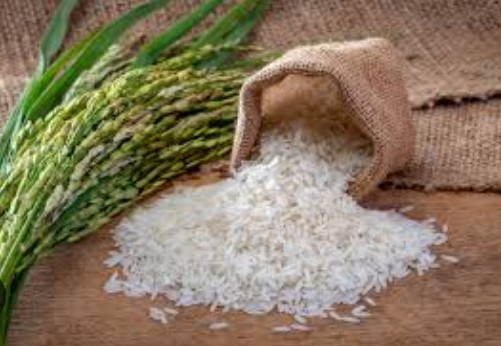
Mexico produced 257,480t of rice in 2025, 17.3% more than the 219,587t recorded in 2024, according to the Ministry of Agriculture and Rural Development (SADER). Despite the increase, domestic production remains insufficient to meet national consumption, and the government set a 200,000t duty-free import quota for 2026 to complement supply.
Figures from the Agrifood and Fisheries Information Service (SIAP) show that the value of production rose 12.5%, from MX$1.30 billion to MX$1.46 billion (US$68.9 million to US$77.5 million) over the same period. SADER attributed part of the result to a larger planted area, which increased 28.4%, from 31,346 ha to 40,250 ha.
Of the 12 producing states, Nayarit led national production with 79,737t, followed by Campeche with 61,670t and Michoacán with 37,300t. Together, the three states produced 178,707t, or 69.4% of the national total.
Campeche recorded the largest growth. In 2025, its planted area rose 166.3% to 12,837 ha, while production increased 134.8%, from 26,263t to 61,670t. SADER attributed these results to Plan Campeche, a strategy by the federal and state governments to increase rice, milk and meat production, create jobs and strengthen food sovereignty through direct support to producers.
Under the plan, small-scale rice producers receive incentives from the Production for Wellbeing program, free fertilizers and certified seed delivered directly, without intermediaries. Producers also receive technical support from specialists trained by a scientific committee of experts from four national and state institutions. The plan includes the delivery of machinery to modernize farm work and reduce costs, as well as public purchases of rice coordinated by Alimentación para el Bienestar and other federal and state agencies.
Support for rice producers extends beyond Campeche. On Oct. 29, SADER began distributing incentives to rice and wheat producers under the Fair Trade program, which will benefit 1,342 rice farmers and 14,157 wheat farmers. Other actions for rice producers, particularly in Nayarit and Campeche, include links to the Production for Wellbeing and Fertilizers for Wellbeing programs, financing through the Harvesting Sovereignty Credit, certified seed and production and marketing incentives.
As of September 2026, SIAP data show rice production of 90,626t on 37,080 ha planted. Nayarit contributed 46,060t, Tamaulipas 16,198t, Campeche 11,630t, Tabasco 7,054t and Jalisco 4,886t, together accounting for 94.7% of the total.
Import Quota to Cover the Supply Gap
Rice ranks fourth among the most consumed basic grains in Mexico. It is used mainly as a side dish and in the production of flours, beverages and animal feed. Even with higher output, Mexico relies heavily on imports to meet this demand. In 2024, imported paddy and milled rice made up 84% of the available supply. Most imports came from the United States, although sources diversified in 2025.
To secure supply, the Ministry of Economy (SE) published a decree in the DOF establishing a 200,000t duty-free import quota for paddy rice, valid until Dec. 31, 2026. The quota applies to tariff code 1006.10.99, which covers rice types other than Morelos rice. Mexico maintains phytosanitary requirements for paddy rice imports from Brazil, the United States, Guyana and Uruguay.
The quota is allocated through a public tender managed by the General Directorate of Trade Facilitation and Foreign Trade (DGFCCE) under the Minimum Price modality. Individuals and companies established in Mexico can participate. Quota certificates are transferable and valid until Dec. 31, 2026. According to the SE, the quota seeks to diversify supply sources, create competitive conditions and support price stability without discouraging domestic production
https://mexicobusiness.news/agribusiness/news/mexicos-rice-output-173-2025Published Date: November 4, 2026


 READ