Downloads
 Login
 Register


Tags
Super El Nino heats up Vietnamese rice prices.
In October, the price of Vietnamese fragrant rice with 5% broken grains increased by approximately $30-40 per ton. In just the last 10 days of the month, the price of Vietnamese rice rose by another $15 to $515-520, the highest level since the beginning of the year. The super El Niño phenomenon is heating up the rice market and raising the question of whether the “price surge” of three years ago will return.
Prices are rising, but there’s no more rice to sell.
Since the beginning of October, world rice prices in general, and Vietnamese rice prices in particular, have started to warm up, and the momentum is gradually increasing, a complete contrast to the gloomy situation of the previous nine months.
According to the Vietnam Food Association (VFA), at the end of October, the price of Vietnamese fragrant rice (5% broken rice) increased by $15 compared to the previous week, reaching $515/ton, while jasmine rice also increased by $8 to $539/ton. Meanwhile, the price of rice from other countries such as Thailand, India , Pakistan, and Myanmar only increased by $1-4/ton.
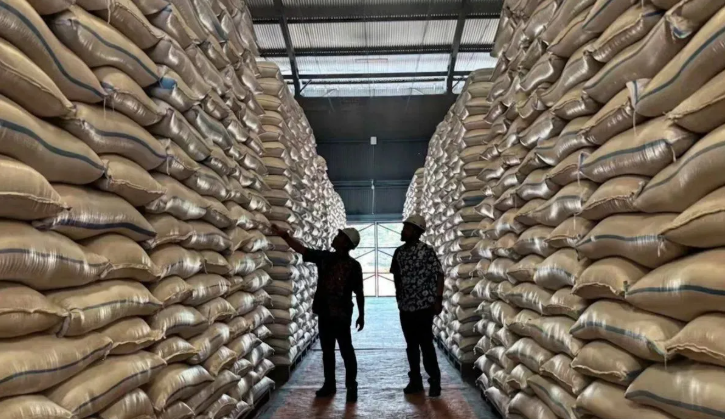
Rising export rice prices have created a bustling atmosphere domestically. In the Mekong Delta, a major rice-producing region, many businesses report a vibrant end-of-year market. Numerous Filipino entrepreneurs have traveled to the region to source goods and sign contracts, as their government reopened its market in November and issued Special Purpose Vehicle Licenses (SPS) for rice imports.
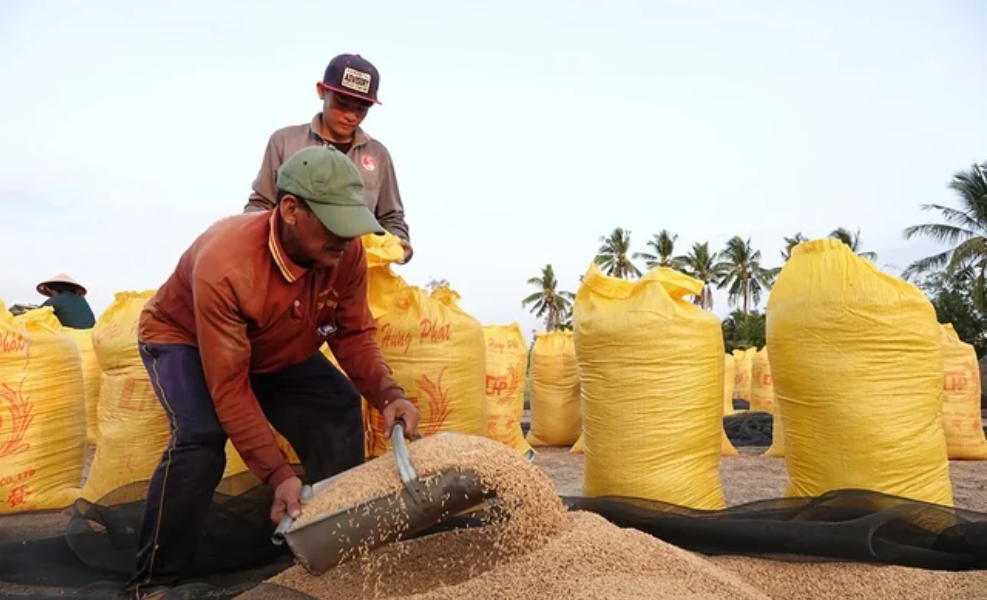
Mr. Nguyen Vinh Trong, Director of Viet Hung Co., Ltd. ( Dong Thap ), said: “Since the beginning of the month, Filipino businessmen have increased their purchases, but not significantly because they didn’t have SPS certificates. Now that they have SPS certificates, they are buying more aggressively, causing prices to rise rapidly. This is partly because the Mekong Delta currently lacks fresh rice and farmers will have to wait until the end of November or beginning of December to harvest the third rice crop. Recently, low rice prices coupled with high fertilizer prices have caused many farmers to suffer losses, reducing the planted area and resulting in lower yields,” Mr. Trong added.
In Vinh Long, Mr. Nguyen Van Thanh, Director of Phuoc Thanh IV Production and Trading Company Limited, excitedly reported: Besides the Philippines, customers from Africa and China are also increasing their purchases of ST25 rice and glutinous rice in preparation for the Lunar New Year. The increased demand has driven up export rice prices and paddy prices, reaching 7,000 – 7,200 VND/kg. Unfortunately, despite the price increase, farmers no longer have paddy to sell. “The upcoming third crop, also known as the autumn-winter crop, will have the lowest yield of the year, and recently many people abandoned their fields due to flooding. Meanwhile, for the 2026-2027 winter-spring crop, many areas will be affected by drought and salinity, so it’s uncertain how the planted area and yield will be impacted. With the current market trend, rice prices will continue to rise in the coming period,” Mr. Thanh predicted.
Ms. Phan Mai Huong, co-founder of the rice market website SS Rice News , analyzed: In the recently concluded harvest, the Philippines’ rice production did not meet expectations, and the quality was also low due to the impact of weather, directly related to El Nino. Therefore, they opened their doors to rice imports earlier than previously planned, which was to wait until early 2027, when Vietnam’s 2026-2027 winter-spring crop begins to harvest. The low yield of the last rice crop is a factor that prompted the Philippines to quickly increase rice imports to ensure food security in the face of the very strong El Nino. The country has imported over 4 million tons of rice and forecasts that the total for 2026 will exceed 5 million tons; it is expected to be significantly higher in 2027.
Will rice prices return to their 2023 peaks?
Super El Niño is predicted to last until early 2027, after which its intensity will decrease but continue until mid-year before returning to a neutral state. Meanwhile, agricultural and economic experts estimate that the impact of El Niño usually lags behind weather and climate developments by at least 6 months. Therefore, the impact of this El Niño will be concentrated and prolonged throughout 2027.
Along with sugar, palm oil, and coffee, rice is among the key commodities most at risk of being severely impacted. Meanwhile, Asian countries, especially Southeast Asia, will be heavily affected by El Nino, with the Philippines being a prime example, as one-third of its food security depends on imported rice. To date, the Philippines’ rice imports have reached 4.07 million tons, a 20.06% increase compared to the same period last year. However, worryingly, rice reserves are declining.
Data from the Philippine Statistics Authority (PSA) shows that as of September 1st, the country’s rice reserves had decreased by 8% year-on-year to 1.91 million tons, compared to 2.07 million tons in the same period of 2023. Of this, the National Food Authority (NFA) rice reserves decreased by 36.1% year-on-year, while household rice reserves fell by 0.6%. These figures indicate that the Philippines has a very large demand for rice consumption and imports.
Conversely, India, the world’s largest rice supplier, is experiencing high prices. Currently, the price of 5% broken rice from the country is between $389 and $394 per ton, the highest level in over a year, due to the strengthening rupee and limited supply. Thailand is also significantly impacted by El Niño because a large portion of its rice-growing area, particularly in the Chao Phraya River basin, lies outside of irrigation systems.
With El Nino casting a shadow over rice prices, the question is whether prices will return to their 2023 peaks? “This is something many in the industry have considered. Besides weather factors, rising fertilizer prices also pose a challenge to global food security. I believe many in the industry wouldn’t be surprised if rice prices return to their peak from three years ago. If this happens, it will likely occur in the first half of 2027. However, it’s worth noting that this also depends partly on India’s economic policies,” expert Phan Mai Huong commented.
Sharing the same view, Mr. Nguyen Van Thanh analyzed: If El Nino occurs as predicted, the food supply in Asia and the world will be severely affected, with India alone potentially experiencing a production drop of 5-10 million tons in 2027. This is a very significant change, forcing countries to focus on food security, especially those dependent on external sources. These countries must increase their reserves as soon as possible before rice prices rise sharply at the end of 2026 and the beginning of 2027. Vietnam will also be significantly affected, with severe drought and saltwater intrusion predicted, meaning the supply of rice for export will not be as abundant as in previous years.
Mr. Nguyen Vinh Trong predicted that, at least from now until mid-2027, rice prices will only increase and cannot decrease because the demand for rice from other countries is very high. To prepare for the new “rice price surge,” domestic businesses will have to take advantage of buying when prices are good and sell gradually according to specific market developments to avoid losses when domestic prices rise too quickly. However, doing this requires businesses to have large capital resources, in addition to storage infrastructure.
“The good news now is that, following the government’s directive to prioritize capital and interest rates for manufacturing businesses, access to capital has become easier, and interest rates have also decreased by about 1.5-2%, from 9-10% to 7-8%,” Mr. Nguyen Vinh Trong informed.
Rice exports surged in October 2026.
According to the Ministry of Industry and Trade, as of the end of October, Vietnam’s rice exports reached 6.8 million tons, a decrease of 4.7%; and the value reached 3.3 billion USD, a decrease of 9.8% compared to the same period in 2025. However, in October alone, the market showed a clear recovery with an estimated volume of 475,000 tons and a value of 253 million USD; an increase of 37% in volume and 39% in value compared to the same period in 2025.
https://www.vietnam.vn/en/sieu-el-nino-ham-nong-gia-gao-vietPublished Date: November 2, 2026



 READ