Downloads
 Login
 Register


Tags
Indonesia’s rice inflation hits four-year low in September: Bapanas
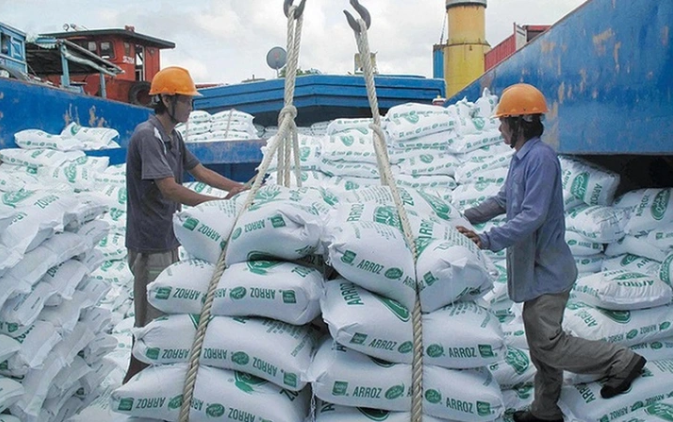
Jakarta (ANTARA) – Indonesia’s annual rice inflation eased to a four-year low in September 2026, supported by strong government reserves, a halt to medium-grade rice imports, and continued public rice distribution, the National Food Agency (Bapanas) said.
Bapanas Head Andi Amran Sulaiman said the government had not imported medium-grade rice, limiting imports to specialty varieties not grown domestically.
“We have zero imports of medium-grade rice. What existed was smuggled rice, which has been seized. Imports are limited to specialty rice not grown here, such as Basmati, and the volume is extremely small,” Amran said in a statement confirmed on Sunday.
Historical data from Statistics Indonesia (BPS) show that annual rice inflation in September 2026 was the lowest recorded for the same month over the past four years. Rice inflation stood at 18.44 percent in September 2023, partly driven by the severe El Niño weather pattern.
The rate eased to 5.91 percent in September 2024 and declined further to 4.06 percent in September 2025. By September 2026, annual rice inflation had moderated to 3.73 percent, marking its lowest level over the four-year period.
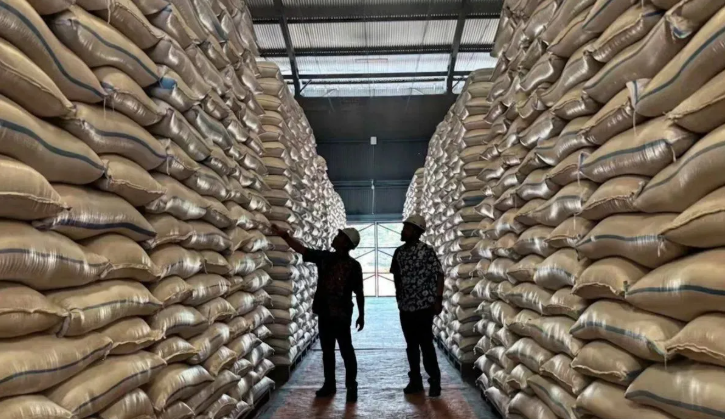
Amran attributed the improvement to the distribution of government rice reserves, saying the large stockpile gave the government greater room to intervene in the market.
With government rice reserves currently at 4.5 million metric tons, he said the government was well-positioned to expand food assistance and implement price stabilization measures.
Bapanas data show that the distribution of government rice reserves through state logistics agency Bulog reached 2.88 million metric tons between January and October 28, 2026. The figure excludes an additional 76,800 metric tons allocated for the Food Supply and Price Stabilization (SPHP) program and rice assistance through the end of the year.
Meanwhile, total rice assistance allocations for the remainder of 2026 stood at 997,000 metric tons for designated beneficiaries.
Amran projected that total public rice distribution would approach 4 million metric tons by the end of 2026, surpassing the previous record of 3.37 million metric tons in 2024.
The rice assistance program, which targets 33.24 million beneficiary families, accounts for the largest share of government rice reserve use, with 1.63 million metric tons distributed through October.
Bapanas expressed optimism that expanded food assistance would help curb consumer rice prices and keep food inflation under control. In addition to direct food assistance, SPHP rice distribution reached 1.16 million metric tons through October to maintain market supplies.
Translator: Muhammad Harianto, Raka Adji
Editor: M Razi Rahman
Published Date: November 2, 2026



 READ