Downloads
 Login
 Register


Tags
Solutions to improve the efficiency of post-harvest rice preservation.
Despite achieving an annual production of over 1 million tons, the value of Nghe An’s rice remains disproportionately low due to weaknesses in post-harvest drying and preservation. Investing in centralized drying systems and providing financial support to cooperatives are considered key solutions to improve agricultural product quality and increase farmers’ income.
Báo Nghệ An
The effectiveness of the concentrated drying model
Since 2017, Lien Thanh Agricultural Cooperative (Yen Thanh commune) has boldly invested 3.5 billion VND to build a system of two agricultural product drying ovens with a capacity of 60 tons/batch and a storage warehouse of 1,000 tons. This proactive approach to drying infrastructure has helped the cooperative successfully build a production and distribution chain for approximately 150 hectares of rice per season, purchasing and supplying hundreds of tons of rice seeds and commercial rice to markets inside and outside the province.
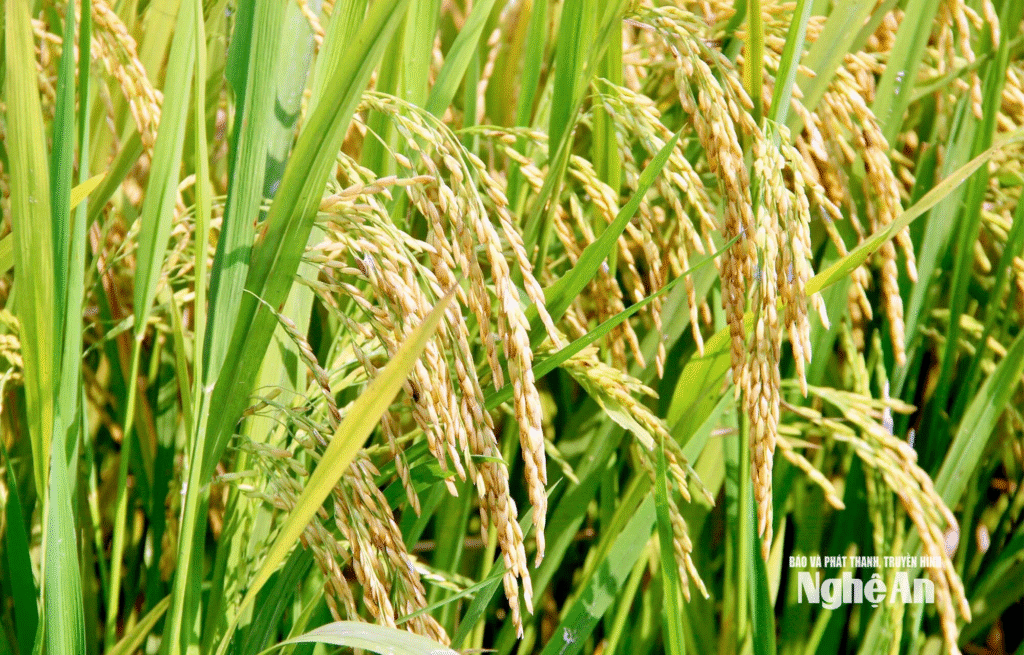
If dried properly, the rice grains will be uniform, shiny, fragrant, and free from cracks, breakage, or mold. Photo: Phu Huong
Mr. Le Nam Giang, Deputy Director of the Cooperative, shared: “During peak harvest season, the drying system prioritizes serving the affiliated area and farmers in the commune, then accepts processing orders for neighboring areas. Throughout the remaining months, we also dry corn, peanuts, and sesame. Thanks to the diversification of agricultural products, the drying system operates year-round.”
This model offers practical benefits to rice farmers. Thanks to proper drying techniques, the rice grains are uniform, shiny, fragrant, and free from cracks, breakage, or mold, making them highly sought after in the market.

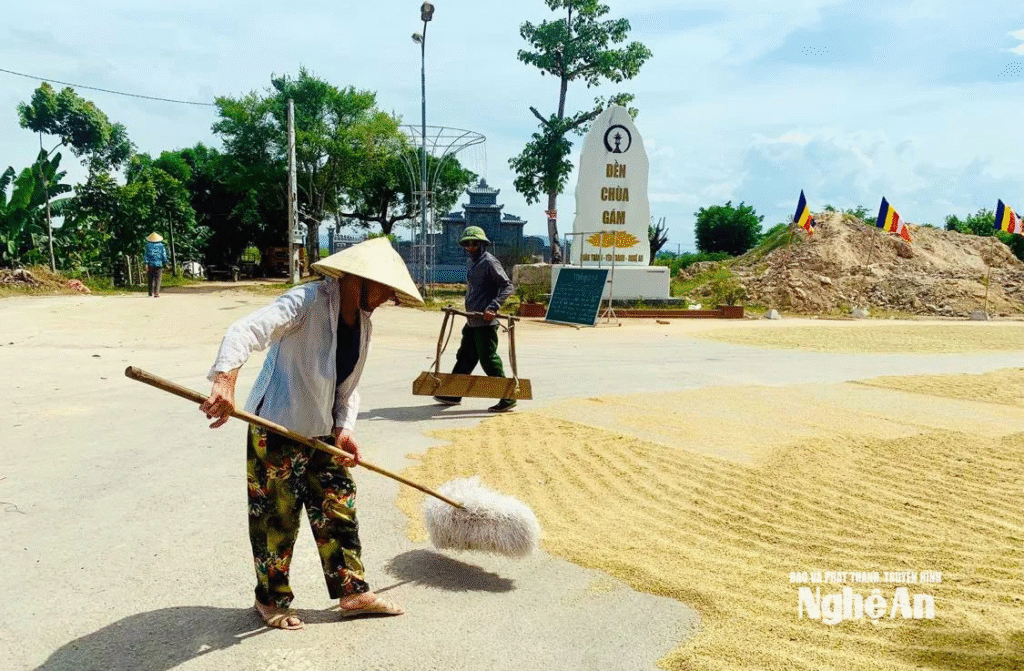
Meanwhile, farmers freed up labor, avoided drying rice on roads, and minimized risks from rain, wind, and natural disasters. Many households boldly accumulated 4-5 hectares of land, confidently producing rice seeds through cooperative agreements and selling fresh rice directly in the fields at high prices, such as Mr. Vu Xuan Huong (Lien Tru hamlet) and Mr. Phan Doan Nga (Bau Chen hamlet)…
Inadequate drying infrastructure
Although the centralized drying model has proven effective, the number of well-invested facilities in the province remains very limited. In Hung Nguyen Nam commune, despite the high-quality pure rice varieties accounting for over 80% of the spring crop area (1,165 hectares) and continuing to maintain over 950 hectares in the summer-autumn crop, the income of the people is still not commensurate due to the lack of an industrial drying system.
Ms. Phan Thi Giang, Deputy Head of the Economic Department of the commune, stated that the unstable scale of dried agricultural products makes it difficult to operate drying machines economically. In addition, all six agricultural cooperatives in the area are facing difficulties, relying mainly on irrigation fees, and therefore lack the resources and capacity for investment.

Similarly, Hop Minh commune has a large rice cultivation area of approximately 1,034 hectares, achieving high yields each year, but it still lacks any industrial drying facilities. Traders only purchase about 20% of the output, with nearly 400 hectares under contract farming, and the majority of farmers still have to dry their rice manually.
Ms. Phan Thi Phuong, Deputy Director of the Commune’s Agricultural Services Center, shared that the complete dependence on weather conditions makes the summer-autumn rice crop susceptible to mold and damage from rain and floods.
A comprehensive solution is needed, encompassing both policy and practice.
To date, Nghe An has achieved a very high mechanization rate in land preparation (98.5%), transportation (99.2%), and harvesting using combine harvesters (97.5%), while expanding the area of high-quality rice to more than 85,000 hectares per year.
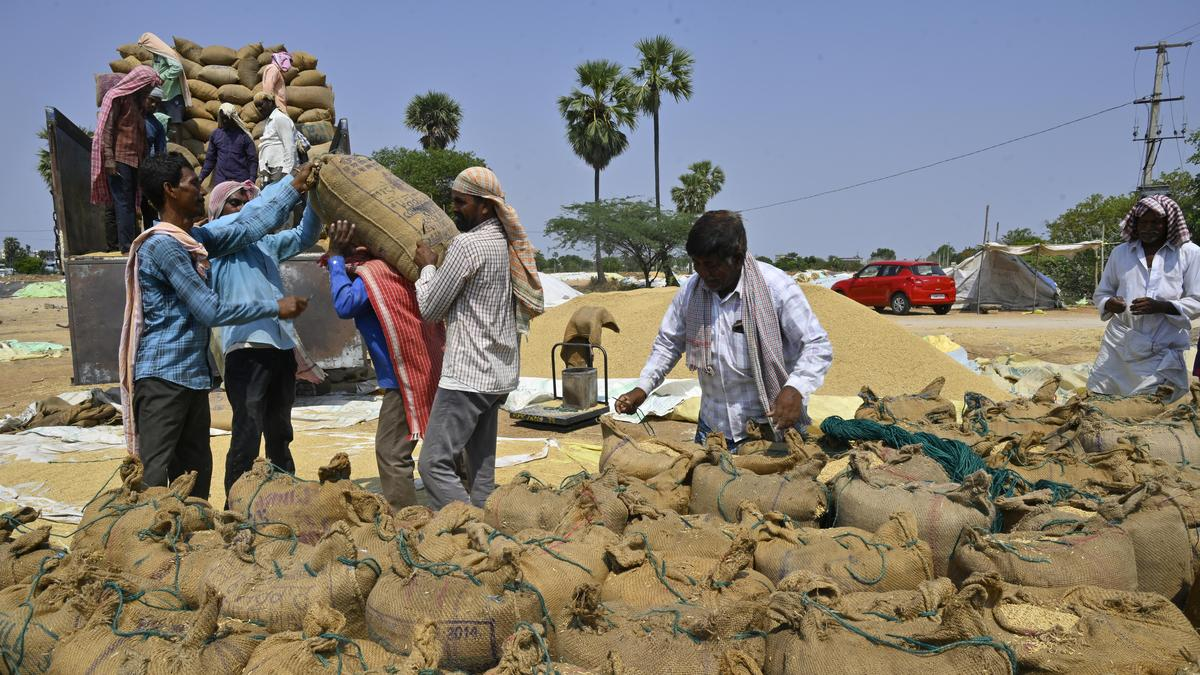
However, post-harvest preservation remains a major obstacle. Preservation largely depends on small-scale milling facilities and the local people’s habit of drying rice on roads, which poses safety risks and reduces the quality of the rice grains.

According to Mr. Nguyen Van Duong, Chairman of the Yen Thanh Commune People’s Committee: The core reason is that production in many areas is still fragmented, and output is not concentrated. The investment cost for industrial drying ovens is relatively high, while cooperatives lack capital and face difficulties in accessing support policies. Even Lien Thanh Cooperative, after nearly 10 years of operation, is facing difficulties as its production line is gradually becoming outdated; upgrading to a semi-automatic system would require approximately 4 billion VND, exceeding the unit’s self-financing capacity.”
Inadequacies in the drying process increase post-harvest losses, leading to reduced rice quality or mold. This is also why Nghe An rice has difficulty accessing supermarket chains, large distribution channels, or high-value export markets.
Mr. Nguyen Tien Duc – Head of the Provincial Department of Crop Production and Plant Protection
To solve this problem, Nghe An province needs to review and simplify procedures so that funding for mechanization and industrial promotion truly reaches cooperatives and business households. At the same time, localities need to proactively plan concentrated raw material areas linked to convenient electricity and transportation infrastructure to attract businesses to invest in large-scale drying clusters and deep processing plants, and promote sustainable linkages between businesses, cooperatives, and farmers.
Source: Báo Nghệ An
https://www.vietnam.vn/en/giai-phap-nang-hieu-qua-bao-quan-lua-gao-sau-thu-hoachPublished Date: October 25, 2026


 READ