Downloads
 Login
Login
 Register


Tags
Polao rice price surge raises questions
Munna Raihan.
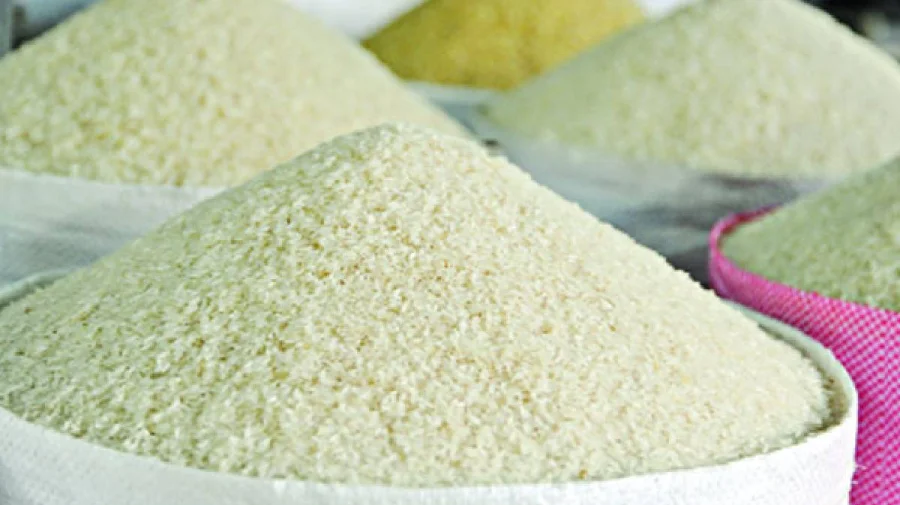
At one time, polao was a staple dish at ordinary family gatherings. Now, buying the rice used to make polao costs Tk 200 to Tk 230 per kilogram. The price has nearly doubled in just six months. This sharp increase has put pressure not only on families but also on restaurant owners. But what is behind this unusual price hike? Is it the government’s approval of nearly double the amount of aromatic rice exports compared with the previous year, or is it an artificially created shortage?
Some market insiders claim that prices have risen because supplies in the domestic market have declined since the government approved exports of aromatic rice. On the other hand, another group of traders alleges that large rice mills and corporate companies have stockpiled paddy and rice, creating an artificial shortage in the market. Exporters, however, argue that the country has a sufficient surplus of aromatic rice compared with production and domestic demand. Therefore, they say, such a shortage should not occur simply because a small quantity is exported.
A visit to various retail markets in the capital on Thursday found that packaged polao rice from different companies was selling for Tk 210 to Tk 230 per kilogram, while loose rice was selling for Tk 180 to Tk 200 per kilogram. Just a month ago, some packaged polao rice was priced at Tk 120 to Tk 130 per kilogram, while loose polao rice was selling for Tk 110. Prices have also increased significantly in wholesale markets. A 50-kilogram sack of good-quality Chinigura rice, which sold for Tk 7,500 a month ago, now costs Tk 9,500—an increase of Tk 2,000 in just one month.
Why are prices rising?
Polao rice is mainly produced from BRRI-34, or Chinigura, paddy. A large portion of this paddy is grown in Dinajpur. According to data from the Department of Agricultural Extension, the target for total paddy cultivation in Dinajpur this year is 260,860 hectares. Of this, Chinigura has been cultivated on 95,000 hectares, compared with 94,000 hectares last year.
However, several reasons have been cited to explain the rise in rice prices. On the one hand, traders say domestic supplies have declined after export permits were granted. On the other hand, there are allegations that large rice mills and corporate companies bought and stockpiled huge quantities of paddy in advance. Traders allege that these companies subsequently raised rice prices, citing higher paddy prices as the reason.
Exporters, meanwhile, argue that exports should not be blamed for the market shortage. Mohammad Ishakul Hossain, president of the Bangladesh Rice Exporters Association, said that around 2,000 tonnes of aromatic rice have been exported over the past month. According to their estimates, the country produces at least 1 million tonnes of aromatic rice annually, while domestic demand is around 400,000 tonnes. That leaves a surplus of approximately 600,000 tonnes. Their argument is that exporting a small portion of this surplus should not create a shortage in the domestic market.
Are export approvals responsible?
In the current fiscal year, the government has approved exports of a total of 45,320 tonnes of aromatic rice by 278 companies in two phases. In the previous fiscal year, the approved amount was 23,959 tonnes. In other words, the government has approved nearly twice as much polao rice for export compared with the previous year.
Some traders claim that rice prices in the domestic market rose rapidly after the export approvals were granted. Saddam Hossain, owner of Saddam General Store in New Bazar in the Turag area of the capital, said, “A large quantity of polao rice is being exported this year. That is why prices have risen so much.” He also said that the increase in polao rice prices has pushed up the prices of good-quality Nazir and Kataribhog rice as well.
Or is it an artificial shortage?
Meanwhile, several market traders allege that large corporate companies and rice mills purchased and stockpiled huge quantities of paddy during the production season. They claim that these companies later used the increase in paddy prices as a justification for raising rice prices.
A H M Shafiquzzaman, a former secretary and the current president of the Consumers Association of Bangladesh (CAB), which works on consumer rights, said that Bangladesh produces between 1 million and 1.2 million tonnes of aromatic rice annually. After meeting domestic demand, several hundred thousand tonnes remain as surplus. Therefore, he said, exports should not create such a shortage in the market.
According to him, some traders are using exports as an excuse to increase prices. He also said that the arguments about rising transportation costs and fuel shortages are unreasonable. If prices were increasing because of fuel and transportation costs, the prices of other types of rice should also have gone up.
https://en.ittefaq.com.bd/17979/polao-rice-price-surge-raises-questionsPublished Date: September 4, 2026


 READ
READ