Downloads
 Login
Login
 Register


Tags
Italian rice, the European market and the tariff issue
Di Dario Dongo

The sector of the Italian rice and Europe is preparing for a structural turning point. While on the one hand Italy consolidates its primacy process in the European Union, covering approximately half of the continental needs, on the other hand the supply chain has to deal with unprecedented import flows.
The market balance is being redefined by the reform of the system of tariff preferences of the European Union. The new regulatory framework introduces targeted protections for domestic production, intended to reshape the dynamics of trade with third countries.
Production and consumption figures in Italy
The Italy produces about 50% of the EU rice harvestIn 2024 the harvest was around 1,4 million tons of paddy rice; for 2025, the National Rice Board estimates a production di 1.439.047 tons, with a surface area of 234.732 hectares, an increase of 8.603 hectares (+3,8%) compared to 2024 (National Rice Board, 2026). Approximately 84% of the rice grown in Italy is of the japonica, while the remaining 16% is Indicates.
On the commercial front, in 2024 the Italian exports of rice have touched the 720.000 tons (+9% on the previous year), for a total value of 872 million euros (Confagricoltura, 2025). The main destination markets remain Germany (22,5% of the value) and the France (21,6%), which together absorb 43% of Italian exports; followed at a distance by the United Kingdom (7%) and Belgium (5%) (Confagricoltura, 2025).
In the 2024/2025 campaign (1 September 2024 – 24 June 2025) the cheap imports Italians have also grown, +15%, reaching the 149.391 tons, compared to 130.243 t in the previous year. Approximately half of the volume was subject to full duty, while the other half was exempt, primarily as Basmati rice (43.208 t, mostly of Pakistani origin) or under the preferential regime reserved for Least Developed Countries (26.213 t, of which 15.092 t from Cambodia) (Ente Nazionale Risi, 2025).
On the level of consumption, in 2024 Italian families spent 447,6 million euros on rice, for 164,3 thousand tons purchased at an average price of €2,72/kg: consumption remains concentrated in milled white rice (73% of volumes), with parboiled at 25%; among the most purchased varieties stand out Carnaroli (17,1%) and Arborio (11,6%) (Ismea, 2025).
The market and stock scenario in the European Union
At the level of XNUMX-XNUMX business days, paddy rice production in 2025 stood at around 2,6 million tonnes (+14% on 2024), also driven by Spain’s recovery (+83,5%) after the drought of the previous year, although Italy remained the leading producer with 50% of the total (Il Sole 24 Ore, 2025).
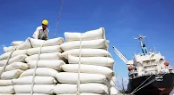
On the trade front, the EU is a structural net importer: in the 2024/2025 campaign the cheap imports community have reached the record of 1,73 million tons in milled rice equivalent, contributing to a situation of overstocking on the market, also due to the advance purchases by European operators in a context of uncertainty about global supplies (Informatore Agrario, 2026).
A significant portion of these volumes benefits from preferential tariff regimes, which allow entry at reduced or zero duty from third countries, fuelling concerns in the European rice sector about the competitiveness of domestic production (Confagricoltura, 2026).
The system of tariff preferences
The system of tariff preferences applied to rice imports into the European Union is currently governed by Regulation (EU) No. 978/2012 establishing the GSP regime (Generalized Tariff Preferences) and includes the special regime Everything But Arms reserved for Least Developed Countries. As specified by the European Commission in response to a parliamentary question:
- Rice is classified as a sensitive product and does not benefit from tariff preferences under the standard GSP and GSP+ regimes;
- only the Least Developed Countries, including Cambodia and Myanmar, can export rice to the EU at a preferential rate (European Parliament, 2026a).
The widespread use of this facilitated channel has led the European Parliament and the Council to introduce, as part of the review of the system, a new automatic safeguard mechanism reserved exclusively for the rice sector, which is in addition to the general and special safeguards already existing (European Parliament, 2026a).
What changes with the automatic safeguard clause for rice?
The political agreement between Parliament and Council was reached on 1 December 2025 (European Parliament, 2026b) and provides for the safeguard clause for rice to be activated when imports cumulative from a country beneficiary exceed the ten-year average by 45%. For example:
- the 45% threshold for Cambodia, in 2027, it is calculated at 313.268 tonnes based on a 2015-2024 historical average of 216.047 tonnes (Council of the European Union, 2026a);
- in a limit scenario of ‘saturation’ that is, if imports from Cambodia remained each year exactly at the level of the previous year’s threshold the safeguard threshold, driven by the sole effect of the 10-year moving average, could almost double in ten years: from 313.268 t in 2027 to approximately 590.000-600.000 t by 2037.
The text was approved in plenary session by European Parliament on 28 April 2026, with 459 votes in favour, 127 against and 70 abstentions (European Parliament, 2026c).
Il new regulation, which repeals Regulation (EU) No 978/2012, was finally agreed on 17 June 2026 and applies from January 1, 2027 for a period of ten years. As of the date of writing, the act has not yet been published in the Official Journal of the European Union with a definitive number.
Conclusions
The introduction of the automatic safeguard mechanism is presented as a trade defense tool suitable for ensuring the stability of the continental rice supply chain. This system will effectively allow zero-duty rice imports from some non-EU countries, potentially causing socio-environmental dumping, to double within ten years, exceeding the volume of Italian-made rice exports.
In this scenario, the future of Italian rice depends on the ability to preserve and enhance the biodiversity heritage of the historical varieties of the Po Valley, created in the last century to create risotto Memorable. In addition to varietal traceability, strict compliance with EU regulations on contaminants, and the added value of organic farming.
Dario Dongo
Credit cover Sophy Chen
https://www.greatitalianfoodtrade.it/en/cereals/rice/Italian-rice-European-market-tariffs%E2%81%A0%E2%81%A0/Published Date: June 23, 2026


 READ
READ