Downloads
 Login
Login
 Register


Tags
Philippines–Vietnam US$10 Billion Trade Ambition Collides With Rice Policy Turbulence
Import curbs, tariff shifts and enforcement disputes expose structural strain beneath deepening economic partnership.
by Sri Lanka Guardian
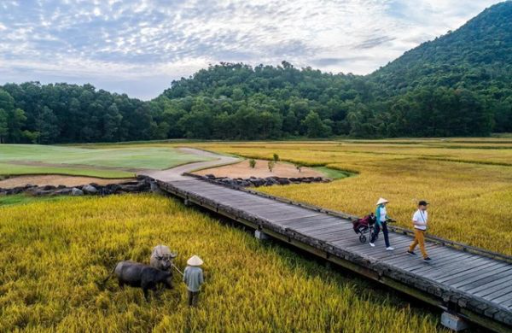
The Philippines’ plan to raise bilateral trade with Vietnam to US$10 billion by 2026 is facing mounting pressure from policy instability in Manila, where shifting rice import rules and tariff uncertainty are disrupting a key agricultural supply chain that underpins the wider commercial relationship with Hanoi.
The push for expanded trade comes alongside a recent diplomatic upgrade, with the two countries elevating ties to an “enhanced strategic partnership” during the state visit of Vietnamese President To Lam to Manila. Despite this political alignment, commercial relations are being strained by recurring regulatory interventions, an entrenched trade imbalance and disputes over contract reliability that are complicating cross-border business planning.
Rice remains at the centre of the tension. The Philippines depends heavily on Vietnam for food security, importing 85.3 per cent of its rice supply from the country, amounting to 1.7 million tonnes in mid-May this year. Vietnam, in turn, relies significantly on the Philippine market, which accounts for around 40 per cent of its global rice exports, making the corridor economically critical for both sides.
However, the relationship has been repeatedly disrupted by abrupt policy shifts in Manila. The Philippines imposed a 60-day rice import ban at the start of September 2025 to protect local farmers during the harvest season, later extending the restriction to the end of December under its amended Rice Tariffication Law. The move followed a decline in farm-gate prices linked to a strong domestic harvest and increased inflows of cheaper imports.
The disruption affected Vietnam’s export performance, with Vietnamese rice shipments falling sharply in late 2025 and contributing to an 11.5 per cent annual decline in total rice exports for the year. Industry participants say the volatility undermined momentum in what had been a rapidly expanding trade channel between the two countries.
Policy unpredictability has since extended beyond import bans. In January, Manila introduced a flexible tariff system allowing duties on rice imports to fluctuate between 15 and 35 per cent depending on global market conditions. Vietnamese exporters say the mechanism reduces pricing certainty, forcing higher risk premiums or delaying large-scale shipments.
The Philippines has also tightened food safety, traceability and environmental compliance requirements for imports. These measures, while framed as consumer protection, have been described by industry groups such as the Vietnam Rice Sector Association as technical barriers that increase compliance costs and complicate long-term contracting.
Trade between the two countries has grown significantly over the past decade, rising from US2.9billionin2015toUS7.2 billion in 2025. Vietnam has become the Philippines’ 11th-largest trading partner, but the relationship remains heavily imbalanced. Vietnam recorded a trade surplus of US3.7billionin2024,drivenbymorethanUS6 billion in exports to the Philippines.
Officials have also highlighted persistent friction over contract enforcement. Philippine Agriculture Secretary Francisco Tiu Laurel Jr said a key concern is that Vietnamese traders sometimes withdraw from agreements when global grain prices rise, undermining confidence among Philippine importers and prompting efforts to establish more coordinated negotiation mechanisms.
Beyond agriculture, trade links are supported by industrial exchanges, including Philippine exports of US424millioninintegratedcircuitsandUS200 million in electric motors to Vietnam in 2025. Both countries are also leveraging regional frameworks such as the Regional Comprehensive Economic Partnership and the ASEAN Trade in Goods Agreement to integrate supply chains and reduce tariffs across manufacturing networks.
Despite expanding trade flows, investment remains limited. Vietnamese foreign direct investment in the Philippines stood at US$92 million in 2025, though inflows are increasingly directed toward sectors such as green infrastructure and electric mobility. Manila has introduced reforms including the Create More Act, amendments to the Foreign Investments Act and “green lane” processing systems aimed at accelerating approvals for foreign investors.
Business engagement has increased following the upgraded partnership, with 15 memorandums of understanding signed during a recent Vietnam–Philippines business forum covering energy, agriculture, tourism and technology. However, analysts and industry officials continue to point to structural constraints, including bureaucratic delays and uneven policy execution, as obstacles to sustained investment growth.
Macroeconomic conditions are adding further pressure. The ASEAN+3 Macroeconomic Research Office downgraded the Philippines’ 2026 growth forecast from 4.4 to 4.1 per cent, citing geopolitical tensions, rising energy costs and inflation risks, factors that could complicate Manila’s efforts to stabilise trade relations and meet its US$10 billion target with Vietnam.
https://slguardian.org/philippines-vietnam-us10-billion-trade-ambition-collides-with-rice-policy-turbulence/Published Date: June 11, 2026


 READ
READ