Downloads
 Login
Login
 Register


Tags
DA ready to enforce P50/kilo imported rice price cap
Josiah Antonio
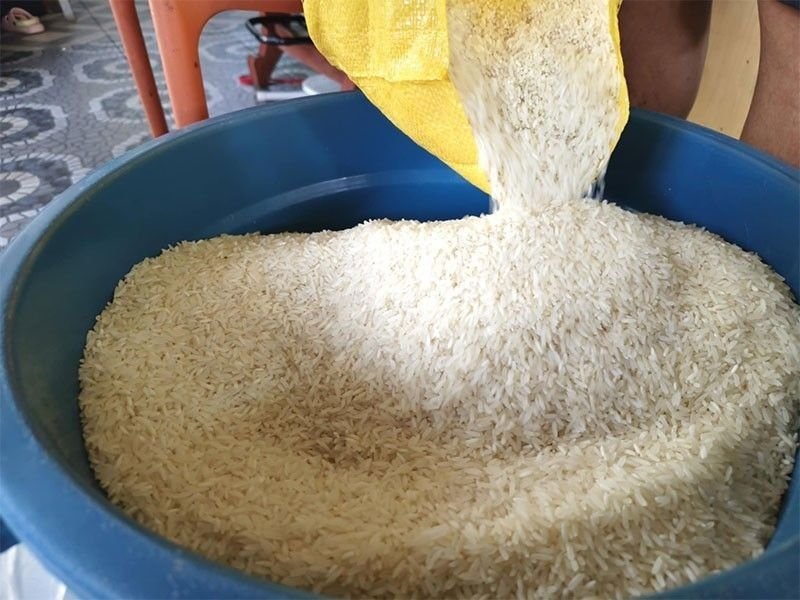
MANILA, Philippines — The Department of Agriculture (DA) is gearing up for the enforcement of President Marcos’ executive order imposing a price ceiling on imported rice.
The agency said that the move is aimed at cushioning consumers from surging food costs amid inflationary pressures triggered by the conflict in the Middle East.
Executive Order 118 imposes a P50-per-kilo cap on five percent broken imported rice for 30 days “to address unjustified price increases, prevent market abuse, and ensure the availability of affordable rice while maintaining market stability.”
The order takes effect immediately upon publication in the Official Gazette or a newspaper of general circulation.
“We will implement this immediately once it takes effect to help the general public cope with rising food costs,” agriculture chief Francisco Tiu Laurel Jr. said.
He added that the DA is empowered under the Price Act and the Anti-Agricultural Economic Sabotage law to pursue hoarders, profiteers, cartels and other market manipulators.
Inflation has accelerated sharply since oil prices surged following the outbreak of conflict in the Middle East on Feb. 28.
Headline inflation climbed to 4.1 percent in March and further to 7.2 percent in April, from 2.4 percent in February and 1.4 percent in April last year.
Food inflation alone jumped to 6.1 percent in April from 2.7 percent in March, underscoring mounting pressure on household budgets.
The DA stressed that rice remains one of the most “politically and economically sensitive commodities in the country,” accounting for roughly nine percent of the consumer basket used to measure inflation.
“For the poorest 30 percent of Filipino households, rice accounts for nearly one-fifth of household spending, making price spikes particularly painful for low-income families,” it said.
The DA said the temporary price cap complemented earlier interventions aimed at easing inflation and stabilizing food prices.
These include the rollout of the government’s P20-per-kilo rice program and the implementation of a maximum suggested retail price mechanism for imported rice, “both of which helped temper rice prices before the recent oil-driven inflation surge.”
Tiu Laurel said the National Price Coordinating Council would review the price ceiling within two weeks after implementation, and may recommend adjustments, an extension, or its removal depending on market conditions.
The DA added that the measure is intended as a calibrated response to extraordinary market volatility while the government continues efforts to strengthen domestic rice production and curb speculative pricing.
Imports still last resort
Tiu Laurel has reassured lawmakers that importation remains a last-resort tool, not a standing policy of the agency, stressing that “overseas sourcing will only be used in tightly defined cases where supply shortfalls threaten price stability and food security.”
“Importation is not our first resort – it is our last line of defense. Under this administration, we have deliberately reduced dependence on imports. Every decision to allow entry is weighed against its impact on farmers, consumers, and long-term food security,” he said in a statement.
During a hearing of the House of Representatives’ committee on North Luzon growth quadrangle, Tiu Laurel also laid out a broader preparedness plan to shield the agriculture sector from multiple external shocks, including oil price volatility and the looming risk of a severe El Niño later this year.
Northern Luzon – covering Cagayan Valley, Ilocos Region and the Cordillera Administrative Region – was cited as a critical production hub with more than two million hectares of farmland vital to national supply.
As part of the El Niño preparedness strategy, the DA is rolling out climate-resilient interventions aimed at reducing production losses during prolonged dry spells.
These include the expansion of greenhouse farming, construction of water impounding and storage systems, and wider deployment of drip irrigation and solar-powered irrigation systems.
The department is also promoting crop diversification to reduce dependence on water-intensive staples and improve farmers’ income resilience.
Tiu Laurel said these measures are intended to shift Philippine agriculture “from a reactive to a proactive stance against climate shocks, noting that water stress remains one of the most persistent risks to food security.”
A key policy intervention discussed during the hearing was the adjustment of National Food Authority (NFA) palay procurement prices to strengthen farmgate support.
The buying price for freshly harvested palay will be raised to P22 per kilo from the minimum P17, while dry palay buying price will be increased to P27 per kilo from P21 starting September, subject to higher fertilizer costs.
“The NFA has the funds and warehouse capacity to sustain better farmgate prices by September,” he said.
https://www.philstar.com/headlines/2026/05/15/2528067/da-ready-enforce-p50kilo-imported-rice-price-cap
Published Date: May 14, 2026


 READ
READ