Downloads
 Login
Login
 Register

Tags
Can India’s rice farmers reap from US$30 million Amazon carbon credit deal?
The pact promises green farming and methane emission cuts, but raises questions over payouts and corporate climate accountability
Biman Mukherji
A US$30 million carbon credit deal by tech giant Amazon with India’s Good Rice Alliance will boost carbon markets globally, according to experts, potentially showing agriculture – as well as industry – can be at the heart of emission reductions.
The organisation, primarily backed by Bayer and in collaboration with GenZero and Shell, is designed to transform emissions-heavy rice cultivation in India through scientific advances.
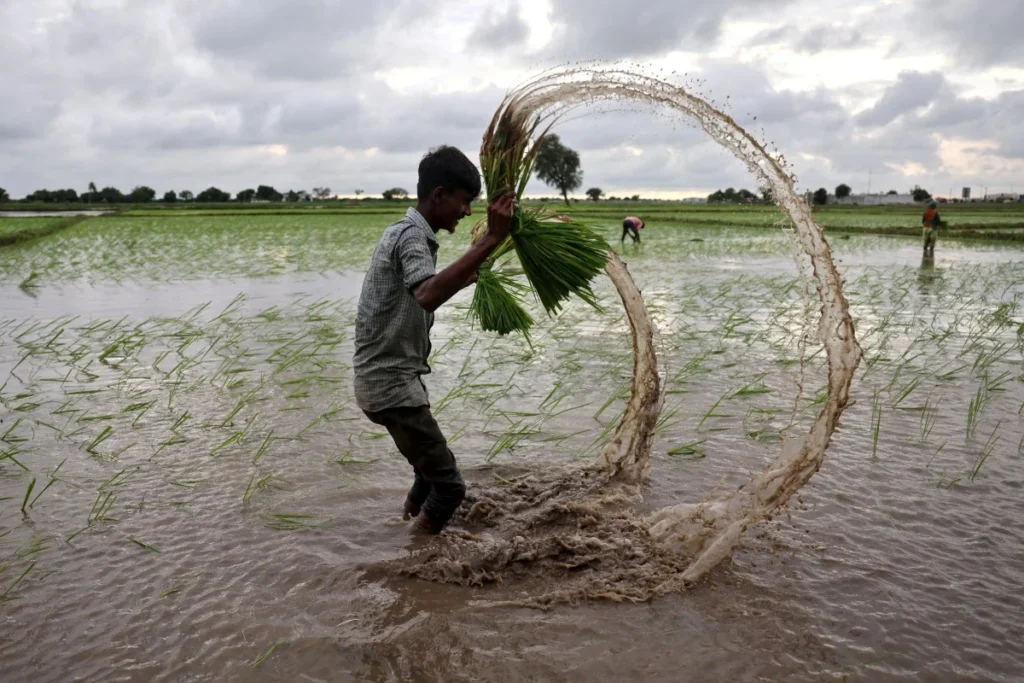
It helps thousands of smallholder farmers adopt climate-smart growing techniques that reduce water use and methane emissions from the vast rice crop.
Studies have shown that improved water management and better nutrient practices can cut methane emissions from rice fields by 30 to 50 percent.
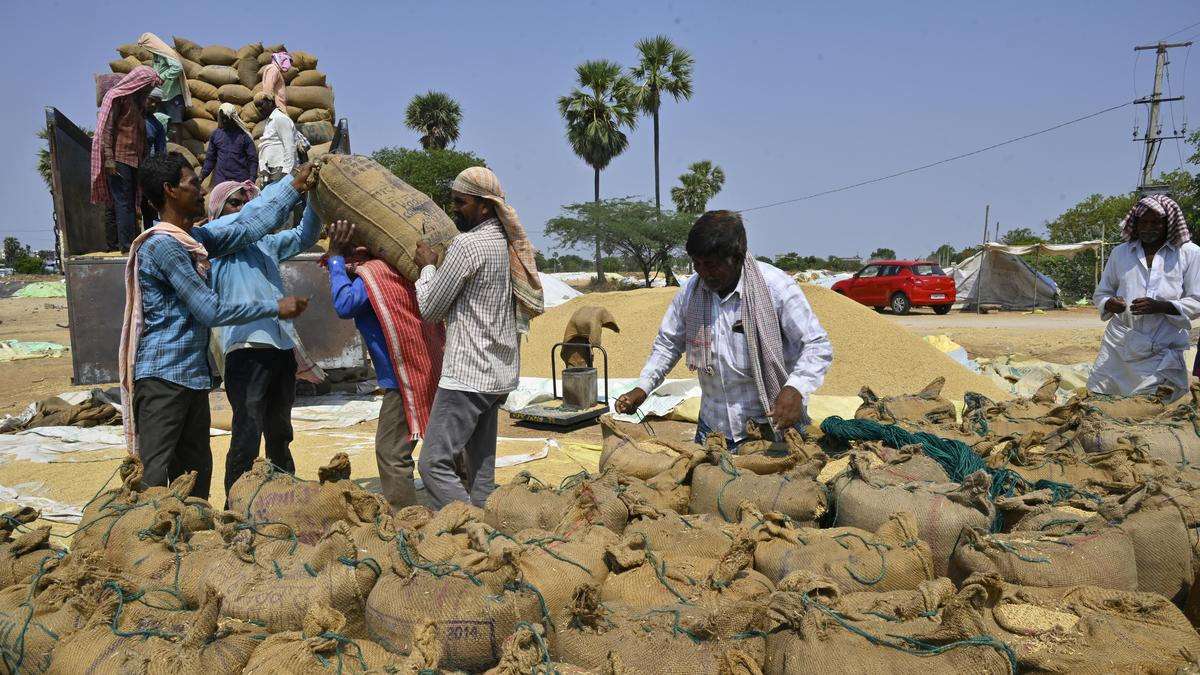
With around 42 to 44 million hectares (108 million acres) under cultivation, India is the world’s top rice exporter and a major contributor to agricultural methane.
The agreement is expected to secure around 685,000 tonnes of carbon dioxide equivalent, according to local media.
“The deal is a massive one,” said Vaibhav Chaturvedi, senior fellow at the Council on Energy, Environment and Water. “This gives a boost to the backers of carbon markets as a source of finance to accelerate decarbonisation while improving development outcomes.”

But experts caution that the success of the pact will be defined by the benefits that trickle down to farmers.
“The key thing to watch out for is how much money will actually be passed on to farmers,” Chaturvedi said.
“On-field implementation in the agricultural sector is costly. It is only when meaningful money is passed on to low-income farmers will this deal become valuable to them.”
Last December, Amazon announced a US$35 billion investment in India by 2030, with most of it focused on AI-driven digitisation and logistics, following US$40 billion previously invested in the country.
Experts say these investments are likely to spike carbon emissions, but how much depends on offset plans and newly installed capacity of renewable energy.
Green wash?
Carbon credit markets are widely considered an important, though controversial, tool in environmental efforts to mitigate climate change. They are designed to put a price on carbon pollution and drive capital towards projects that reduce or remove greenhouse gas emissions.
Harjeet Singh, climate activist and founding director of Satat Sampada Climate Foundation, said there are pitfalls to the Amazon deal as it can be used to offset emissions generated from the company’s data centres and logistics.
“By buying agricultural credits, Amazon effectively uses Indian rice paddies as a ‘vent’ for its own fossil fuel-driven expansion,” he said, adding that it offers a shield for industrial emissions from high-income Western countries.

Why the global rice supply is in crisis
The Global South has consistently asked for heavy polluting Western nations to pay reparations, insisting slashing their own carbon production risks crimping economic growth in the countries least responsible for historical emissions.
“While technical benefits like water saving are possible, the deal fails to address the ‘polluter pays’ principle,” Singh said.
Besides high methane emissions, rice cultivation poses other environmental challenges such as severe water depletion and air pollution from stubble burning.
Traditional cultivation methods of flooding rice fields lead to excessive irrigation, while the application of chemical fertilisers damages soil health.
“While carbon credits aim to promote sustainable practices, if not managed carefully, they may encourage the continued cultivation of water-heavy crops without addressing resource depletion,” said Anjal Prakash, a professor of public policy at FLAME University.
Balancing carbon credit projects with water conservation is crucial to mitigate negative environmental impacts and promote sustainable agricultural practices, he added.
Credit where credit is due
The Amazon deal may be a breakthrough for major firms to reach downstream carbon producers, other experts say.
“The initiative opens up the potential for more cross-border use of credits. This is an example of how India and Chinese markets for emission reduction can collaborate,” said Suranjali Tandon, an associate professor at the National Institute of Public Finance and Policy.
But she flagged the risk of carbon credits creating a false market for rice – making cultivation more profitable rather than reducing water use.
https://www.scmp.com/week-asia/health-environment/article/3352930/can-indias-rice-farmers-reap-us30-million-amazon-carbon-credit-deal
Published Date: May 8, 2026


 READ
READ