Downloads
 Login
Login
 Register

Tags
Various initiatives to increase country’s self-sufficiency in rice production
The Ministry of Primary Resources and Tourism (MPRT), through the Department of Agriculture and Agrifood, continues to implement various initiatives to progressively increase the country’s self-sufficiency in rice production.
Based on current plans, local rice production is expected to rise from around 2,594 metric tonnes in 2025 to approximately 4,000 metric tonnes by 2030.
Along with this increase, the self-sufficiency rate of rice in the country is targeted to grow from about 8.5 per cent at present to around 10 to 12 per cent over the next five years.
The nation’s journey toward self-sufficiency in rice and increasing local rice production was shared by Minister of Primary Resources and Tourism Yang Berhormat Dato Seri Setia Dr Haji Abdul Manaf bin Haji Metussin on the last day of the First Meeting of the 22nd Session of the Legislative Council (LegCo).
The minister outlined several key approaches, namely increasing rice output in non-irrigated areas, where efforts have previously focused on irrigated fields.
However, almost 50 per cent of rice fields do not have irrigation systems due to factors such as being far from water sources or having land that is uneven or hilly.
Efforts are now also directed at improving yields in non-irrigated areas. Currently, trials with hybrid rice varieties suitable for non-irrigated areas are being conducted in cooperation with several agencies and international institutes, such as the Hunan Hybrid Rice Research Centre in China. The ministry has received three hybrid rice varieties – WDR101, WDR102, and WDR103 – suitable for non-irrigated areas, with the second season of the study on variety suitability set to begin in the off-season of 2026 in the Temburong District.
FINC-Singrow from China is providing three rice varieties undergoing suitability trials for the first season in the Temburong District, with harvesting expected in April 2026. The second season trial will continue in the off-season of 2026.
Meanwhile, Jiayuan Agriculture Trading Company will enter a pilot project phase in the off-season of 2026 with a single variety, Yuan1601, across a 30-hectare field in Tutong, Temburong, and Belait districts.
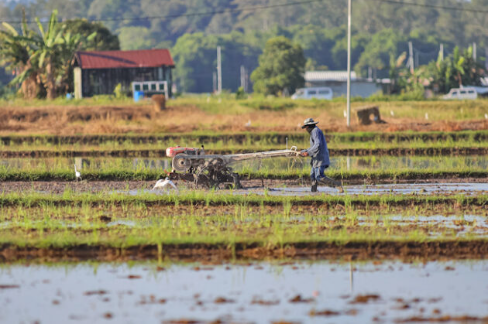
If successful, these trials are expected to double or triple the average rice yield in non-irrigated areas, from one metric tonne per hectare per year to two or three metric tonnes, contributing to increased self-sufficiency and food security.
On the use of modern agricultural technology to boost productivity, the minister shared that this includes high-yield rice varieties such as the newly introduced hybrid Yuan158 rice, which has the potential to yield between five to seven metric tonnes per hectare per season.
In comparison, the current variety, Sembada 188, yields an average of three to four metric tonnes per hectare per season.
Studies on the suitability of new rice varieties are being conducted in collaboration with international institutions like the International Rice Research Institute and research partners from China.
The ministry also plans to establish a Hybrid Rice Research Centre to strengthen research and development on rice varieties better suited to the soil and climate conditions in Brunei.
The ministry encourages collaboration with the private sector to increase investment in rice production technology, processing, and marketing, thus strengthening the overall value chain of the country’s rice industry.
Meanwhile, the ministry is also looking at improving soil fertility through Sustainable Practices (Regenerative Agriculture). Fertile soil is crucial for high-yield rice varieties to reach their full potential.
Efforts to improve soil health include using organic fertiliser, such as those produced from farm waste like chicken manure, green waste, and food scraps.
The approach supports the circular economy and helps mitigate the impacts of climate change.
Since 2024, the ministry, through the Department of Agriculture and Agrifood in collaboration with Wasan Milling Company Sdn Bhd, has been conducting a study on the effectiveness of various locally produced organic fertiliser to improve soil fertility in rice fields, particularly at the Kandol Agricultural Development Area, covering 20 hectares.
Initial results from the project have been encouraging, showing decreased soil acidity, improved soil fertility, and increased rice yields.
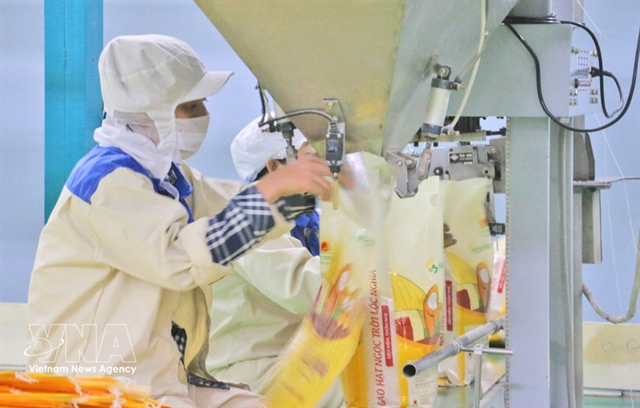
On enhancing the efficiency of rice production and processing chains, collaboration with Wasan Milling Company Sdn Bhd has been strengthened to upgrade post-harvest management systems, rice milling, and storage, as well as the use of modern drying technologies.
These steps help improve the quality of local rice and reduce post-harvest losses.
Highlighting strengthening farmer capacity development, the minister shared that capacity-building programmes continue in all four districts through the Rice Farmers’ School.
This improves farmers’ skills in rice crop management, technology use, and best agricultural practices.
The approach also opens up opportunities for more young farmers to enter the rice farming sector as a potential enterprise.
At the same time, the ministry has taken a realistic approach to diversify the sources of rice supply through regional cooperation, including with BIMP-EAGA.
The approach is important to ensure the country’s rice supply security, as the available land suitable for rice farming is limited.
Overall, the integrated approach aims to increase local rice production progressively through the use of modern technology, private sector involvement, and the participation of new farmers, including youth, in line with efforts to strengthen the country’s food security in the long term. – James Kon
https://borneobulletin.com.bn/various-initiatives-to-increase-countrys-self-sufficiency-in-rice-production/Published Date: March 30, 2026


 READ
READ