Downloads
 Login
Login
 Register


Tags
Japan’s Rice Prices Soar Too as Korea’s Hit Record Highs
By Kim Su-ho
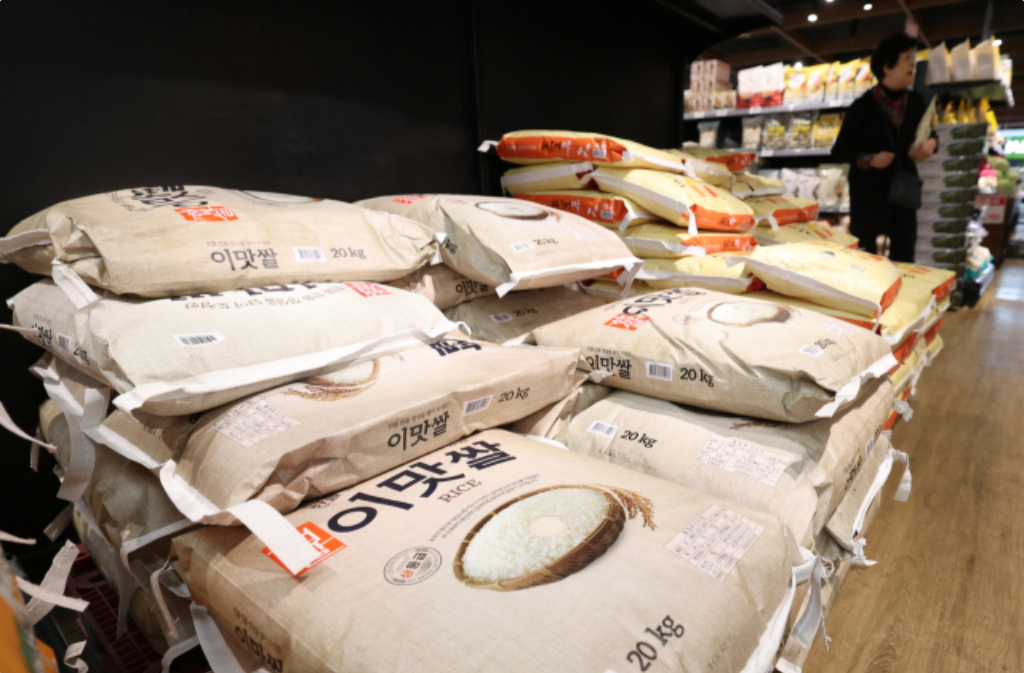
Farm-gate rice prices in South Korea hit a record high of 58,000 won per 20 kilograms last year. The surge boosted net income for rice farmers by nearly 58% in a single year.
According to the “2025 Paddy Rice Production Cost Survey” released by the National Data Center on Tuesday, net income from rice farming per 10a (1,000 square meters) reached 427,256 won last year, up 156,673 won (57.9%) from the previous year. That marks the highest growth rate since 2011 (63.5%). Net income per 10a is calculated by subtracting production costs from total revenue, representing the actual earnings farmers take home after all farming expenses.
The net profit margin rose to 31.7%, up 8.2 percentage points year-on-year, the highest since 2021 (38.8%), as farm-gate rice prices climbed.
Farm-gate rice prices jumped 25.0% from 46,000 won per 20 kg in 2024 to 58,000 won last year. Rice production per 10a also edged up 9 kg (1.7%) to 522 kg from 514 kg in the previous year. Total revenue from paddy rice per 10a rose 17.0% (approximately 196,000 won) to 1,348,651 won.
Production costs also increased. Rice production costs per 10a reached 921,395 won last year, up 4.4% (39,085 won) from the previous year. The rise was driven by higher direct production costs such as pesticide and fertilizer expenses, as well as indirect costs including land service fees.
Rising rice prices are putting upward pressure on dining-out prices. Some restaurants have raised the price of a bowl of steamed rice. Rice cakes were 5.1% more expensive last month compared to a year earlier. Triangle gimbap rose 3.6%, while dishes such as bibimbap, doenjang-jjigae set meals and kimchi-jjigae set meals became roughly 3.5% pricier.
Government to Supply 100,000 Tons of State Rice
Agriculture Minister Song Mi-ryeong said at a press briefing in August last year that a retail price of 60,000 won per 20 kg represented “a psychological resistance level at which consumers feel rice is expensive,” pledging to stabilize prices. Song predicted on multiple occasions that rice prices would fall after the harvest season, but the strong pricing trend has persisted.
The government plans to swiftly release 100,000 tons of government-stockpiled rice to stabilize prices. If supply-demand instability continues, an additional 50,000 tons will be released. However, the government noted it will take time for the measures to be reflected in consumer prices.
Meanwhile, rice prices in neighboring Japan have also been surging. Prices that hovered around the mid-2,000 yen range per 5 kg in the first half of 2024 more than doubled last year, and average retail prices currently remain at the 4,000 yen level per 5 kg. Earlier last year, Japanese tourists visiting South Korea were spotted buying Korean rice at supermarkets — an unusual sight that underscored the severity of Japan’s own rice shortage.
https://en.sedaily.com/culture/2026/03/28/japans-rice-prices-soar-too-as-koreas-hit-record-highsPublished Date: March 28, 2026


 READ
READ