Downloads
 Login
Login
 Register


Tags
Facing a ‘crisis’, EU millers seek safeguard duties on rice
Indian rice may face extra tariffs as millers’ body seeks review of trade pacts with various nations.
By Subramani Ra Mancombu
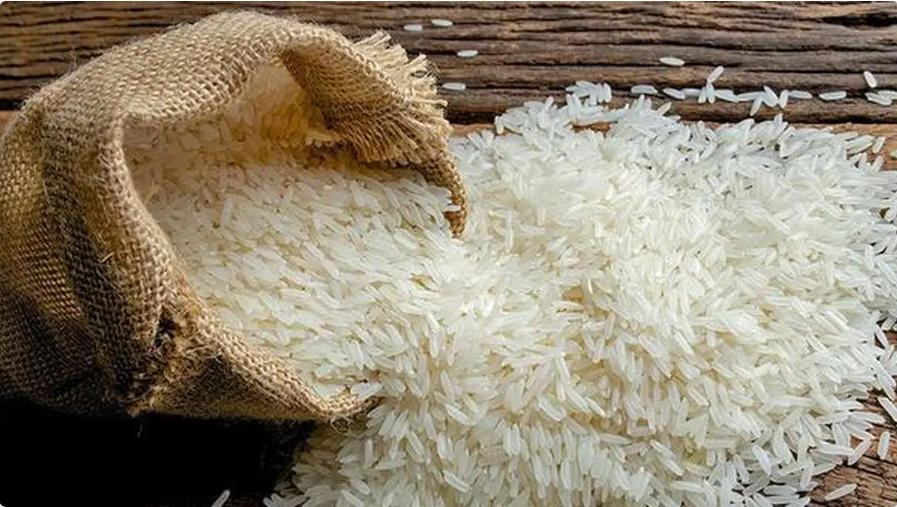
The European Union (EU) may resort to imposing safeguard duties on rice imports, including from India, as it is under pressure from the rice industry that is facing a crisis.
Trade organisations, led by the Federation of Rice Millers (FERM), are seeking a review of the trade agreements entered into by the EU and safeguard mechanisms to protect the domestic industry. They say EU rice production is becoming economically unviable, while producers and exporters are facing mounting burdens that are crushing businesses.
According to EU agri-food group Copa-Cogeca, rice imports into the EU reached around 1.7 million tonnes a couple of weeks ago, with a significant share of the year’s exports entering the EU market at reduced or zero tariffs under existing trade deals.
Protecting sensitive products
Led by Copa-Cogeca and backed by other trade groups, FERM has sought measures, particularly raising EU tariffs on imported rice to protect the producers and processors.
At a meeting of the European Parliament and the European Council last week, mainly to discuss safeguard clauses of the EU’s deal with the Mercosur countries, a group of South American nations, it was resolved to protect sensitive products in the agriculture sector. This would be done by limiting preferences to tariff rate quotas.
The meeting said the EU would insist on its right to take global safeguard measures in accordance with the World Trade Organization (WTO) Agreement on Safeguards as well as the agreements with Mercosur and other interim trade deals.
Rice among 12
The EU said it was determined to make swift and effective use of the bilateral safeguard clauses to counteract possible negative impacts of the tariff reductions, including for products whose market access is constrained by the limits contained in tariff rate quotas.
The meeting listed a dozen sensitive items and included rice among them. “It is necessary to lay down procedures to guarantee the effective implementation of the bilateral safeguard clauses for agricultural products,” the EU said.
The meeting said any delay in imposing safeguard measures could hurt EU farmers in more than one country, and it could be difficult to remedy. It was resolved to lay down specific procedures in line with the Agreements to guarantee a timely implementation of the bilateral safeguard clauses for certain sensitive agricultural products.
Triffering mechanism
“Safeguard measures are only to be considered where the product in question is imported into the EU in such increased quantities, in absolute terms or relative to EU production, and under such conditions as to cause or threaten to cause serious injury to producers of like or directly competitive products,” said one of the resolutions.
The meeting also resolved that the EC should monitor and present a report at least every six months, containing its assessment of the impact of imports of sensitive products benefitting from preferential market access under the various free-trade agreements.
S Chandrasekaran, an expert in trade and author of “Basmati Rice – The Natural History Geographical Indication”, said once imports reach about 552,000 tonnes (the baseline plus the 45 per cent surge), the safeguard mechanism would be triggered without needing a new legal investigation.
“Such a surge applies to other exporting countries. An unforeseen surge in Indian rice imports into the EU has not seen any claim of serious injury to EU rice farmers and millers,” he said.
Reciprocity principle
The Government should insist on an exemption for Indian rice imports if the EU intends to implement safeguard duties, as Indian prices are much higher than EU rice prices, he said.
The EU Parliament and Council meeting reinforced the principle of reciprocity in international trade. “Imports placed on the EU market should comply with standards equivalent to those required of European producers, particularly concerning environmental protection, food safety and labour conditions,” it said.
This, traders and analysts say, could be a tricky aspect to monitor.
https://www.thehindubusinessline.com/economy/agri-business/facing-crisis-eu-millers-seek-safeguard-duties-on-rice/article70772551.ecePublished Date: March 23, 2026


 READ
READ