Downloads
 Login
Login
 Register


Tags
Iran War Impacts India’s $11.8-billion Food Exports to West Asia
Rice faces the largest potential impact. India exported $4.43 billion worth of rice to West Asia in 2025, accounting for 36.7% of its global rice exports.
Gyanendra Keshri | DHNS
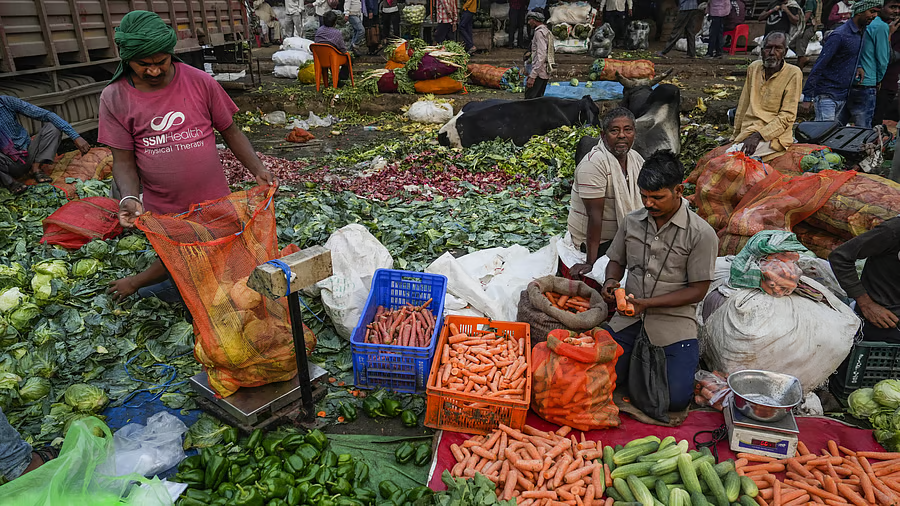
New Delhi: Prolonged disruption in West Asia will badly hit Indian farmers, food processors and exporters across several states including Karnataka, Telangana, Andhra Pradesh, Punjab and Maharashtra, as India’s agricultural exports are heavily dependent on the Gulf markets, experts said.
In 2025, India exported nearly $11.8 billion worth of agricultural and food products to the West Asia region, accounting for more than one-fifth of the country’s total agri exports. Cereals, fruits, vegetables and spices dominate India’s exports basket to the Gulf region.
Rice faces the largest potential impact. India exported $4.43 billion worth of rice to West Asia in 2025, accounting for 36.7 per cent of its global rice exports. Saudi Arabia, Iraq and Iran have been among the biggest buyers of Indian basmati rice. According to industry sources, nearly 4 lakh metric tonnes of basmati rice is currently stuck at ports or in transit.
Disruption in rice exports will badly hit farmers in the states of Punjab, Haryana, Uttar Pradesh, Andhra Pradesh, and Telangana.
“If instability around the Strait of Hormuz persists, the impact could ripple through India’s agricultural economy, highlighting the need for exporters to diversify markets and reduce excessive dependence on a single region,” said Global Trade Research Initiative (GTRI) founder Ajay Srivastava.
India’s agricultural exports have developed a deep dependence on West Asian markets over the past decade, particularly for products such as rice, bananas, spices, meat and dairy products.
More than 70 per cent of India’s shipments of some food products like sheep and goat meat, fresh beef, bananas, copra and certain spices go to West Asia, making them extremely vulnerable if trade flows are disrupted. Others, including dairy products, beverages, tea and several edible oils, also depend heavily on Gulf demand.
“The Gulf has been a natural destination due to its geographic proximity and large Indian diaspora. But the ongoing conflict in West Asia, along with disruptions to shipping routes and rising insurance costs, is now creating uncertainty for exporters and could directly affect farmers and food processors across several Indian states,” GTRI said in a note.
West Asia broadly includes the six Gulf Cooperation Council (GCC) countries — Saudi Arabia, the UAE, Bahrain, Kuwait, Oman and Qatar — along with Iran, Iraq, Israel, Jordan, Lebanon, Syria and Yemen. Nearly one crore Indians live and work across the West Asia region.
According to a statement released by the Ministry of External Affairs (MEA), more than 52,000 Indians have returned to the country from the Gulf region from March 1-7. The US and Israel began joint air attacks on Iran on February 28. Since then, the conflict has widened to several countries in the region and led to disruptions in the Strait of Hormuz, one of the world’s most-critical energy chokepoints.
“Though India does not buy any oil from Iran, Hormuz is crucial for India, as 40 per cent of oil imports still pass through this waterway between Iran and Oman,” SBI Research said in a note.
High oil prices and disruption in exports is likely to hit India’s economy. According to SBI Research, every $10 increase in the crude oil price may lead to 35-40 bps rise in inflation.
In the worst case scenario (if oil prices reach $130 per barrel), GDP growth may plummet to 6 per cent (on the assumption of 7 per cent growth in FY27), SBI Research said.
India’s spice exports are closely tied to Gulf demand, with 70.5 per cent of nutmeg, mace and cardamom exports going to the region. Exports of spice seeds such as cumin and coriander reached $163 million, while ginger and turmeric totaled $173 million, with about 23per cent of India’s exports of these products going to the region in 2025. These crops mainly support farmers in Kerala, Karnataka, Rajasthan and Gujarat.
https://www.deccanherald.com/business/economy/iran-war-impacts-indias-118-billion-food-exports-to-west-asia-3924435Published Date: March 9, 2026


 READ
READ