Downloads
 Login
Login
 Register


Tags
Vietnamese agricultural products restructured to affirm global standing
In recent years, the sector has shifted from a production-oriented mindset to an agricultural economic approach. Instead of focusing mainly on output, it now prioritises quality, added value and brand building.
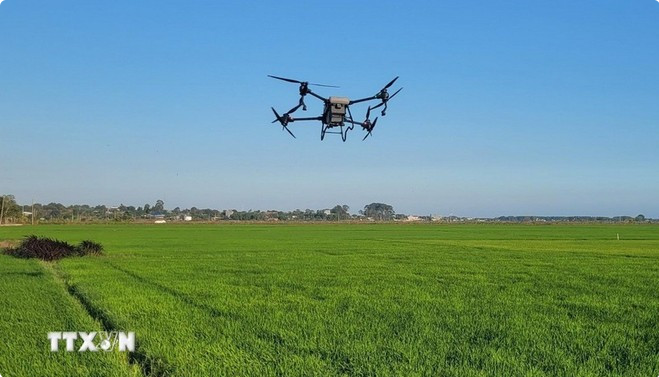
Hanoi (VNA) – Amid deepening international integration and intensifying global competition, localities across Vietnam are restructuring the agricultural sector toward large-scale production, value chain development, and a growth model driven by quality and technology.
In recent years, the sector has shifted from a production-oriented mindset to an agricultural economic approach. Instead of focusing mainly on output, it now prioritises quality, added value and brand building.
Building on stable growth in previous years and a strong recovery in 2025, agro-forestry-fishery exports surpassed 70 billion USD. According to the Ministry of Agriculture and Environment, export turnover in January reached nearly 6.51 billion USD, up 29.5% year-on-year. The figures underscore a strategic transition toward standardisation, improved quality and stronger application of science and technology in production.
Brand development has become a key driver. Vietnam is currently the world’s largest producer and exporter of coffee, with annual output of around 1.8–2 million tonnes. Beyond exporting raw beans, enterprises are increasingly investing in deep processing to enhance product value.
Nguyen Nam Hai, Chairman of the Vietnam Coffee–Cocoa Association, said export value in January alone reached nearly 1.1 billion USD, up almost 40% compared to the same period last year.
The growth shows that Vietnamese firms are integrating more deeply into global value chains and gradually shedding the image of low-value raw material exporters.
The fruit and vegetable sector has also posted impressive gains. Nguyen Dinh Tung, Vice Chairman of the Vietnam Fruit and Vegetable Association and General Director of Vina T&T Group, said stronger brand building and systematic investment in science and technology enabled robust growth from the first month of 2026.
High-tech applications in cultivation, preservation and deep processing have improved quality, extended shelf life and ensured compliance with stringent import standards. A national branding strategy for Vietnamese fruit has further enhanced product value and credibility in global markets.
As a result, fruit and vegetable exports in January exceeded 644 million USD, surging 72.9% year-on-year. The strong performance provides momentum for the sector to target double-digit growth and strive to reach 10 billion USD in export revenue this year.
At the local level, brand investment is delivering tangible results. In Hanoi, Deputy Director of the municipal Department of Agriculture and Environment Ta Van Tuong said branding plays a decisive role in expanding markets and increasing value. Products such as Dong Phu organic rice and Dai Thanh late-ripening longan have significantly improved competitiveness following systematic brand development, with selling prices rising by 15–20%.
Despite notable achievements, Vietnamese agricultural brands remain underrepresented in the mid- and high-end segments. International marketing and digital positioning are still limited.
Deputy Minister of Agriculture and Environment Phung Duc Tien stressed that amid rapid digital transformation, applying technology and artificial intelligence is inevitable. Integrating data for market forecasting and production management, adopting electronic farm diaries, cooperative management software, and online platforms for seeds and input materials are helping farmers access technology more easily and improve efficiency.
Digital branding, personalised customer engagement, optimised marketing costs and higher conversion rates will enable Vietnamese enterprises to compete more effectively in regional mid- and high-end markets.
To achieve breakthroughs in 2026, brand positioning must be treated as a central, long-term strategy. The sector needs to shift decisively from an “exporting quantity” approach to “exporting value,” with quality and standards as the foundation.
Key products such as fruit, rice, coffee and cashew nuts should build clear brand identities linked to growing-area codes, geographical indications and sustainability criteria. Localities must also invest in digital traceability systems, transparent supply chains and international certifications such as GlobalGAP, organic and low-carbon standards.
Enterprises, meanwhile, should proactively develop their own brands in export markets rather than relying solely on importers’ labels. Greater participation in specialised trade fairs, stronger connections with major distribution networks and accelerated cross-border e-commerce are also essential.
With clearer brand positioning and deeper digital transformation, Vietnamese agricultural products are expected not only to increase export volumes but also command higher prices, strengthening the foundation for sustainable growth and reinforcing Vietnam’s standing in the global agricultural marketplace.
VNA
https://en.vietnamplus.vn/vietnamese-agricultural-products-restructured-to-affirm-global-standing-post338567.vnpPublished Date: March 3, 2026


 READ
READ