Downloads
 Login
Login
 Register


Tags
5 reasons why rice prices are rising in Bangladesh
The five reasons are: rising production costs, disconnect with global market trends, limited impact of cheaper imports, controlled import regime, and weather shocks and supply concerns.
The Daily Star
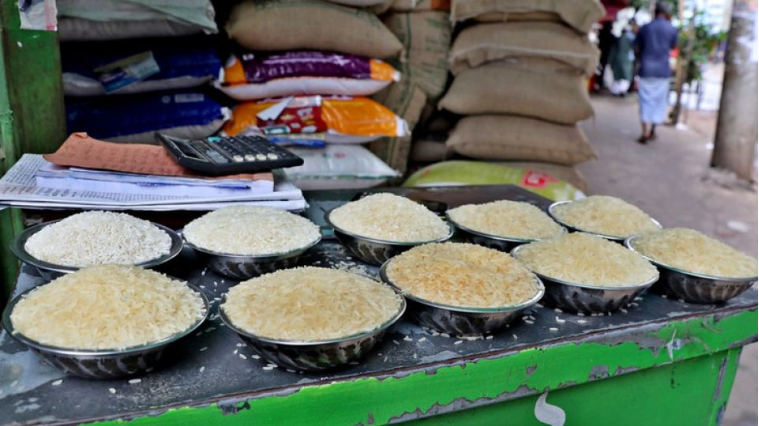
DHAKA – Rice prices have seen an abnormal increase recently in Bangladesh, despite higher yields and an adequate supply. Even a sharp drop in international prices failed to make an impact on the domestic market, according to a new report by the Bangladesh Trade and Tariff Commission.
The commission reviewed demand, production, local and global prices, and import duties to explain five key reasons behind the surge.
The five reasons are:
Rising production costs
The price of rice procured by the government under the social safety net rose by 8 percent year-on-year to Tk 49 per kilogram this year, while paddy prices increased by 11 percent.
This increase was driven by higher input costs for fertiliser, fuel, and labour.
Limited impact of cheaper imports
From July to September 2025, rice imported from India entered Bangladesh at Tk 55 to Tk 58 per kg, with an average of Tk 57.
Yet local coarse rice is still sold at Tk 55 to Tk 60 per kg and medium rice at Tk 60 to Tk 70, showing only a slight easing.
Disconnect with global market trends
Data from the Thailand Rice Association show that international prices fell by about 37 percent year-on-year, from 613 dollars per tonne to 388 dollars. Converted at Tk 120 per dollar, this equals a decline of Tk 46.56 per kg.
Despite this sharp fall, domestic rice prices in Bangladesh rose by 8 to 11 percent during the same period.
Controlled import regime
Bangladesh does not allow open rice imports. The food ministry permits shipments only when domestic supply falls short. While duty concessions have temporarily lowered import costs, with most shipments paying only 2 percent advance income tax, the government maintains restrictions to protect local farmers from being undercut.
Weather shocks and supply concerns
Floods and heavy rains in the past year disrupted cultivation, even though overall production rose by 2.3 million tonnes to 4.43 crore tonnes.
With national demand estimated at 3.7 to 3.9 crore tonnes, supply is technically adequate. However, weather volatility has added uncertainty and kept consumer prices elevated.
https://asianews.network/5-reasons-why-rice-prices-are-rising-in-bangladesh/Published Date: October 22, 2025



 READ
READ